Is The Harley 107 A Good Engine: Honest Review

For most riders in the United States, yes—the Harley-Davidson Milwaukee-Eight 107 is a good engine. It offers strong low-speed torque, a smooth feel, simple air cooling on many models, and enough power for highway travel, touring, and daily riding.
The 107 is not the fastest Milwaukee-Eight engine. The 114 and 117 make more torque and may suit riders who carry heavy loads or want stronger roll-on power. Still, the 107 often gives the best balance of price, fuel use, heat, performance, and long-term ownership cost.

What Is the Harley-Davidson 107 Engine?
The Harley 107 is part of Harley-Davidson’s Milwaukee-Eight engine family. Harley introduced the engine in the United States for the 2017 model year.
The name “107” refers to about 107 cubic inches of displacement. The actual displacement is commonly listed as 1,746 cc, or about 106.5 cubic inches.
Key features include:
- A 45-degree V-twin layout
- One camshaft
- Four valves per cylinder
- A counterbalancer to reduce vibration
- Electronic fuel injection
- Air cooling or liquid-cooled cylinder heads, depending on the motorcycle
- A six-speed transmission on most motorcycles using the engine
The 107 replaced many Twin Cam engines in Harley’s lineup. It brought more valve area, better airflow, less vibration, and updated engine cooling.
The engine appears in several Harley-Davidson models, including many Softail and Touring motorcycles. Exact output, cooling design, fuel mapping, and equipment can vary by model and year.

Why Is the Milwaukee-Eight 107 Considered a Good Engine?
The Milwaukee-Eight 107 works well because it gives useful torque without pushing the engine as hard as larger versions. Its design suits riders who want a classic Harley feel with modern fuel injection and engine control.
Strong low-speed torque
The 107 makes its best impression at low and middle engine speeds. It pulls well from a stop and gives a steady push when passing on the highway.
That power suits:
- City riding
- Two-lane roads
- Moderate highway use
- Weekend trips
- Light touring
- Solo riding
It does not need high engine speed to feel useful. The motor feels relaxed when ridden at normal US highway speeds.
Better vibration control than older Harley engines
The Milwaukee-Eight uses a counterbalancer. It reduces unwanted engine vibration while keeping some of the movement many Harley riders enjoy.
The result is not perfectly smooth like a small four-cylinder engine. That is not the goal. Instead, the 107 aims to reduce harsh vibration through the seat, bars, and foot controls.
Less vibration can also improve comfort during longer rides.
Modern cylinder-head design
The Milwaukee-Eight uses four valves per cylinder. This gives the engine more valve area than older two-valve Harley designs.
In simple terms, the engine can move air more effectively. Better airflow helps the engine make useful power while meeting modern emissions and noise requirements.
Good fit for normal street riding
A larger engine is not always better. The 107 has enough power for most street riders, especially those who do not often ride two-up with full luggage.
The lower output can also make the motorcycle easier to manage in slow traffic. Throttle response may feel less abrupt than a larger, heavily tuned engine.
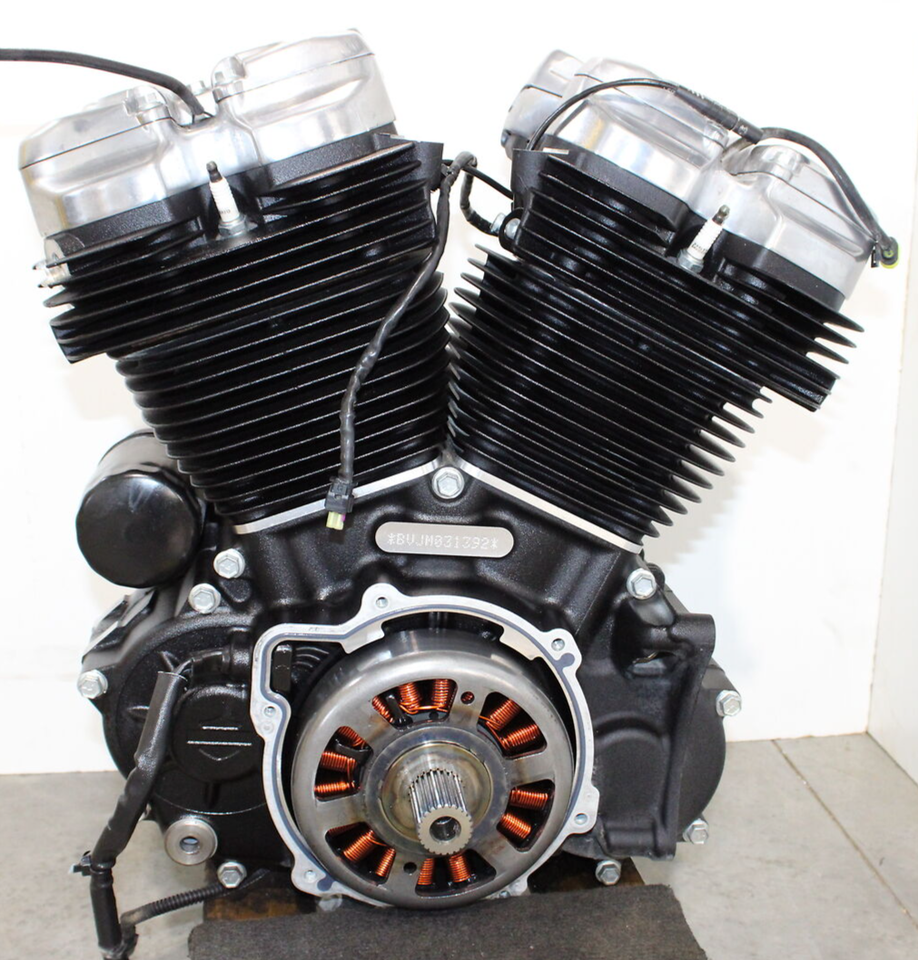
Harley 107 vs. 114 vs. 117
the main difference between the Milwaukee-Eight 107, 114, and 117 is displacement and output. Larger engines usually make more torque, but they also cost more and may create more heat and fuel demand.
| Engine | Approximate displacement | Best suited to | Main trade-off |
|---|---|---|---|
| Milwaukee-Eight 107 | 1,746 cc | Daily riding and light touring | Least output of the three |
| Milwaukee-Eight 114 | 1,868 cc | Stronger street and touring performance | Higher purchase and running cost |
| Milwaukee-Eight 117 | 1,923 cc | Maximum factory torque | More cost, heat, and fuel demand |
These figures describe engine size, not a universal horsepower result. Harley-Davidson output can change by model, exhaust system, air cleaner, calibration, and cooling system.
Choose the 107 if:
- You ride mostly alone.
- You want a lower-cost Harley.
- You value smooth, calm power.
- You ride in town and on normal highways.
- You do not need maximum acceleration.
- You want to leave the engine close to stock.
Choose the 114 or 117 if:
- You often ride two-up.
- You carry full touring luggage.
- You ride in steep or mountainous areas.
- You want stronger passing power.
- You plan major performance upgrades.
- You care more about torque than purchase price.
For many buyers, the 107 is the sensible choice. For riders who want the biggest factory motor, it may feel limited.

How Reliable Is the Harley 107?
The Harley 107 can be reliable when it receives the correct service and is not overheated, poorly modified, or neglected. Reliability depends on the motorcycle’s model year, mileage, maintenance history, storage, riding conditions, and previous repairs.
A well-kept 107 should not be judged only by its displacement. Service records tell you more than the engine badge.
Main factors that affect reliability
Oil and filter service
Clean oil matters in any air-cooled or partially air-cooled engine. Harley-Davidson service schedules commonly call for regular oil and filter changes at set mileage intervals. The correct interval depends on the model and owner’s manual.
Use the oil grade and filter type listed for the specific motorcycle. Do not assume that every Milwaukee-Eight model uses the same fluid capacity or service procedure.
Heat management
Large air-cooled V-twins can produce substantial heat in slow traffic. Heat is most noticeable when a motorcycle sits in traffic on a hot day.
Heat does not automatically mean the engine is failing. However, repeated severe heat can increase stress on oil, seals, electrical parts, and rider comfort.
Good habits include:
- Avoiding long periods of unnecessary idling
- Keeping the cooling fins clean
- Using the correct fuel
- Maintaining the factory calibration
- Checking for blocked airflow
- Fixing warning lights promptly
Correct fuel calibration
A fuel-injected motorcycle relies on sensors and an electronic control module. An aftermarket exhaust or air cleaner may change airflow.
A poorly matched tune can cause poor throttle response, excess heat, weak starting, or poor fuel economy. Performance parts should be installed as a matched system and calibrated by someone familiar with the exact model.
Service history
A used Harley 107 deserves a record check. Look for proof of:
- Oil and filter changes
- Air filter service
- Spark plug replacement
- Primary and transmission fluid service
- Drive belt inspection
- Brake service
- Battery replacement
- Recall completion
The engine may be strong, but neglected fluids and worn parts can make any motorcycle expensive.

Common Harley 107 Problems and Weak Points
The 107 is not free from problems. The correct question is whether a problem is common, model-specific, linked to early production, or caused by poor maintenance.
Heat in slow traffic
Heat is one of the most common complaints linked to large Harley V-twins. It can be more noticeable on motorcycles with air-cooled cylinders and restrictive stock calibration.
The practical effect is discomfort and added stress during long idle periods. It does not prove that every 107 has a cooling defect.
Oil leaks or seepage
Oil seepage can come from a gasket, seal, drain plug, filter, or loose fastener. A small dirty area is not the same as an active leak.
Inspect the engine after it has been cleaned. Look for fresh oil near:
- Rocker-box covers
- Pushrod areas
- Oil lines
- The oil filter
- Drain plugs
- The transmission or primary case
A steady drip needs repair before riding. Oil on a tire, belt, brake, or exhaust is a safety concern.
Electronic warning lights
The Milwaukee-Eight uses electronic controls. A warning light may result from a sensor, wiring issue, battery problem, charging fault, or engine-control fault.
Do not ignore a warning light because the motorcycle still runs. A scan tool or dealer diagnostic check can identify stored fault codes.
Cam and valve-train noise
Some mechanical noise is normal for a large V-twin. Loud tapping, a new knock, or a noise that changes with engine speed needs inspection.
Do not diagnose internal damage by sound alone. Check oil level and stop riding if the noise is severe, sudden, or joined by low oil pressure or poor running.
Early-model and model-specific concerns
The first model years of a new engine family may have different updates, software revisions, or service bulletins than later years. The motorcycle’s VIN matters.
Before buying a used Harley 107, check:
- The VIN for open recalls.
- Dealer service records.
- Technical updates that apply to that model.
- The exact engine and cooling setup.
- Any aftermarket engine work.
The National Highway Traffic Safety Administration recall search can help US buyers check vehicle recalls. Harley-Davidson’s owner resources and the motorcycle’s manual remain the best sources for model-specific service details.
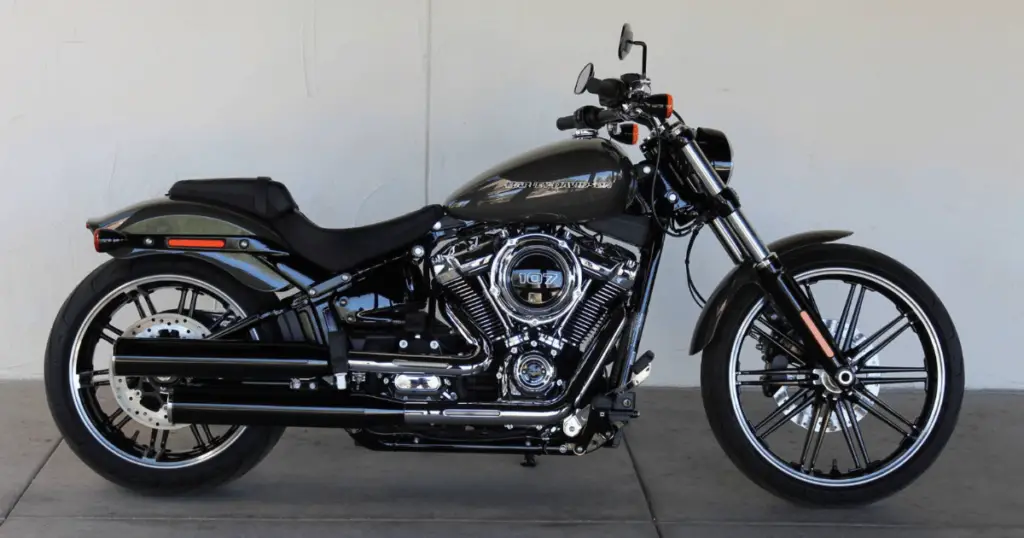
Is the Harley 107 Good for Touring?
The Harley 107 is good for light and moderate touring. It can cruise on US highways and carry a rider with normal luggage.
The answer changes when the motorcycle is heavily loaded. A rider, passenger, luggage, steep grades, strong wind, and high temperatures all increase the work the engine must do.
A 107 may feel adequate in these conditions, but a 114 or 117 will usually provide more relaxed passing power. “Adequate” is not the same as “best for every touring load.”
For touring buyers, also consider:
- Seat comfort
- Wind protection
- Suspension quality
- Fuel range
- Luggage space
- Passenger comfort
- Brake performance
- Cooling system
- Dealer support near your travel routes
The engine is only one part of the touring experience.

Is the Harley 107 Good for Beginners?
The Harley 107 can work for a beginner who has completed proper motorcycle training and can manage the motorcycle’s size and weight.
The engine itself is not unusually difficult to use. Fuel injection gives predictable starting, and the broad torque curve means the rider does not need to rev the motor hard.
However, many Harley models with the 107 are heavy. Weight, seat height, clutch feel, steering at low speed, and braking technique may matter more than the engine size.
A new rider should:
- Take a recognized US motorcycle safety course.
- Practice braking in a safe area.
- Learn slow-speed turns.
- Wear a certified helmet and protective gear.
- Read the owner’s manual.
- Avoid carrying a passenger until basic control skills are strong.
A smaller motorcycle may still be easier for a first-time rider, even if the 107 has manageable power.

How Long Can a Harley 107 Last?
There is no honest mileage number that applies to every Harley 107. Engine life depends on service, heat, use, storage, modifications, and prior damage.
A 107 with regular oil changes, clean air filtration, proper fueling, and timely repairs can serve for many years. A neglected engine can develop costly problems much sooner.
When judging a high-mileage example, inspect condition instead of relying on the odometer alone.
Look for:
- Cold-start behavior
- Oil pressure warnings
- Exhaust smoke
- Strange valve-train noise
- Oil leaks
- Excessive vibration
- Hard starting
- Charging performance
- Service records
- Compression or leak-down results, if needed
A qualified Harley-Davidson technician can perform a deeper inspection before purchase. This is money well spent on an expensive used motorcycle.

Harley 107 Maintenance Checklist
Use the owner’s manual for the exact schedule. A general inspection plan includes:
- Check engine oil level correctly.
- Change engine oil and the oil filter on schedule.
- Inspect the air filter.
- Check spark plugs at the listed interval.
- Inspect the drive belt and pulleys.
- Check primary and transmission fluids.
- Inspect brake pads, rotors, and fluid.
- Test the battery and charging system.
- Check tire pressure and tire age.
- Look for fluid leaks.
- Check for software updates, recalls, or service campaigns.
- Inspect the motorcycle after long storage.
Do not guess fluid levels. Harley-Davidson motorcycles can use separate oil, primary, and transmission fluids. The check method may also vary by model.

Pros and Cons of the Harley 107
Advantages
- Strong low-speed torque
- Good highway ability
- Modern Milwaukee-Eight design
- Four-valve cylinder heads
- Reduced vibration compared with older designs
- Lower cost than larger Milwaukee-Eight engines
- Broad availability in the US used-bike market
- Enough power for most solo street riding
Disadvantages
- Less passing power than the 114 and 117
- Heat can be noticeable in traffic
- Heavy motorcycles may feel slow with a passenger and luggage
- Output varies by model and tune
- Aftermarket modifications can hurt reliability
- Stock suspension may limit the whole motorcycle, even when the engine is capable

Is the Harley 107 Worth Buying Used?
A used Harley 107 can be worth buying when its price, condition, and intended use match. A clean motorcycle with service records is often a better choice than a larger engine with poor maintenance.
Before buying, complete these checks:
- Confirm the exact year and model.
- Run the VIN through a US recall database.
- Inspect for crash damage and oil leaks.
- Start the engine cold, not after the seller has warmed it.
- Listen for unusual mechanical noise.
- Test the clutch, gearbox, brakes, and cruise control if fitted.
- Check tire age and battery condition.
- Ask about engine tuning and aftermarket parts.
- Review maintenance receipts.
- Pay for a professional inspection if the bike is expensive.
A pre-purchase inspection is especially useful when the motorcycle has high mileage, unknown history, performance modifications, or signs of overheating.

Key Takeaways
- The Harley-Davidson Milwaukee-Eight 107 is a good engine for most US street riders.
- It offers useful torque, modern design, and a relaxed riding character.
- It is usually a better value than the larger 114 and 117 engines.
- The 114 or 117 is a better choice for heavy two-up touring or maximum torque.
- Heat, oil leaks, warning lights, and valve-train noise deserve proper checks.
- Maintenance history matters more than the engine’s displacement alone.
- A used 107 should be inspected by VIN, service record, cold start, and mechanical condition.
FAQs
Is the Harley 107 powerful enough?
Yes. The Harley 107 is powerful enough for normal city riding, highway travel, and light touring. It may feel less strong than a 114 or 117 during two-up riding, steep climbs, or high-speed passing.
Is the Harley 107 better than the 114?
Neither is better for every rider. The 107 usually offers a lower purchase price and adequate performance. The 114 gives more torque and suits riders who carry passengers, luggage, or want stronger acceleration.
Does the Harley 107 have reliability problems?
The 107 can develop heat-related complaints, leaks, electrical faults, or valve-train noise, but these issues do not mean every engine is unreliable. Model year, maintenance, modifications, and service history are key factors.
Is the Milwaukee-Eight 107 air-cooled?
Some Harley 107 models are primarily air-cooled, while some Touring versions use additional liquid cooling around the cylinder heads. Check the exact model and year because cooling equipment is not identical across the lineup.
Can you upgrade a Harley 107 to a 114?
Some 107 motorcycles can receive performance or displacement upgrades, but the work is not always a simple bolt-on change. Parts, tuning, cooling, clutch capacity, warranty status, and local emissions rules can affect the project. Use a qualified shop and confirm compatibility for the exact motorcycle.
What oil does a Harley 107 use?
Use the oil grade, specification, and fill procedure listed in the motorcycle’s owner’s manual. Oil capacity and checking methods can vary by model, year, and cooling system.
Conclusion: Is the Harley 107 a Good Engine?
The Harley-Davidson 107 is a good, practical Milwaukee-Eight engine for riders who want classic V-twin character without paying for the largest available motor. It has enough torque for everyday riding and normal highway travel, and its modern design improves on many older Harley engine features.
The main limitation is output. If you regularly ride two-up with luggage, live in steep terrain, or want the strongest factory acceleration, the 114 or 117 may suit you better.
For everyone else, a well-maintained Harley 107 is a balanced choice. Judge the motorcycle by its exact model, maintenance record, cooling system, condition, and intended use—not by the number on the air cleaner alone.