Motorcycle Noise Laws by State: Ultimate Guide to Compliance & Fines

Are you aware of how loud your motorcycle can legally be where you live? Motorcycle noise laws vary a lot from state to state, and not knowing the rules can lead to fines or even getting your bike taken away.
Whether you ride for fun, work, or both, understanding these laws helps you stay safe and avoid trouble. You’ll discover the key noise limits and regulations in each state, so you can enjoy the ride without worrying about breaking the law.
Keep reading to find out what you need to know about motorcycle noise laws where you live.
Federal Motorcycle Noise Standards
Motorcycle Muffler Laws and Noise Pollution Laws for Motorcycles vary widely across the United States. Each state sets its own Motorcycle Sound Level Legislation and Motorcycle Exhaust Noise Restrictions. These rules control the noise motorcycles can produce on public roads. State Motorcycle Sound Limits and State-By-State Motorcycle Noise Rules help reduce noise pollution and protect communities. Despite these differences, Federal Motorcycle Noise Standards create a baseline that all states follow. These standards ensure motorcycles meet minimum Motorcycle Noise Compliance Standards nationwide. They play a key role in Motorcycle Noise Enforcement and help maintain consistent Legal Decibel Limits for Motorcycles.
What Are Federal Motorcycle Noise Standards?
Federal Motorcycle Noise Standards are regulations set by the Environmental Protection Agency (EPA). They limit the noise motorcycles can produce when new. The standards focus on the motorcycle’s muffler and exhaust system. These limits help reduce harmful noise pollution and improve public health.
Federal standards apply to all motorcycles sold or imported in the U.S. They set a maximum noise level measured in decibels (dB). This creates a uniform baseline for state laws and Motorcycle Noise Regulations.
Key Federal Noise Limits For Motorcycles
| Year of Manufacture | Maximum Noise Level (dB) | Measurement Method |
|---|---|---|
| Before 1983 | 80 dB | Stationary test at 50 feet |
| 1983-1985 | 83 dB | Stationary test at 50 feet |
| 1986 and later | 80 dB | Stationary test at 50 feet |
How Federal Standards Affect State Motorcycle Noise Laws
- States must enforce at least the federal noise limits.
- Many states adopt stricter Motorcycle Noise Regulations.
- Federal standards guide Motorcycle Noise Enforcement policies.
- Motorcycle Muffler Laws often reflect these noise limits.
Importance Of Federal Standards In Motorcycle Noise Compliance
Federal Motorcycle Noise Standards help manufacturers design quieter motorcycles. They ensure all new motorcycles meet minimum noise requirements. This protects riders and communities from excessive noise.
States rely on these standards for setting State Motorcycle Sound Limits. They also use federal rules to check compliance during inspections. This reduces conflicts between state and federal Motorcycle Noise Regulations.
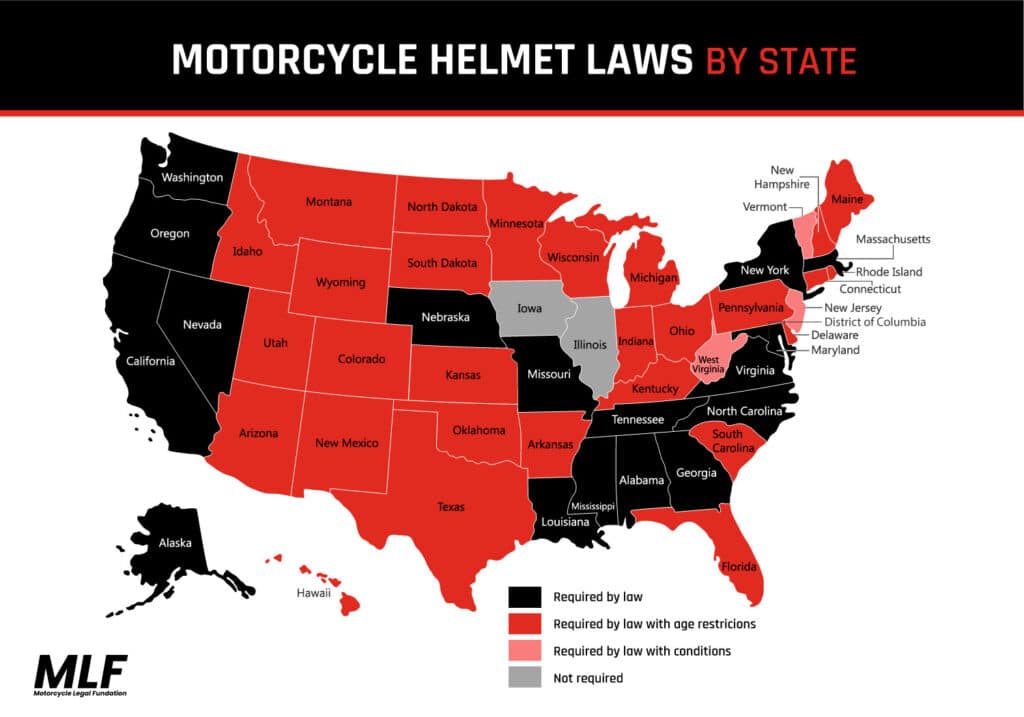
Credit: www.motorcyclelegalfoundation.com
Noise Limits By State
Motorcycle noise laws vary widely across the United States. Each state sets its own State Noise Limits and Decibel Restrictions to control sound levels from motorcycles. These Motorcycle Noise Regulations are part of broader Noise Control Legislation aiming to reduce noise pollution. Understanding Motorcycle Sound Ordinances by region helps riders comply with legal noise levels and avoid fines. Below is a breakdown of State-By-State Noise Rules focused on different U.S. regions.
Northeast States
The Northeast has some of the strictest Motorcycle Exhaust Laws. States like New York, Massachusetts, and Connecticut enforce tight Noise Pollution Standards to protect dense urban areas.
- New York: Maximum 82 decibels at 50 feet. Enforcement is active in cities and highways.
- Massachusetts: Limits sound to 80 decibels measured 20 inches from the exhaust.
- Connecticut: Uses a 96-decibel limit but monitors enforcement in residential zones.
Many states here require motorcycles to have manufacturer-approved mufflers. Police conduct random noise checks to ensure compliance. Some towns add local restrictions, tightening legal noise levels further.
| State | Decibel Limit | Measurement Distance | Notes |
|---|---|---|---|
| New York | 82 dB | 50 feet | Strict urban enforcement |
| Massachusetts | 80 dB | 20 inches | Manufacturer muffler required |
| Connecticut | 96 dB | Unspecified | Focus on residential zones |
Southern States
Southern states vary more in their Motorcycle Noise Enforcement. States like Florida and Texas have moderate restrictions, while others allow louder exhausts.
- Florida: 86 decibels max at 50 feet. Noise checks often occur near highways.
- Texas: No specific statewide decibel limits but cities have their own rules.
- Georgia: Maximum 96 decibels, with some rural leniency.
Many Southern states focus on Noise Control Legislation that balances rider freedom with community peace. Enforcement depends on local authorities. Helmet laws and noise limits often intersect to promote safety and noise control.
| State | Decibel Limit | Notes |
|---|---|---|
| Florida | 86 dB | Highway noise checks common |
| Texas | Varies by city | No statewide decibel limit |
| Georgia | 96 dB | Rural areas less strict |
Midwestern States
The Midwest shows a mix of Motorcycle Sound Ordinances with clear State Noise Limits. Illinois, Ohio, and Michigan have defined decibel caps and active enforcement.
- Illinois: 96 decibels max at 50 feet, with strict penalties for violations.
- Ohio: 82 decibels limit measured 20 inches from the exhaust.
- Michigan: 94 decibels max, focusing on both urban and rural compliance.
These states emphasize education on Motorcycle Noise Regulations alongside enforcement. Many offer resources for riders to test their exhaust noise levels. Some cities add local noise pollution standards to protect neighborhoods.
| State | Decibel Limit | Measurement | Enforcement |
|---|---|---|---|
| Illinois | 96 dB | 50 feet | Strict penalties |
| Ohio | 82 dB | 20 inches | Active enforcement |
| Michigan | 94 dB | Unspecified | Urban and rural focus |
Western States
The Western region enforces diverse Motorcycle Noise Regulations. States like California and Washington have strong noise control laws.
- California: 80 decibels max measured 50 feet away, very strict enforcement.
- Washington: 96 decibels max, with detailed measurement rules.
- Oregon: 96 decibels limit, but some cities enforce 80 dB or less.
The West focuses on balancing outdoor recreation with quiet communities. Motorcycle noise enforcement includes roadside checks and community reporting. Riders often upgrade mufflers to meet legal noise levels.
| State | Decibel Limit | Notes |
|---|---|---|
| California | 80 dB | Strict statewide enforcement |
| Washington | 96 dB | Detailed sound measurement |
| Oregon | 96 dB | Some cities stricter |
Measurement Methods For Noise
Motorcycle noise laws vary across the country, with each state setting specific limits for acceptable sound levels. Understanding the measurement methods for noise is essential for riders and law enforcement. These methods ensure that motorcycles meet state noise limits and comply with vehicle noise ordinances. Proper testing helps reduce motorcycle exhaust noise that can disturb communities and violate noise pollution laws. Sound measurement must follow strict sound measurement standards to keep results accurate and fair.
Decibel Testing Procedures
Decibel level testing is the primary method used to measure motorcycle noise. This process captures the loudness of the exhaust and engine at specific points. Testing devices use sound meters calibrated to follow noise compliance procedures that meet legal standards.
Key points of decibel testing include:
- Using a sound level meter that meets industry standards
- Measuring noise at a fixed distance, usually 50 centimeters to 1 meter from the exhaust
- Testing while the motorcycle is at a specified engine speed or RPM
- Conducting tests in controlled environments to avoid background noise interference
The table below outlines typical decibel limits in some states:
| State | Max Decibel Level | Testing Distance |
|---|---|---|
| California | 80 dB | 50 cm |
| New York | 82 dB | 1 m |
| Texas | 86 dB | 50 cm |
Following proper decibel testing procedures ensures compliance with motorcycle noise regulations. This helps riders avoid fines and reduces noise complaints.
Distance And Environment Factors
Distance and environment factors significantly affect how motorcycle noise is measured and perceived. Sound decreases as distance from the source increases. Therefore, testing rules specify exact distances for noise measurement.
Environmental conditions also impact sound readings. Common factors include:
- Wind speed and direction
- Background noise from traffic or machinery
- Surface types such as asphalt or grass
- Nearby buildings or barriers that reflect sound
Testing locations must minimize interference from these factors. Open, quiet areas are preferred for accurate sound measurement standards. Some states require multiple readings from different angles to confirm results.
The table below shows common environment considerations in state noise rules:
| Factor | Impact on Testing | State Examples |
|---|---|---|
| Wind | Can increase or decrease noise levels | Florida, Oregon |
| Background Noise | May cause false high readings | New Jersey, Illinois |
| Surface Type | Affects sound reflection and absorption | Colorado, Washington |
Understanding environmental noise factors improves the fairness of noise tests. It supports consistent enforcement of state-by-state noise rules and protects communities from excessive motorcycle exhaust noise.
Penalties For Violations
Motorcycle noise laws vary widely by state, and so do the penalties for violations. Most states enforce strict exhaust noise restrictions to control sound levels. These laws use sound level meters to measure noise and set state noise limits on motorcycles. Violating these limits can lead to serious consequences. Understanding the penalties for violations helps riders avoid costly fines and legal trouble. Authorities, including noise enforcement agencies, take motorcycle muffler laws and traffic noise ordinances seriously to reduce noise pollution and protect communities.
Fines And Citations
Fines and citations are the most common penalties for breaking motorcycle noise regulations. These noise violation penalties vary depending on the state and the severity of the offense. Police use sound level meters to check if a motorcycle exceeds the legal decibel limits. If it does, riders can face:
- Monetary fines ranging from $50 to over $500.
- Citations that may add points to the rider’s driving record.
- Repeat offenses leading to increased fines or court appearances.
Some states have a tiered fine system based on how much the noise exceeds the legal limit. For example, a motorcycle 5 decibels over the limit might get a smaller fine than one 15 decibels over.
| State | Typical Fine Range | Additional Notes |
|---|---|---|
| California | $100 – $500 | Fines increase for repeated violations |
| Texas | $200 – $400 | Enforcement includes random noise checks |
| Florida | $150 – $300 | First offense warnings possible |
These fines help reduce noise pollution and encourage riders to maintain compliant mufflers.
Vehicle Impoundment
Some states use vehicle impoundment to enforce motorcycle muffler laws. This penalty applies when a motorcycle repeatedly violates exhaust noise restrictions or causes serious noise disturbances. Impoundment means authorities can temporarily take the motorcycle away. This action aims to:
- Stop ongoing noise violations.
- Force riders to fix their noisy exhaust systems.
- Act as a strong warning against future offenses.
Impoundment periods differ but usually last from a few days to several weeks. Riders must pay towing and storage fees before getting their motorcycle back. Some states require proof that the motorcycle meets state noise limits before release.
Here is a simple outline of the impoundment process:
- Officer measures noise with a sound level meter.
- If the motorcycle exceeds limits, a citation is issued.
- Repeated violations can lead to impoundment.
- Rider must repair the muffler or exhaust.
- Proof of compliance is submitted to the noise enforcement agency.
- Motorcycle is released after fees and proof are accepted.
Legal Consequences
Beyond fines and impoundment, legal consequences can include court hearings and criminal charges. Courts take motorcycle noise regulations seriously because excessive noise harms public peace. Possible legal outcomes include:
- Mandatory court appearances for serious or repeat violations.
- Community service related to noise pollution awareness.
- Suspension or revocation of motorcycle registration or license.
- In rare cases, misdemeanor charges with potential jail time.
States with strict traffic noise ordinances often prosecute repeat offenders to deter ongoing violations. Legal action usually happens after multiple warnings or citations. Courts may also impose higher noise pollution fines or require riders to attend educational programs on noise control.
Being aware of noise violation penalties helps riders comply with the law. Respecting motorcycle muffler laws protects communities from loud noise and avoids costly legal issues.
Exemptions And Special Cases
Motorcycle noise laws vary widely across the United States, with each state setting its own limits and regulations. Many states enforce strict State Motorcycle Noise Limits to reduce noise pollution and protect residents. However, certain Exemptions and Special Cases apply to specific motorcycles or events. These rules recognize that some motorcycles, like vintage models, have unique sounds or that rallies involve large groups generating more noise. Understanding these exceptions helps riders comply with Motorcycle Sound Regulations while enjoying their passion.
Vintage And Classic Motorcycles
Vintage and classic motorcycles often have different noise rules than modern bikes. Many states offer special exemptions to protect the heritage and character of these older machines. These exemptions relate to Classic Bike Sound Laws and Vintage Motorcycle Noise Restrictions. The reason is simple: older motorcycles produce distinct sounds that are part of their charm.
Common features of vintage motorcycle noise exemptions include:
- Relaxed Exhaust Noise Compliance limits compared to newer motorcycles
- Special registration or labeling indicating the bike’s classic status
- Allowances for original exhaust systems, even if louder
- Periodic inspections focusing more on safety than noise levels
Here is a brief overview of how some states treat vintage motorcycle noise:
| State | Noise Limit (dB) | Special Exemptions |
|---|---|---|
| California | 80 dB | Classic bikes registered before 1975 may have relaxed noise limits |
| Texas | 82 dB | Historic motorcycles exempt from some sound regulations |
| New York | 78 dB | Vintage motorcycles allowed original exhaust without modification |
Riders should always check State-By-State Motorcycle Noise Rules for vintage bikes before riding. These exemptions balance respecting history with controlling noise pollution.
Motorcycle Events And Rallies
Motorcycle events and rallies create unique challenges for noise regulation. Large groups of motorcycles can generate significant noise, raising concerns under Motorcycle Rally Noise Ordinances and Motorcycle Event Sound Guidelines. Many states and local governments have set rules to manage noise levels during these events.
Typical regulations for rallies include:
- Time limits on loud engine revving and exhaust noise
- Maximum sound levels allowed in event areas
- Requirements for sound level testing before events
- Restrictions on after-hours noise to protect local residents
Some states have detailed Motorcycle Sound Level Standards specifically for rallies. Event organizers must often obtain permits and ensure Exhaust Noise Compliance by participants. Failure to follow these rules can lead to fines or event shutdowns.
The table below shows examples of rally noise regulations in selected states:
| State | Max Noise Level (dB) | Restrictions |
|---|---|---|
| Florida | 90 dB | Quiet hours after 10 PM, mandatory sound checks |
| Colorado | 88 dB | Permit required, noise monitoring during event |
| Ohio | 85 dB | Ban on revving engines before 9 AM and after 9 PM |
Understanding Noise Pollution Motorcycle Laws for events helps riders and organizers avoid problems. Observing these rules supports a safer and more enjoyable environment for everyone.
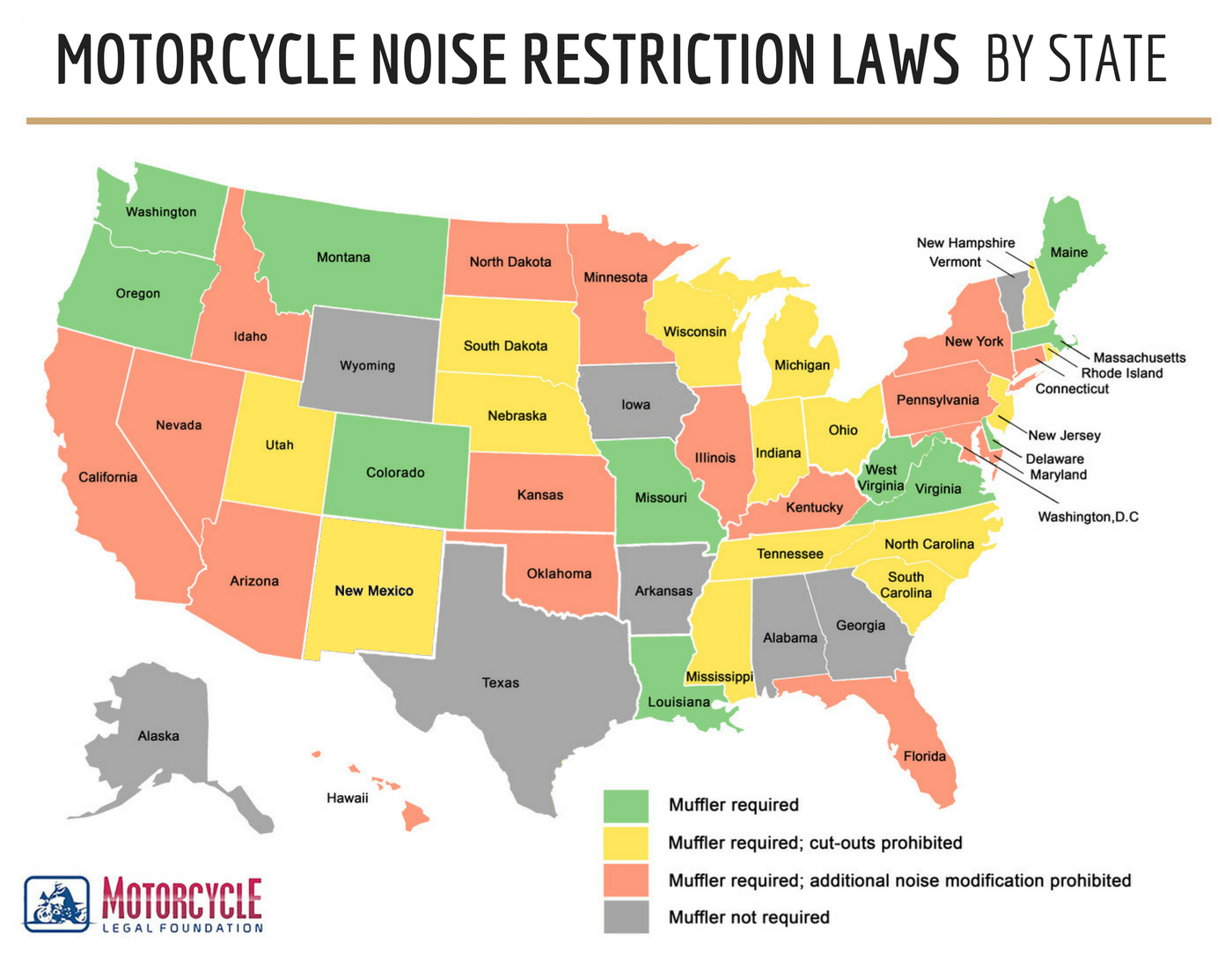
Credit: roadguardians.org
Noise Reduction Technologies
Motorcycle noise laws vary widely by state, influencing how riders manage their bike’s sound levels. Noise Reduction Technologies play a key role in helping riders follow these laws without sacrificing performance. These technologies include changes to exhaust systems and accessories designed to lower sound output. They help meet State Motorcycle Sound Limits and ensure Exhaust Noise Compliance under strict Motorcycle Muffler Laws. Understanding these options aids compliance with Motorcycle Noise Enforcement and Noise Pollution Laws Motorcycles face nationwide.
Aftermarket Exhaust Systems
Aftermarket exhaust systems offer a popular way to control motorcycle noise. Many riders replace stock exhausts to reduce noise and improve bike performance. However, states often have strict Aftermarket Exhaust Restrictions that affect what modifications are legal.
These exhaust systems come with features like:
- Built-in mufflers designed to lower decibel output
- Noise-reducing baffles inside the pipes
- Materials that absorb sound better than stock exhausts
Choosing an aftermarket exhaust compliant with State Noise Control Motorcycle laws helps avoid fines and ticketing. Some states enforce Legal Decibel Limits Motorcycles strictly, so riders must check local limits before installation.
| Feature | Benefit | Compliance Aspect |
|---|---|---|
| Adjustable baffles | Control sound output | Meets noise limits |
| High-quality mufflers | Reduce harsh noise | Passes muffler laws |
| Durable materials | Last longer with sound control | Ensures long-term compliance |
Properly fitted aftermarket exhausts balance sound and performance. Riders should research Motorcycle Noise Regulations by state to select legal options. This helps avoid conflicts with Motorcycle Noise Enforcement officers.
Sound Dampening Accessories
Sound dampening motorcycle gear provides extra noise control beyond exhaust systems. These accessories reduce sound pollution and improve rider comfort. They support compliance with State Motorcycle Sound Limits and Noise Pollution Laws Motorcycles must follow.
Common sound dampening accessories include:
- Silencers and inserts for exhaust pipes
- Sound-absorbing wraps around the muffler
- Helmet liners that reduce wind and road noise
- Noise-canceling earplugs for riders
These items reduce excessive noise and help meet Exhaust Noise Compliance standards. Many states require motorcycles to have proper mufflers or sound control devices. Adding sound dampening gear can prevent violations of Motorcycle Muffler Laws.
Below is a comparison of popular sound dampening accessories:
| Accessory | Purpose | Compliance Benefit |
|---|---|---|
| Silencer Inserts | Lower exhaust noise | Meets legal decibel limits |
| Muffler Wraps | Absorb and reduce sound | Helps pass noise inspections |
| Helmet Liners | Reduce rider noise exposure | Improves comfort, less noise complaints |
| Earplugs | Protect hearing, reduce sound | Supports long rides in noisy areas |
Using sound dampening accessories with proper exhaust systems ensures full compliance with State Motorcycle Sound Limits. This approach supports clean, quiet riding and avoids issues with Motorcycle Noise Enforcement.
Impact On Communities And Riders
Motorcycle noise laws vary widely by state, directly affecting communities and riders alike. These laws aim to control sound levels to reduce noise pollution while allowing riders to enjoy their motorcycles. The impact on communities and riders is significant because sound affects quality of life and safety on the roads. Understanding how State Motorcycle Sound Limits and Motorcycle Noise Regulations work helps balance these needs.
Noise Complaints And Community Relations
Communities often raise Community Noise Complaints about loud motorcycles disrupting peace. Excessive noise can lead to tension between residents and riders. Vehicle Noise Ordinances aim to limit these disturbances through clear rules. Local governments use Noise Control Enforcement to handle complaints and ensure compliance.
Common issues include:
- Loud exhaust systems causing disturbance in residential areas
- Frequent noise during night hours
- Non-compliance with Motorcycle Exhaust Restrictions
Here is a simple table showing how noise complaints relate to enforcement actions:
| Type of Complaint | Common Enforcement Action |
|---|---|
| Excessive engine noise | Warning or fine |
| Illegal exhaust modifications | Vehicle inspection or citation |
| Nighttime noise violations | Curfew enforcement |
Maintaining good community relations requires riders to respect local noise rules. It also depends on clear communication from authorities about Motorcycle Noise Regulations. When both sides cooperate, noise conflicts drop, making neighborhoods more peaceful.
Balancing Safety And Enjoyment
Riders need to enjoy their motorcycles without creating unsafe noise levels. Balancing Noise And Safety means setting Safe Riding Noise Levels that protect hearing and reduce distractions for all road users. Many states set Motorcycle Sound Level Standards to achieve this balance.
Important factors include:
- Allowing some engine sound for rider awareness and safety
- Preventing noise so loud it startles drivers or pedestrians
- Ensuring Motorcycle Exhaust Restrictions do not reduce performance dangerously
States differ in their approach:
| State | Maximum Allowed dB Level | Notes |
|---|---|---|
| California | 80 dB | Strict Noise Pollution Laws, frequent checks |
| Texas | 86 dB | More lenient, but enforces Noise Control Enforcement |
| New York | 82 dB | Focus on urban noise reduction |
Riders can follow these tips to meet noise limits while enjoying their rides:
- Choose motorcycles with factory-approved exhausts
- Maintain exhaust systems to prevent excess noise
- Avoid revving engine unnecessarily in neighborhoods
Respecting State Motorcycle Sound Limits helps protect hearing and improve road safety. It also promotes a positive image of the motorcycle community.

Credit: ohv.parks.ca.gov
FAQs For Motorcycle Noise Laws by State
What Are Motorcycle Noise Limits By State?
Motorcycle noise limits vary by state, often measured in decibels. Most states set maximum sound levels between 80-95 dB. These limits help reduce noise pollution and ensure rider compliance with local laws. Check specific state regulations for exact limits and enforcement details.
How Do States Enforce Motorcycle Noise Laws?
States enforce noise laws through periodic inspections and roadside checks. Violations can result in fines, warnings, or vehicle impoundment. Law enforcement uses sound meters to measure noise levels. Consistent enforcement promotes quieter riding and community safety.
Are Aftermarket Exhausts Legal In All States?
Aftermarket exhaust legality differs by state and local laws. Some states allow them if they meet noise limits, while others ban certain types. Riders should verify their state’s rules before installing aftermarket parts to avoid fines or penalties.
Can Loud Motorcycle Noise Lead To Fines?
Yes, excessive motorcycle noise can lead to fines in most states. Fines vary based on severity and repeat offenses. Authorities use decibel readings to determine violations. Complying with noise limits helps avoid costly penalties.
Conclusion
Motorcycle noise laws differ across states and matter a lot. Riders must know their local rules to avoid fines. Quiet riding helps keep peace in neighborhoods. Respect for these laws shows good responsibility. Check updates often, as rules can change.
Staying informed keeps you safe and legal on the road. Noise limits protect everyone’s comfort and hearing. Follow the laws, enjoy your ride without trouble.