
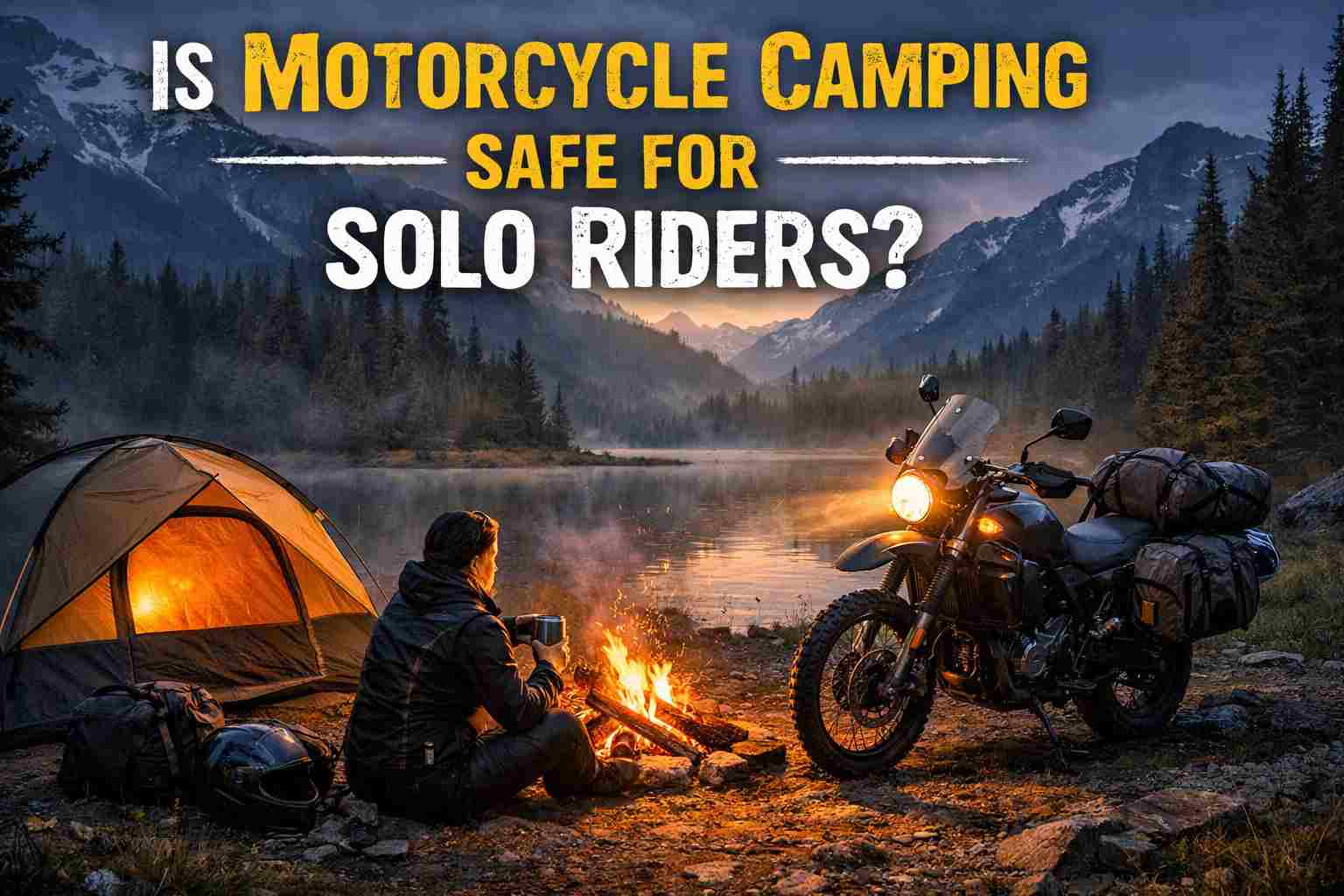
Is Motorcycle Camping Safe For Solo Riders
Riding a motorcycle alone on an open road, camping under the stars—this idea attracts many adventurers. The freedom, the fresh air, and the simple joy of being in nature make motorcycle camping a dream for countless riders worldwide. But is it safe when you go solo? This question matters, especially for people who love riding but also worry about risks.
Solo motorcycle camping is different from traveling with a group or in a car. You depend on your own decisions, your own gear, and your own ability to handle surprises. Safety concerns are real, but with the right preparation, knowledge, and mindset, many dangers can be reduced.
In this guide, you’ll learn what makes solo motorcycle camping unique, what risks exist, and how to manage them smartly. You’ll also discover practical tips, common mistakes, and honest advice that can help you decide if this adventure suits you.
Why People Choose Solo Motorcycle Camping
For many, solo motorcycle camping is more than just a way to travel—it’s a lifestyle. Some riders crave the independence of setting their own schedule, choosing their route, and finding campsites off the beaten path. Others see it as a way to disconnect from daily stress and connect with nature in a pure, direct way.
Many solo campers say they feel more focused on their surroundings. Riding alone means you notice the small things: the change in air, the sound of animals, the feel of the road. There’s also a sense of achievement. When you set up camp alone and wake up to a quiet sunrise, you know you did it all yourself.
While the rewards are great, solo camping is not for everyone. You have to be comfortable with being alone, making fast decisions, and handling unexpected problems. Understanding these challenges is the first step to a safe and enjoyable experience.
Main Risks For Solo Motorcycle Campers
Every adventure has its risks. Knowing the main dangers helps you prepare and stay safe. Here are the top risks solo riders face when camping with their motorcycle:
- Accidents and injuries: Without a travel partner, even a small injury can become serious if you’re far from help.
- Mechanical breakdowns: If your motorcycle stops working in a remote area, you must fix it yourself or wait for help.
- Theft and crime: Campsites are not always secure. Thieves may target solo campers, especially at night.
- Wildlife encounters: Wild animals can be curious or dangerous, especially if you camp in unfamiliar areas.
- Weather changes: Sudden storms, heat, or cold can cause trouble if you’re not prepared.
- Navigation mistakes: Getting lost is easier when you travel alone, especially in remote places without cell signal.
- Health issues: Dehydration, food poisoning, or illness can become worse if you can’t get help quickly.
- Mental fatigue and loneliness: Long days on the road and quiet nights can affect your mood and alertness.
- Legal trouble: Camping in the wrong place or crossing borders without the right papers can bring unexpected problems.
Some of these risks are clear, but others—like mental fatigue and legal mistakes—often surprise new solo campers. Understanding all these dangers is key to staying safe.
Safety Preparation Before The Trip
Good safety begins long before you start your engine. Solid preparation can turn a risky trip into a safe and fun adventure. Here’s what you should do:
Route Planning
Choose your route carefully. Use detailed maps and GPS, but also bring a paper map in case devices fail. Mark fuel stops, camping sites, and emergency services along your route.
- Pick well-traveled roads if you’re new to solo camping.
- Tell someone your full route and check in often.
- Know alternate routes in case of roadblocks or weather changes.
Motorcycle Maintenance
A reliable bike is your best friend on the road. Check:
- Tires (pressure and tread)
- Brakes and lights
- Oil and fluids
- Chain and sprockets
- Battery and electrics
Bring a basic toolkit, spare fuses, tire repair kit, and a way to charge your phone. If your bike is due for a big service, get it done before your trip.
Packing Essentials
What you pack can make or break your trip. Here’s a common list for solo motorcycle campers:
- Tent and sleeping bag (suitable for the season)
- Food and water (enough for emergencies)
- First aid kit
- Weather-appropriate clothing
- Flashlight or headlamp
- Navigation tools (GPS, maps, compass)
- Power bank for charging devices
- Emergency whistle and signaling tools
- Cash and ID
Don’t overload your bike. Secure your gear with bungee cords or dry bags. Test your pack before leaving, and adjust for balance.
Health And Safety Supplies
Solo riders must be ready for small injuries or sickness. Your first aid kit should have:
- Bandages and antiseptic
- Painkillers and allergy medicine
- Emergency blanket
- Tweezers and safety pins
- Any personal medication
If you have allergies or health conditions, wear a medical ID bracelet.
Insurance And Documents
Carry all needed documents:
- Motorcycle registration and insurance
- Driver’s license (plus international permit if needed)
- Health insurance card
- Emergency contact info
Check your insurance covers both travel and motorcycle in other states or countries.
Choosing Safe Campsites
Where you sleep matters a lot, especially when solo. A good campsite is not just about a pretty view—it’s about safety, privacy, and peace of mind.
Public Vs. Private Campgrounds
Public campgrounds (state parks, national forests) often have more people, rangers, and facilities. They’re usually safer for solo riders, especially beginners.
Private campgrounds can offer more security, showers, and power, but sometimes cost more.
Wild Camping
Wild camping means sleeping outside of official campsites. It’s popular for the real adventure feel, but it brings higher risks:
- Harder to get help if needed
- Greater wildlife exposure
- More chance of trespassing (and legal trouble)
Always check local laws. If wild camping is allowed, pick a spot far from busy roads but not too isolated. Look for flat, dry ground, and avoid animal trails.
Signs Of A Safe Campsite
A safe campsite usually has:
- Good cell signal (if possible)
- Nearby water (but not too close to prevent flooding)
- Shelter from wind and storms
- Visibility from main roads (for help, but not so visible that you attract thieves)
- No signs of recent animal activity
Set up before dark so you can check your surroundings.
On-the-road Safety Tips
While riding to your campsite, road safety is just as important as camp safety. Here are some key tips for solo riders:
- Ride within your limits. Don’t push for distance if you’re tired or it’s getting dark.
- Check weather often. Sudden changes can make roads dangerous.
- Take regular breaks. This helps avoid fatigue and keeps you alert.
- Stay hydrated and eat well. Low energy can cause mistakes.
- Keep your phone charged and on. Use airplane mode in low-signal areas to save battery.
- Trust your instincts. If an area feels unsafe, move on.
- Avoid risky shortcuts. Stick to roads you can handle.
It’s better to arrive late than not at all. Solo riders don’t have backup, so every choice matters more.
Nighttime Safety For Solo Campers
Night brings special risks. Darkness hides hazards and attracts wildlife. Here’s how to stay safe:
Camp Setup
Set up your tent before dark, away from cliffs, rivers, or known animal paths. Store food in sealed containers, and keep it away from your sleeping area.
Lighting
Use a headlamp or lantern. Keep a flashlight by your side at all times. Mark your tent lines with reflective tape to avoid tripping.
Security
Lock your motorcycle and cover it if possible. Don’t leave valuables in plain sight. Zip your tent when inside, and keep a whistle or alarm nearby.
Fire Safety
If you build a fire, keep it small and controlled. Never leave it unattended. Extinguish fully before sleeping.
Managing Fear
It’s normal to feel nervous at night alone. Simple routines—like checking your gear and listening to local sounds—can help you relax. Some riders listen to calming music or white noise to sleep better.
Handling Emergencies Alone
Dealing with emergencies is harder when you’re alone. Prepare for the most likely problems:
Mechanical Breakdown
If your bike breaks down:
- Move to a safe spot off the road.
- Assess the problem calmly.
- Use your toolkit for simple repairs (flat tires, loose chains).
- If you can’t fix it, use your phone or emergency beacon.
- Mark your location and wait where you’re visible.
Injury Or Illness
If you’re hurt:
- Stop and treat injuries immediately.
- Use your first aid kit.
- If you need help, call emergency services or use a signaling device.
- Stay calm. Panic can make things worse.
Getting Lost
If you lose your way:
- Don’t keep riding blindly. Stop, check your map and GPS.
- Backtrack to a known location if possible.
- If lost in the wild, stay near your bike—it’s easier to spot than a person.
- Signal for help with a whistle, flashlight, or fire.
Theft Or Crime
If you face crime:
- Don’t resist. Protect yourself first.
- Remember details for police.
- Report the incident as soon as you can.
Weather Disaster
If severe weather hits:
- Seek shelter fast (under bridges, in sturdy buildings, or thick forest).
- Wait out the worst before moving.
- Avoid flooded roads or campsites.
Pro Tip
Carry a small personal locator beacon (PLB). It can send your location to rescuers even without cell service. It’s a smart investment for solo adventures.
Real-life Stories: Lessons From Solo Motorcycle Campers
Hearing from real people helps you see both the risks and rewards. Here are a few brief examples:
- Case 1: Flat tire on a remote road
John, a solo rider in Colorado, got a flat tire 30 miles from the nearest town. He had a repair kit, but no CO2 inflator. He had to walk 6 miles before he found cell service. Now, he always carries both patches and a mini pump.
- Case 2: Bear encounter at camp
Maria camped in Montana and left food near her tent. A bear came close at night. She scared it away by making noise, but learned to store food far from camp in a bear-proof bag.
- Case 3: Sudden sickness
Mike got food poisoning after eating at a roadside diner in Oregon. He had to rest for two days at his campsite. His well-stocked first aid kit and extra water kept him safe until he felt better.
These stories show how simple mistakes can turn into big problems. Learning from others helps you avoid the same traps.

Credit: motocampnerd.com
Comparing Solo Vs. Group Motorcycle Camping Safety
Many riders wonder if it’s better to camp alone or with friends. Here’s a quick comparison of solo and group camping from a safety point of view:
| Factor | Solo Camping | Group Camping |
|---|---|---|
| Independence | Full control, but no backup | Shared decisions, group support |
| Safety in Emergencies | Must handle alone | Help is close by |
| Gear Sharing | Carry all yourself | Can split among group |
| Wildlife Risks | More vulnerable | Less likely to be targeted |
| Flexibility | Go at your own pace | Must match group pace |
| Loneliness | Can be an issue | Social support |
Solo camping gives more freedom but less safety net. Groups can handle problems together, but you lose some independence. Your choice depends on your skills and what you want from the trip.
Essential Gear For Solo Motorcycle Camping
Having the right gear makes solo camping much safer and more comfortable. Here are the essentials, plus some extras that solo riders often miss:
Motorcycle Gear
- Helmet (full-face for best protection)
- Armored riding jacket and pants
- Waterproof gloves and boots
- High-visibility vest or reflectors
Camping Gear
- Lightweight tent (quick setup is best)
- Sleeping bag (rated for expected temperatures)
- Sleeping pad (for comfort and insulation)
- Small camp stove and fuel
- Water filter or purification tablets
- Compact cookware and utensils
Safety And Survival Gear
- First aid kit (see earlier list)
- Multi-tool or knife
- Fire starter (waterproof matches, lighter)
- Headlamp with extra batteries
- Signaling device (whistle, mirror, or beacon)
- Emergency blanket
Navigation And Communication
- GPS unit (with offline maps)
- Smartphone with power bank
- Paper map and compass
Extra Items Solo Riders Overlook
- Cable lock for securing your bike at night
- Bear spray in wild animal areas
- Duct tape (for quick repairs)
- Emergency cash hidden separately
- Earplugs (for noisy campsites or wind)
Packing light is important, but don’t skip safety items. Practice packing your bike before the trip to make sure everything fits and the weight is balanced.
Credit: www.youtube.com
Mental Preparedness For Solo Camping
Physical safety is only part of the challenge. Solo camping also tests your mental strength. Here’s what helps:
- Accept loneliness. It’s normal to feel alone sometimes. Plan ways to stay positive—bring a book, music, or journal.
- Stay alert. Solo riders can’t afford to get careless. Check your gear and surroundings often.
- Stay adaptable. Plans can change fast. Be ready to adjust without stress.
- Trust your instincts. If something feels wrong, move or change your plan.
Solo camping builds confidence. The first trip is often the hardest, but each time you go, you’ll feel stronger and safer.
Common Mistakes Solo Riders Make (and How To Avoid Them)
Many solo campers repeat the same errors, especially on their first trips. Here’s what to watch for:
1. Underestimating The Weather
Always check the forecast and pack for unexpected changes. Cold nights, sudden rain, or heat waves can ruin your trip.
2. Poor Route Planning
Don’t rely only on GPS. Double-check your route and know where you’ll refuel, eat, and sleep.
3. Overpacking Or Underpacking
Too much gear makes riding hard; too little leaves you unprepared. Make a checklist and test-pack.
4. Ignoring Local Rules
Wild camping is not legal everywhere. Research laws and avoid fines or trouble with locals.
5. Camping Too Close To Roads Or Trails
This increases the risk of theft and unwanted attention. Choose spots with some privacy.
6. Not Sharing Plans
Always tell someone where you’ll be. Check in when you reach your campsite.
7. Skipping First Aid Training
A small injury can get worse fast. Learn basic first aid before your trip.
8. Forgetting Spare Keys
Losing your only bike key far from home is a nightmare. Bring a spare and hide it on your bike.
9. Not Checking Local Wildlife Risks
Every area has different animals. Know what to expect, and carry needed deterrents.
10. Ignoring Fatigue
Don’t push for long rides if you’re tired. Rest is key to safety.
Avoiding these mistakes can make the difference between a great trip and a dangerous one.
Credit: womenridersnow.com
Data: Motorcycle Camping Accident Rates
It’s helpful to look at actual data when thinking about safety. While not all countries track motorcycle camping accidents separately, studies show:
- Motorcycle accidents are 28 times more likely to be fatal than car crashes (US NHTSA, 2019).
- Solo riders have a higher risk of delayed rescue after crashes or breakdowns, especially in remote areas.
- Camping incidents most often involve minor injuries, theft, or weather-related problems.
Here’s a brief comparison of accident types for solo vs. group motorcycle campers, based on survey data and reported cases:
| Incident Type | Solo Riders (%) | Group Riders (%) |
|---|---|---|
| Mechanical breakdowns | 18 | 9 |
| Wildlife encounters | 13 | 5 |
| Theft/Crime | 7 | 3 |
| Lost/Navigation errors | 12 | 4 |
| Serious injury | 4 | 2 |
Solo camping is not extremely dangerous, but the numbers show that risks are higher alone, especially for breakdowns and getting lost.
How To Make Solo Motorcycle Camping Safer
You can’t remove all risk, but you can lower it a lot. Here are advanced tips that even experienced riders sometimes miss:
- Use a tracking app that lets friends or family follow your location in real time.
- Take a motorcycle maintenance class. Being able to fix more than just a flat tire makes a big difference.
- Join online camping groups. Other riders often share alerts about road closures, weather, or crime hotspots.
- Check your gear every day. Small problems (like a loose bolt or slow tire leak) can become big issues if ignored.
- Learn basic self-defense. It’s rare to need it, but it builds confidence.
- Practice camp setup at home. The faster you can set up, the less exposed you are in unfamiliar places.
- Carry two communication devices (phone plus satellite messenger) if you go off-grid.
- Store digital copies of all documents in your email or cloud storage.
- Be ready to walk away from a campsite if it feels wrong—even if it’s late.
Taking these extra steps sets you apart from most new solo campers and can save you from real trouble.
When Solo Camping Might Not Be Safe
There are times when even prepared riders should think twice about solo camping:
- In areas with high crime rates or recent reports of attacks on campers
- During extreme weather seasons (hurricanes, blizzards, etc.)
- If you’re new to both motorcycling and camping
- When traveling in countries with strict or unclear camping laws
- If you have a health condition that could need help fast
In these cases, consider joining a group or picking safer, more public campgrounds. Safety is more important than pride.
Is Solo Motorcycle Camping Worth The Risk?
Only you can answer this. For many, the rewards—freedom, peace, and a sense of achievement—outweigh the risks. But solo motorcycle camping is not about ignoring danger; it’s about managing risk with skill, preparation, and the right attitude.
If you’re well-prepared, know your limits, and respect the environment, solo camping can be one of the most rewarding adventures you’ll ever try. Start small, learn from each trip, and build up to bigger journeys as your confidence grows.
For more information on safe motorcycle camping, you can visit the Wikipedia page on motorcycle touring.
Frequently Asked Questions
Is Solo Motorcycle Camping Safe For Beginners?
Solo motorcycle camping can be safe for beginners if you start with short trips, stick to well-known campgrounds, and follow basic safety steps. Practice setting up your tent and packing your bike at home first.
What Should I Do If I Break Down Far From Help?
Stay with your bike, use your phone or emergency beacon to call for help, and make yourself visible. Carry a basic repair kit and know how to fix common problems like flat tires.
How Can I Avoid Wildlife Problems When Camping Alone?
Store food away from your tent, use animal-proof containers, and avoid camping on animal trails. Learn about local wildlife before your trip and carry deterrents like bear spray if needed.
What Is The Most Important Item For Solo Motorcycle Camping Safety?
A reliable communication device is most important. This can be a fully charged phone, a satellite messenger, or a personal locator beacon for areas without signal.
Can I Camp Anywhere With My Motorcycle?
No, wild camping is not legal everywhere. Always research local rules. Use public campgrounds if you’re unsure, and respect private property to avoid trouble.
Solo motorcycle camping is an adventure like no other. With the right preparation and awareness, you can enjoy the journey and return home safely, full of stories and memories.