Do Coolant Additives Work? The Truth for Motorcycle Owners

As a motorcycle owner, I’ve seen plenty of products that promise lower engine temperatures, better cooling performance, and longer engine life. One of the most common questions riders ask is: do coolant additives work, or are they just another bottle of marketing hype?
If you’ve noticed your bike running hot in traffic, during summer rides, or on long highway trips, it’s natural to look for an easy solution. Coolant additives often claim they can improve heat transfer and reduce operating temperatures.
In this guide, I’ll explain what coolant additives are, how they work, when they can help, and when they probably won’t make much difference. My goal is to give you practical information you can use before spending money on any cooling system product.
Quick Answer
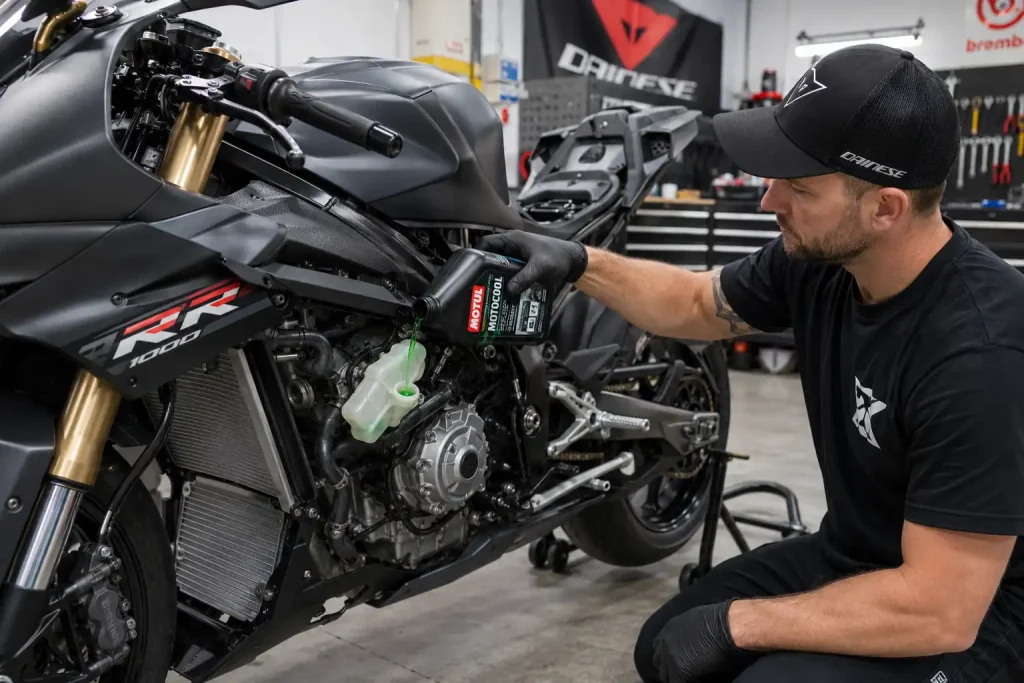
Yes, coolant additives can work, but their results are often modest. Most quality additives help coolant transfer heat more efficiently and may reduce operating temperatures by a few degrees under certain conditions. They are not a fix for a faulty radiator, worn water pump, clogged cooling passages, or low coolant levels.
For most motorcycle riders, a coolant additive works best as a supplement to a healthy cooling system rather than a replacement for proper maintenance.
What Are Coolant Additives?
Coolant additives are chemical products designed to improve the performance of your engine’s cooling system. They are typically mixed with coolant or distilled water and circulate throughout the engine and radiator.
The main goal is to improve heat transfer. Some additives also help prevent corrosion, reduce scale buildup, lubricate water pumps, and protect metal components.
Common benefits manufacturers claim include:
- Lower engine operating temperatures
- Improved heat transfer efficiency
- Better cooling during stop-and-go traffic
- Reduced corrosion inside the cooling system
- Longer cooling system life
Popular examples include products from official manufacturers and performance cooling brands. Many racers use specialized additives because even small temperature reductions can help under extreme conditions.
You can learn more about cooling system basics from the National Highway Traffic Safety Administration and your motorcycle manufacturer’s maintenance guide.
How Do Coolant Additives Work?
Here’s the simple explanation.
Heat moves from the engine into the coolant. The coolant then carries that heat to the radiator, where it is released into the air.
Some additives reduce the surface tension of the coolant. This allows the liquid to make better contact with metal surfaces inside the engine. Better contact can improve heat transfer and reduce hot spots.
Many additives also contain corrosion inhibitors that help protect aluminum, magnesium, steel, and other metals commonly found in motorcycle cooling systems.
Most quality products focus on:
- Reducing surface tension
- Improving heat exchange
- Preventing corrosion
- Protecting seals and water pumps
- Reducing mineral deposits
The result may be slightly lower temperatures, especially when the bike is working hard.
Do Coolant Additives Actually Lower Engine Temperature?
In many cases, yes. However, expectations should stay realistic.
Most riders who notice improvements report temperature reductions ranging from a few degrees to around 10°F under favorable conditions. The exact result depends on the motorcycle, riding conditions, cooling system design, and the product used.
Coolant additives are more likely to help when:
- You ride in hot climates
- You spend time in heavy traffic
- You ride performance motorcycles
- Your cooling system is already in good condition
- You regularly maintain coolant levels
They are less likely to make a noticeable difference when major cooling system problems already exist.Warning:
If your motorcycle is overheating, do not assume a coolant additive will solve the problem. Overheating often points to a mechanical issue that needs inspection.
When Coolant Additives Can Help Motorcycle Riders

There are several situations where coolant additives may provide real value.
Heavy Traffic Riding
Airflow through the radiator drops significantly when traffic slows down. An additive may help improve cooling efficiency during long waits at traffic lights.
Hot Weather Conditions
Summer riding places extra stress on cooling systems. Any improvement in heat transfer can help keep temperatures more stable.
Performance Riding
Track riders and aggressive sport bike owners often look for every possible cooling advantage.
Older Motorcycles
An additive can provide extra corrosion protection for aging cooling systems.
| Riding Situation | Potential Benefit |
|---|---|
| City commuting | Reduced heat buildup in traffic |
| Summer touring | Improved temperature stability |
| Track riding | Better heat management under load |
| Older motorcycles | Additional corrosion protection |
| Mountain riding | Improved cooling during long climbs |
When Coolant Additives Will Not Help
This is where many riders get disappointed.
A coolant additive cannot repair damaged cooling system components.
If your motorcycle has any of the following problems, an additive is unlikely to fix them:
- Leaking radiator
- Failed thermostat
- Broken cooling fan
- Low coolant level
- Worn water pump
- Blocked radiator fins
- Internal cooling system blockage
Before adding any product, inspect the cooling system carefully. You may also find our guide on motorcycle cooling system maintenance helpful.
Coolant Additive vs Fresh Coolant
One common mistake is using an additive instead of replacing old coolant.
Fresh coolant often delivers a bigger improvement than an additive because coolant degrades over time. Corrosion inhibitors become less effective, and contamination can reduce cooling performance.
| Maintenance Option | Expected Benefit | Priority |
|---|---|---|
| Fresh coolant replacement | High | Very High |
| Radiator cleaning | High | Very High |
| Coolant additive | Moderate | Medium |
| Fan inspection | High | Very High |
| Water pump inspection | High | Very High |
For most riders, maintenance should always come first.
For additional maintenance recommendations, resources from Consumer Reports and manufacturer service manuals provide useful guidance.
Common Mistakes to Avoid
- Using additives to hide overheating problems
- Mixing incompatible coolant types
- Ignoring coolant replacement intervals
- Adding too much product
- Skipping radiator inspections
- Using tap water instead of distilled water when required
Expert Tips from Alex
Robert Tip:
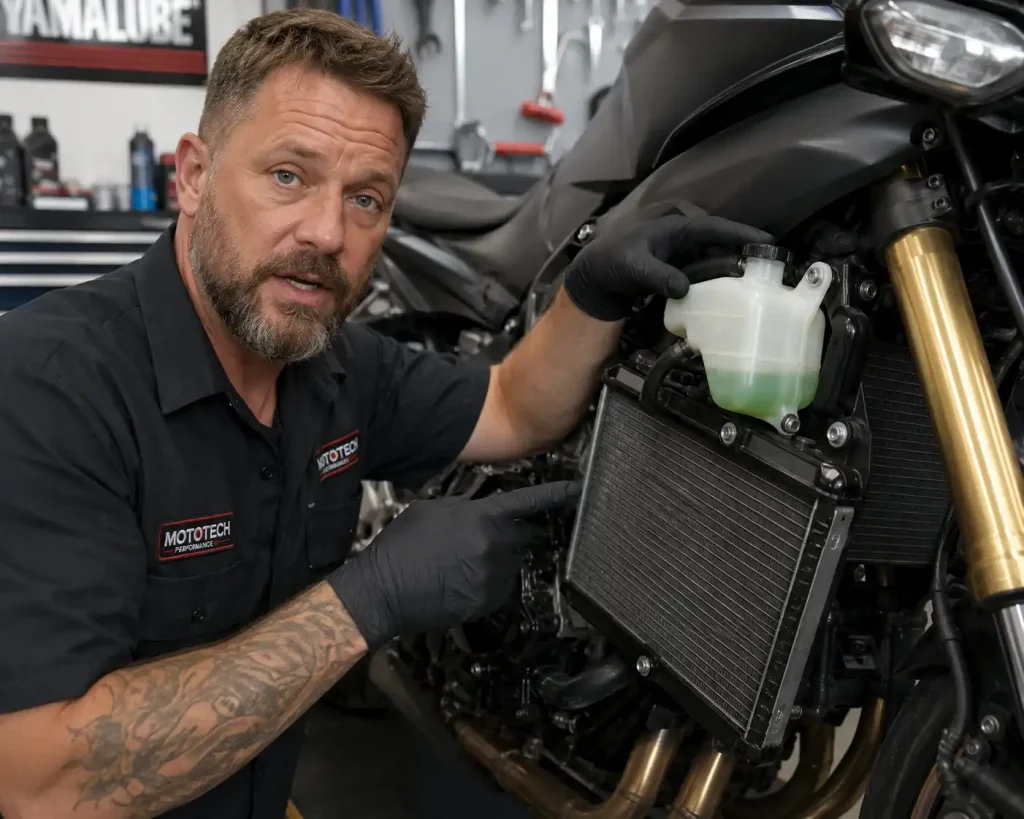
I always check coolant age before considering additives. Fresh coolant often solves more problems than riders expect.Robert Jackson:
Keep radiator fins clean. Dirt, bugs, and debris can reduce cooling efficiency faster than most riders realize.
Robert Tip:
If your bike regularly overheats in traffic, inspect the cooling fan operation before buying performance additives.
Robert Tip:
Follow the manufacturer’s mixing instructions exactly. More product does not automatically mean better results.
Robert Tip:
Track riders may notice greater benefits because cooling systems operate closer to their limits under heavy loads.
Key Takeaways
- Coolant additives can improve heat transfer and cooling efficiency.
- Most riders should expect modest temperature reductions, not dramatic changes.
- They work best in a properly maintained cooling system.
- They cannot fix mechanical cooling system problems.
- Fresh coolant and routine maintenance usually provide the biggest benefits.
Frequently Asked Questions
Do coolant additives really reduce engine temperature?
Yes. Many quality additives can reduce temperatures slightly by improving heat transfer. Results vary depending on the motorcycle and riding conditions.
Are coolant additives safe for motorcycles?
Most reputable products are safe when used according to manufacturer instructions. Always verify compatibility with your motorcycle’s cooling system and coolant type.
Can coolant additives stop overheating?
No. They may help improve cooling performance, but they cannot repair damaged cooling system components. Mechanical issues must be diagnosed and fixed separately.
Should I use coolant additive with new coolant?
Many riders do. If the product is compatible with your coolant, it can provide additional corrosion protection and heat transfer benefits.
How often should coolant additives be added?
Follow the instructions provided by the manufacturer. Some products are added with each coolant change, while others have different maintenance schedules.
Do racers use coolant additives?
Yes. Performance riders and racers often use specialized cooling products because even small temperature reductions can be valuable during high-performance riding.
What is more important, fresh coolant or an additive?
Fresh coolant is usually more important. Proper maintenance provides the foundation for cooling system performance, while additives serve as a supplement.
Conclusion
So, do coolant additives work? In most cases, yes. They can improve heat transfer, support cooling system protection, and help reduce operating temperatures slightly under the right conditions.
The key is having realistic expectations. A coolant additive is not a miracle fix. It works best when paired with fresh coolant, a clean radiator, a healthy water pump, and a properly functioning cooling system.
If you’re looking to improve motorcycle reliability and temperature control, start with maintenance first. Then consider a quality additive as an extra layer of protection. You may also want to read our guide on how often to change motorcycle coolant for more cooling system tips.