Is Motorcycle Coolant the Same as Car Coolant?

If you’ve ever stood in an auto parts store staring at rows of coolant bottles, you’ve probably wondered: is motorcycle coolant the same as car coolant? It’s a common question, especially when it’s time for a coolant change and you want to avoid buying the wrong product.
I’m Alex Carter, and I’ve spent years researching motorcycle maintenance products and helping riders make practical decisions. The good news is that the answer is fairly simple once you understand how cooling systems work.
In this guide, I’ll explain the differences between motorcycle and car coolant, when they can be interchangeable, and how to choose the right coolant for your bike.
Quick Answer
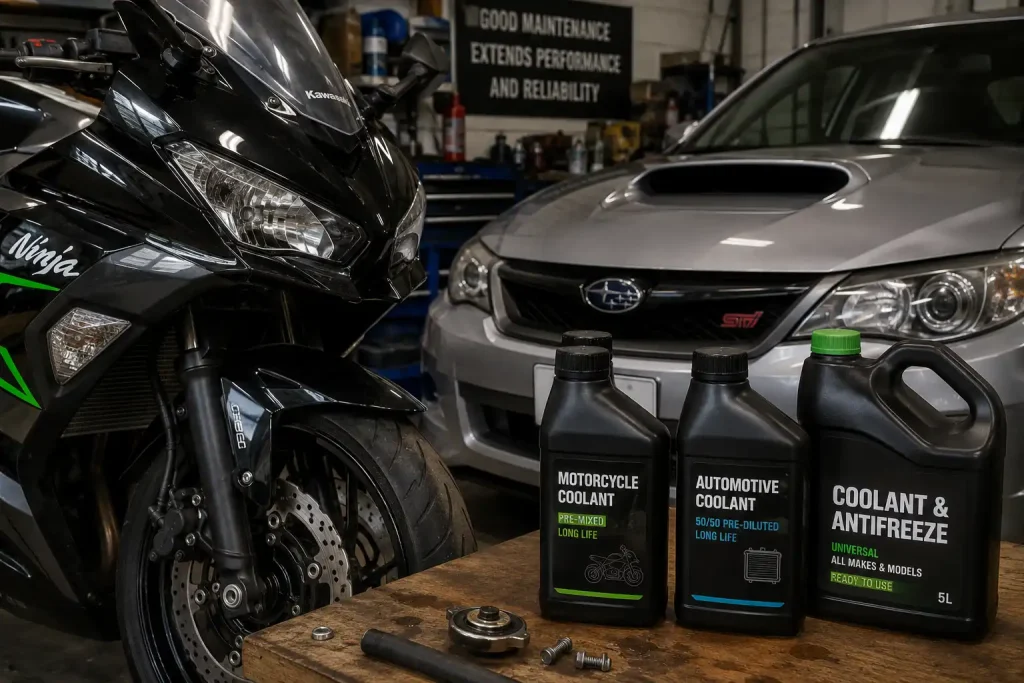
No, motorcycle coolant is not always the same as car coolant. Many coolants use similar base ingredients, but motorcycles often have different cooling system requirements and may use coolants formulated specifically for motorcycle engines.
Some car coolants can work safely in motorcycles if they meet the motorcycle manufacturer’s specifications and do not contain harmful additives. However, using the wrong coolant may increase corrosion risk, reduce cooling performance, or damage certain engine components over time.
The safest approach is to follow the coolant type recommended in your owner’s manual.
Why Motorcycles and Cars Use Coolant
Modern liquid-cooled engines create a lot of heat. Coolant circulates through passages in the engine and radiator to help control operating temperature.
Both motorcycles and cars rely on coolant to:
- Prevent overheating
- Protect against freezing
- Reduce corrosion inside the cooling system
- Lubricate the water pump
- Extend cooling system life
Most coolants use a mixture of water and either ethylene glycol or propylene glycol. The difference often comes from the additive package designed to protect metals, seals, and cooling system components.
Robert‘s Tip: Never assume coolant color tells you whether it is compatible. Different manufacturers use different dye colors for similar formulas.
What Makes Motorcycle Coolant Different?
Motorcycle engines often run at higher RPMs and may experience different heat cycles compared to car engines. Because of this, some motorcycle manufacturers recommend coolants designed specifically for powersports applications.
Motorcycle coolant may offer:
- Enhanced aluminum protection
- Compatibility with motorcycle water pumps
- Reduced risk of deposit buildup
- Protection for high-revving engines
- Long-term corrosion resistance
Many motorcycles use aluminum engine components and radiators. Choosing a coolant that protects aluminum surfaces is especially important.
You can learn more about coolant maintenance from the Consumer Reports vehicle maintenance resources and your motorcycle manufacturer’s service recommendations.
Can You Use Car Coolant in a Motorcycle?
Sometimes, yes. The key factor is whether the coolant meets the specifications listed by the motorcycle manufacturer.
Many riders successfully use automotive coolant products that meet the required standards. However, not every car coolant is safe for every motorcycle.
| Coolant Feature | Usually Safe for Motorcycles? |
|---|---|
| Silicate-free formula | Often Yes |
| Aluminum-safe formula | Yes |
| Meets manufacturer specification | Yes |
| Unknown additive package | Not Recommended |
| Universal coolant without verification | Check manual first |
Before switching products, check your owner’s manual and verify the coolant specifications carefully.
How to Check Whether a Coolant Is Compatible
Compatibility matters more than whether the bottle says “motorcycle” or “automotive.”
Here’s what I recommend checking:
- Read your motorcycle owner’s manual.
- Look for required coolant standards.
- Verify the coolant is safe for aluminum engines.
- Confirm it is silicate-free if required.
- Check whether the coolant is premixed or concentrated.
- Never mix incompatible coolant types.
Many motorcycle manufacturers publish maintenance information on their official websites. The Car and Driver maintenance section also offers helpful explanations about coolant technology.
Signs You May Be Using the Wrong Coolant
If an incompatible coolant is used, problems may not appear immediately. In some cases, damage develops slowly.
Watch for these warning signs:
- Engine running hotter than normal
- Rust or contamination in the coolant
- Coolant discoloration
- Frequent overheating
- Water pump issues
- Radiator corrosion
| Symptom | Possible Cause |
|---|---|
| Overheating | Incorrect coolant formulation |
| Rust in coolant | Poor corrosion protection |
| Sludge formation | Mixed incompatible coolants |
| Water pump wear | Improper additives |
| Coolant leaks | Damaged seals or overheating |
Can You Mix Motorcycle Coolant and Car Coolant?
Generally, I don’t recommend mixing coolant types unless the manufacturer specifically approves it.
Different coolants use different additive technologies. Mixing them can reduce corrosion protection and shorten coolant life.
If you are unsure what coolant is currently in your motorcycle, a complete flush is usually the safest option before switching products.
Warning: Mixing incompatible coolants can create deposits that reduce cooling efficiency and may clog passages inside the radiator.
Premixed vs Concentrated Coolant
Motorcycle owners often see two types of coolant on store shelves.
Premixed Coolant
- Ready to use
- No measuring required
- Convenient for most riders
- Less chance of mixing errors
Concentrated Coolant
- Requires dilution with distilled water
- May be more economical
- Allows custom freeze protection ratios
- Requires careful mixing
For most everyday riders, premixed coolant is the simplest choice.
How Often Should Motorcycle Coolant Be Changed?
Service intervals vary by manufacturer and coolant type.
Many motorcycles require coolant replacement every two to five years. Some long-life coolants may last even longer.
Always follow your motorcycle’s maintenance schedule. The National Highway Traffic Safety Administration (NHTSA) also encourages proper vehicle maintenance to support safe operation.
If you’re planning a complete service, you may also want to read our guide on how to flush a motorcycle cooling system.
Best Practices for Motorcycle Coolant Maintenance
Keeping your cooling system healthy doesn’t take much effort.
- Check coolant levels regularly.
- Inspect hoses for leaks.
- Use distilled water when required.
- Replace coolant on schedule.
- Inspect the radiator cap periodically.
- Address overheating immediately.
These simple steps can help prevent expensive engine repairs later.
Expert Tips from Robert
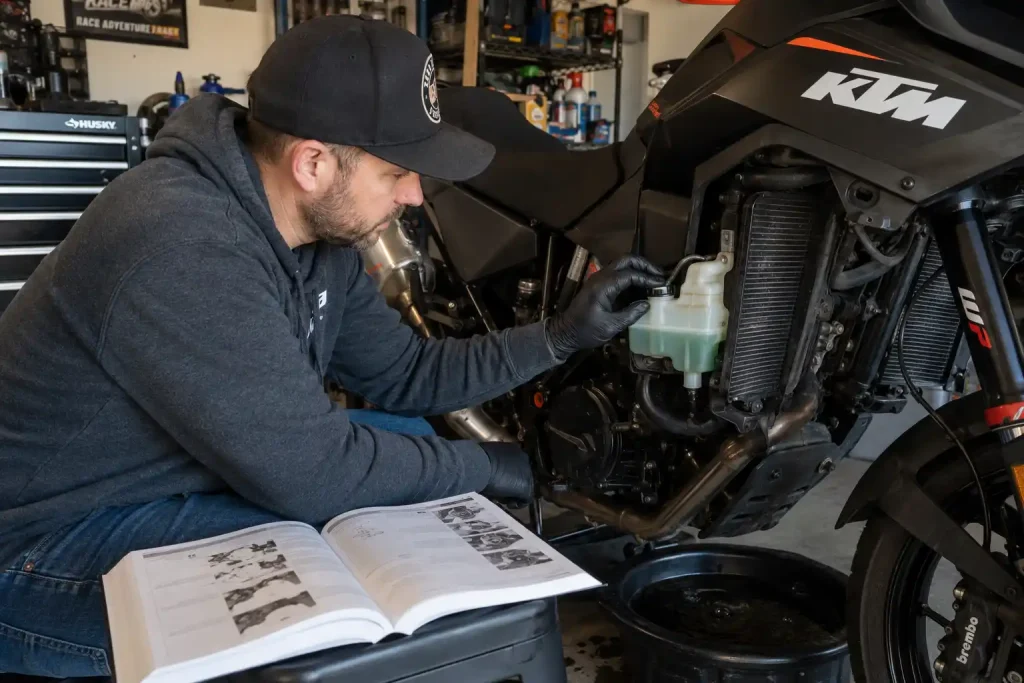
Tip #1: I always recommend checking the owner’s manual before buying coolant. A two-minute check can prevent costly mistakes.
Tip #2: Don’t rely on coolant color alone. Read the specification label carefully.
Tip #3: If your bike’s service history is unknown, consider flushing the system before changing coolant types.
Tip #4: Use distilled water when mixing concentrated coolant. Tap water may introduce minerals that cause deposits.
Tip #5: Check for leaks after every coolant service. Small leaks often appear before larger problems develop.
Key Takeaways
- Motorcycle coolant and car coolant are not always identical.
- Compatibility matters more than marketing labels.
- Always follow the specifications in your owner’s manual.
- Avoid mixing unknown coolant types.
- Regular coolant maintenance helps prevent overheating and corrosion.
Frequently Asked Questions
Can I use automotive coolant in my motorcycle?
Yes, in many cases you can use automotive coolant if it meets the specifications required by your motorcycle manufacturer. Always verify compatibility before filling the system.
What happens if I use the wrong coolant in my motorcycle?
The wrong coolant can reduce corrosion protection, cause overheating issues, and potentially damage cooling system components over time. Problems may develop slowly rather than immediately.
Does coolant color determine compatibility?
No. Coolant color is not a reliable indicator of compatibility. Always check the product specifications and manufacturer recommendations.
Should motorcycle coolant be changed regularly?
Yes. Most motorcycles require coolant replacement every few years depending on the coolant type and manufacturer recommendations.
Can I mix different coolant brands?
Mixing brands is not always recommended because additive packages may differ. It’s safest to use compatible products or perform a full coolant flush first.
Is premixed coolant better than concentrated coolant?
Neither is inherently better. Premixed coolant is more convenient, while concentrated coolant offers flexibility when mixed correctly with distilled water.
How do I know which coolant my motorcycle needs?
The owner’s manual is the best source. It lists the exact coolant specifications and maintenance requirements for your motorcycle.
Conclusion
So, is motorcycle coolant the same as car coolant? Sometimes yes, sometimes no. The important thing is not whether the bottle is marketed for cars or motorcycles, but whether it meets the specifications your motorcycle requires.
Before adding coolant, take a few minutes to check your owner’s manual and verify compatibility. That small step can help protect your engine, radiator, and water pump for years to come.
If you’re working on a complete cooling system service, you may also find our guide on motorcycle radiator maintenance tips helpful.