How to Clean Motorcycle Exhaust Pipe Inside for a Like-New Shine

Cleaning the inside of your motorcycle exhaust pipe might sound like a small maintenance task, but it can make a big difference to your bike’s performance and lifespan. Over time, carbon deposits, rust, and oily residue build up inside the exhaust, which restricts airflow, causes strange noises, and even leads to engine problems.
Many riders focus only on shining the outside of their pipes, forgetting the unseen interior where real problems begin. If you want your motorcycle to run smoothly and sound as it should, you need to understand the best ways to clean inside the exhaust pipe.
This guide explains the entire process, from the tools you need to step-by-step cleaning instructions. You’ll also learn about safety, common mistakes, and tips that most beginners miss. Cleaning inside an exhaust pipe might look tricky, but with the right approach, it’s a task anyone can do at home.
Let’s get started on bringing your bike’s exhaust back to its best.
Why Cleaning The Inside Of The Exhaust Pipe Matters
Many riders underestimate the effect of a dirty exhaust interior. As you ride, carbon deposits and unburnt fuel stick to the inside walls of the pipe. Over weeks and months, this build-up narrows the passage for gases, making your engine work harder. You might notice:
- Reduced engine power
- Strange smells or smoke
- Metallic rattling sounds
- Increased fuel consumption
In serious cases, blocked exhausts cause overheating or damage to engine valves. A clean exhaust helps your bike run cooler, sound better, and last longer.
Tools And Materials You’ll Need
Before you start, gather all the tools and products needed for cleaning. Here’s a list of essentials:
- Safety gloves and goggles – To protect your skin and eyes from chemicals and debris.
- Socket wrench set – For removing the exhaust if necessary.
- Wire brush (flexible and straight) – Helps scrub inside curved pipes.
- Pipe cleaning brush or bottle brush – For deep cleaning inside the pipe.
- Degreaser or exhaust cleaner – Breaks down carbon and oil deposits.
- WD-40 or rust penetrant – Loosens stubborn rust.
- Shop towels or rags – For wiping out residue.
- Sandpaper (medium and fine grit) – For removing tough rust inside.
- Compressed air can or air compressor – Blows out loose debris after scrubbing.
- Plastic scraper or wooden stick – To reach and scrape inside corners.
Optional but useful:
- Rubber plugs to seal the pipe ends during soaking
- Small bucket for soaking the exhaust in cleaner
- Face mask for extra protection from dust and fumes
Preparing Your Motorcycle
Cleaning inside the exhaust means dealing with chemicals, dirt, and possibly removing the pipe. Preparation is important for safety and efficiency.
- Let your motorcycle cool down completely. Exhausts stay hot long after riding.
- Move to a well-ventilated area or work outside to avoid breathing fumes.
- Place your bike on a center stand or paddock stand for stability.
- Lay out all your tools within easy reach.
If you plan to remove the exhaust pipe for a deeper clean, loosen the bolts with your socket wrench while supporting the pipe to prevent damage.
Step-by-step: Cleaning The Inside Of The Exhaust Pipe
1. Remove The Exhaust (if Needed)
For the best access, it’s often easier to remove the exhaust. Most pipes are held by a few bolts and a clamp. Take care not to force anything—rusted bolts can snap. If the pipe is stuck, apply WD-40 and wait 10 minutes before trying again.
2. Inspect The Inside
Shine a flashlight into the pipe. Look for carbon deposits, rust patches, and greasy residue. If you see loose debris or flakes, tap the pipe gently to knock them out.
3. Scrape Out Loose Build-up
Use a flexible wire brush or a bottle brush to scrub the inner walls. Push the brush all the way through, twisting as you pull back. Repeat several times. For stubborn areas, a plastic scraper or wooden stick helps break up hard spots without scratching the metal.
4. Apply Degreaser Or Cleaner
Spray a generous amount of degreaser or specialized exhaust cleaner inside the pipe. Make sure the product you use is safe for your type of exhaust (steel, chrome, or titanium).
- Plug one end of the pipe with a rubber plug or rag.
- Pour or spray cleaner inside until the interior is coated.
- Let it soak for 10–20 minutes. This gives the chemicals time to break down tough carbon and oil.
5. Scrub Again
After soaking, scrub the inside thoroughly with your pipe cleaning brush. For rust, use medium grit sandpaper wrapped around the brush. Move back and forth, focusing on areas with heavy build-up.
6. Rinse And Dry
Flush the inside with warm water. If the pipe is still attached to the bike, use a spray bottle or hose with low pressure—be careful not to spray water into the engine. If the pipe is off, fill and shake gently, then pour out.
Dry the pipe completely. Use a towel or blow out the moisture with compressed air. Any water left inside can cause rust.
7. Treat Rusty Areas
For pipes with heavy rust:
- Apply rust penetrant and let it sit for several minutes.
- Scrub with sandpaper or a wire brush until the rust is gone.
- Wipe clean with a towel.
If the rust has created holes or weak spots, it may be time to replace the exhaust.
8. Final Inspection And Reinstallation
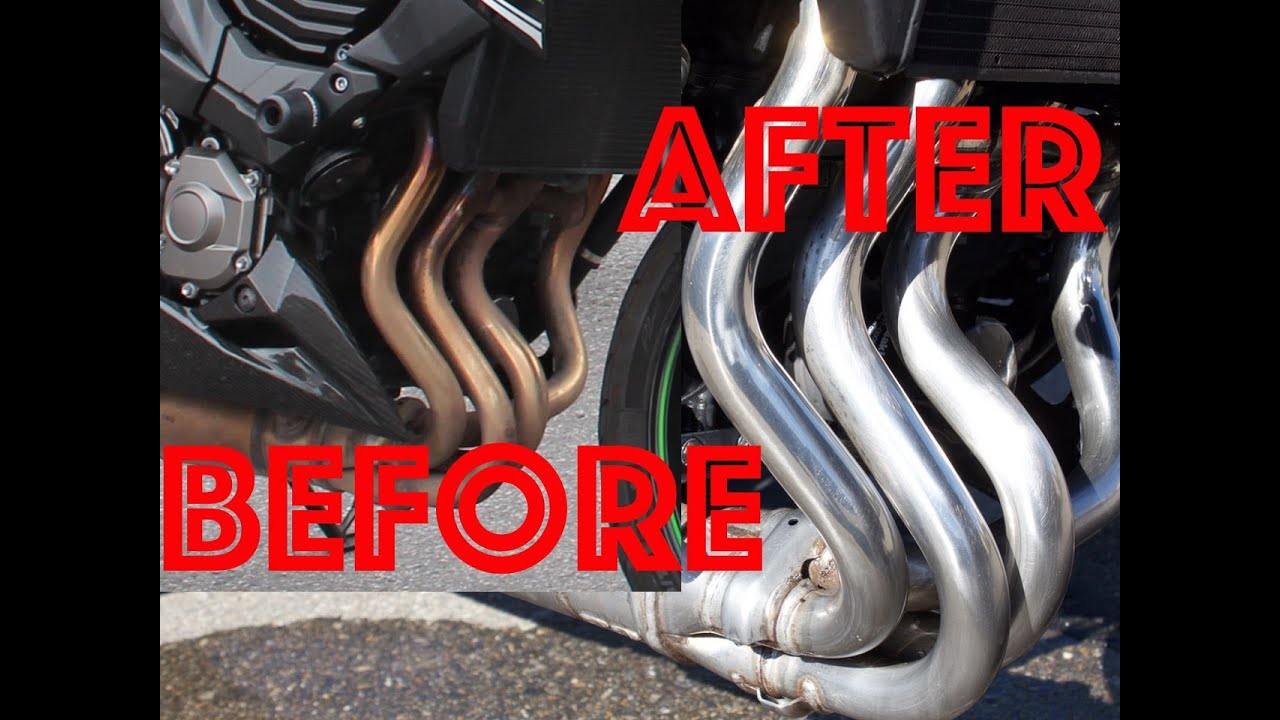
Look through the pipe to make sure it’s clean and dry. Reinstall the exhaust carefully, tightening bolts evenly to avoid leaks. Start your bike and let it idle for a few minutes—this helps evaporate any remaining moisture.
Credit: www.youtube.com
What To Avoid When Cleaning
Beginners often make mistakes that can damage their exhaust or even their engine. Here are key things to avoid:
- Do not use harsh acids or strong solvents that can eat away at the metal or chrome.
- Never use steel wool inside the pipe, as it can leave behind tiny fragments that cause rust.
- Don’t push debris further into the engine—always clean with the pipe removed if possible.
- Avoid high-pressure water inside the exhaust. Water can reach the engine or sensors and cause problems.
- Never light a fire or use heat to “burn out” deposits. This can damage the pipe and is dangerous.
How Often Should You Clean Inside The Exhaust?
The ideal cleaning frequency depends on how and where you ride:
- Daily riders (commuting or long trips): Clean every 6–12 months.
- Occasional riders: Once a year is usually enough.
- After riding in rain, mud, or salty roads: Clean soon after to prevent rust.
- If you notice a change in sound, power, or see smoke: Check and clean the exhaust immediately.
If you live in a humid climate, clean more often to prevent rust from starting inside.
Comparison: Home Cleaning Vs. Professional Service
It’s helpful to compare the two main options for cleaning your exhaust pipe:
| Aspect | Home Cleaning | Professional Service |
|---|---|---|
| Cost | Low (only supplies) | High ($30–$100+) |
| Time Needed | 1–2 hours | 1–2 days (includes drop-off) |
| Quality | Good if done carefully | Excellent (special tools, full inspection) |
| Convenience | Do it anytime | No work for you, but travel needed |
Home cleaning is affordable and gives you control, but a professional service offers deeper cleaning and checks for hidden problems.
Common Questions Beginners Have
You might wonder about chemicals, special tools, or what happens if you skip this job. Here are some quick answers:
- Is oven cleaner safe for exhaust pipes? It’s too harsh for most pipes and can damage finishes.
- Can I clean my exhaust without removing it? Yes, but removing it gives better access and prevents debris from entering the engine.
- What if my exhaust is chrome or titanium? Use only cleaners safe for your pipe’s finish—read product labels carefully.
Credit: grmoto.co.uk
Advanced Tips For A Cleaner Exhaust
Experienced riders often use these extra steps for even better results:
- Soak the pipe overnight in a bucket with degreaser (if the pipe is removable). This loosens heavy deposits.
- Use a flexible borescope camera to check inside bends and tight spots.
- Apply a thin layer of high-temperature oil inside after cleaning (for steel pipes only), which helps prevent rust.
- Install a removable baffle for easier cleaning in the future.
If you ride a two-stroke motorcycle, you’ll need to clean more often, as these engines produce more carbon build-up.
Example: Real-world Cleaning Results
Let’s look at a real case. A rider cleaned his five-year-old exhaust, which had never been serviced. Before cleaning, the bike’s sound was muffled, and acceleration felt slow. After following these steps—removing the pipe, soaking in degreaser, scrubbing, and drying—the sound returned to normal, and throttle response improved.
He also noticed less smoke from the tailpipe. This simple job restored performance without any expensive repairs.

Credit: www.vitalmx.com
Comparing Popular Exhaust Cleaning Products
Choosing the right cleaner makes the job easier. Here’s a quick look at three common options:
| Product | Best For | Cost | Notes |
|---|---|---|---|
| WD-40 Specialist Degreaser | General use | $$ | Widely available, safe for most metals |
| Simple Green | Light carbon deposits | $ | Eco-friendly, less effective on heavy rust |
| Gunk Engine Degreaser | Heavy oil/rust | $$$ | Strong fumes, use outside only |
Always read product labels to make sure they’re safe for your type of exhaust.
Why Most Riders Ignore The Inside
It’s easy to polish the outside and think your exhaust is clean. The truth is, the inside collects much more grime. Many riders skip this job because it takes time, or they don’t realize the effect on performance. But a clean exhaust helps your engine breathe, which means better power, smoother rides, and less risk of expensive repairs later.
Environmental And Safety Notes
Never pour used degreaser or dirty water down the drain. Collect waste liquids in a container and bring them to a recycling center or hazardous waste collection point. Always wear gloves and a mask if you’re sensitive to fumes or dust. Proper safety makes the job much easier and safer.
For more on safe waste disposal, the EPA’s guide on household hazardous waste is a reliable resource.
Keeping your motorcycle’s exhaust pipe clean inside is more important than many riders think. It’s a simple task that pays off with better performance, a longer-lasting engine, and a bike that sounds as good as it looks. With the right tools and a little time, you can do this job yourself and enjoy smoother rides for years to come.
FAQs (How to Clean Motorcycle Exhaust Pipe Inside)
How Do I Know If My Exhaust Pipe Needs Cleaning Inside?
If you notice loss of power, muffled sounds, smoke, or a metallic noise from your exhaust, it’s time to check inside. Also, if your bike is over a year old or has never had an exhaust cleaning, it’s a good idea to inspect.
Can I Use Vinegar Or Cola To Clean Carbon Inside The Exhaust?
Both vinegar and cola can break down some carbon, but they’re less effective than proper degreasers. They also leave sticky residue and can cause rust if not washed out completely. Stick to products designed for exhausts.
Is It Safe To Use A Pressure Washer Inside The Exhaust Pipe?
No. Pressure washers can force water into the engine or sensors, leading to damage. Always use low-pressure water and dry thoroughly after cleaning.
What Should I Do If Rust Keeps Coming Back?
Persistent rust means moisture is trapped inside or the pipe’s coating is damaged. After cleaning, try applying high-temp oil or rust-preventive spray and store your bike in a dry place.
How Long Does It Take To Clean Inside A Motorcycle Exhaust?
Most DIY cleanings take 1 to 2 hours, depending on how dirty the pipe is and whether you remove it from the bike. Soaking overnight can help with heavy build-up but adds more time.
Cleaning the inside of your motorcycle exhaust pipe isn’t difficult, but it makes a real difference. With these steps and tips, you’ll keep your bike running strong and sounding great.