
Mastering motorcycle riding requires dedicated practice in safe, appropriate environments. This guide explores various options, starting with structured training courses like the MSF, moving to controlled, low-risk areas such as empty parking lots, and eventually progressing to low-traffic roads. Choosing the right location based on your skill level is crucial for building confidence and developing essential skills safely.
Where to Practice Motorcycle Riding
So, you’ve caught the bug, the two-wheeled dream is calling, and you’re ready to learn how to ride a motorcycle. That’s fantastic! Riding a motorcycle offers an incredible sense of freedom and adventure. But before you hit the open road, there’s a vital step: practice. Lots of it. Learning the ropes in a safe, controlled environment is paramount, not just for your safety, but for building the confidence that makes riding truly enjoyable.
Knowing where to practice motorcycle riding is just as important as knowing what to practice. You wouldn’t learn to swim in the middle of the ocean, right? The same logic applies here. Picking the right spot based on your current skill level can make all the difference in your learning curve, helping you avoid unnecessary stress and potential hazards. Let’s explore the best places and methods where to practice motorcycle riding, guiding you from absolute beginner to confident rider.
Key Takeaways
- Structured Training is Key: Begin your journey where to practice motorcycle riding with formal courses like the MSF, which provide professional instruction, controlled environments, and often loaner bikes.
- Start in Controlled Environments: Empty, private parking lots or industrial parks on weekends are ideal places where to practice motorcycle riding for beginners to master basic controls without traffic stress.
- Progress Gradually to Public Roads: Once comfortable with fundamentals, low-traffic residential streets or rural roads offer a realistic but less intimidating environment where to practice motorcycle riding in real-world scenarios.
- Prioritize Safety Gear & Buddy System: Always wear full protective gear and consider practicing with an experienced rider or informing someone of your practice location for safety.
- Advanced Practice Options Exist: For experienced riders, track days or off-road trails offer specialized environments where to practice motorcycle riding and hone advanced skills.
- Continuous Learning is Essential: Motorcycle riding is a lifelong learning process; regularly seek new opportunities where to practice motorcycle riding and refine your abilities.
Quick Answers to Common Questions
Can I teach myself where to practice motorcycle riding without any formal training?
While possible, it’s highly recommended against. Formal training like the MSF Basic RiderCourse provides structured instruction, loaner bikes, and a safe, controlled environment, significantly reducing the risks associated with self-teaching.
What gear is absolutely essential for practicing motorcycle riding?
You should always wear a DOT/ECE approved full-face helmet, armored motorcycle jacket, full-fingered gloves, motorcycle-specific pants (with knee/hip armor), and over-the-ankle motorcycle boots. This “All The Gear, All The Time” (ATGATT) approach protects you even during slow-speed falls.
How long should I practice in an empty parking lot before going on public roads?
There’s no set timeframe, as it depends on individual learning speed. You should feel consistently comfortable and confident with basic maneuvers like starting, stopping, shifting, slow-speed turns, and emergency braking before venturing onto public roads.
Is it legal to practice motorcycle riding in any empty parking lot?
It depends on the property owner and local regulations. While many riders use them, it’s always best to seek permission from the property owner to avoid trespassing issues. Public parking lots might have specific rules against such activities.
Should I practice alone or with someone else?
Always practice with an experienced rider if possible. They can offer guidance, spot potential issues, and assist in an emergency. If practicing alone, always inform someone of your location and expected return time for safety.
📑 Table of Contents
Formal Training: The Best Starting Point
When it comes to learning how to ride and finding where to practice motorcycle riding, formal training is, without a doubt, the gold standard. These courses are specifically designed to teach you the fundamentals in a safe, structured environment.
Motorcycle Safety Foundation (MSF) and Similar Programs
In the United States, the Motorcycle Safety Foundation (MSF) Basic RiderCourse (BRC) is the industry benchmark. Many states even waive the riding portion of your licensing exam if you complete an MSF course. Similar programs exist globally, often endorsed by government road safety agencies.
What you’ll find: These courses typically provide training motorcycles (often small, easy-to-handle models), helmets, and expert instructors who are certified to teach riding techniques. The practice environment is usually a large, closed parking lot, specifically set up with cones and marked paths for various drills. This is an ideal place where to practice motorcycle riding without the worry of traffic or other hazards.
Benefits: The biggest advantage here is safety. You’re learning under supervision, on a bike you don’t own, and in an environment where mistakes are expected and corrected without serious consequences. You’ll learn everything from basic controls (clutch, throttle, brakes) to slow-speed maneuvers, emergency braking, and hazard avoidance. It’s the absolute best place where to practice motorcycle riding and build a solid foundation.
Advanced Rider Courses
Even after you’ve got your license and some road experience, formal training doesn’t have to stop. Advanced RiderCourses (ARCs) or similar programs focus on honing skills like cornering, emergency maneuvers at higher speeds, and developing defensive riding strategies. These courses often use larger, more powerful bikes (your own, typically) and are excellent opportunities where to practice motorcycle riding with a focus on advanced safety and control.
Controlled, Off-Road Areas for Beginners
After completing a formal course, or if you’re taking lessons from an experienced friend (with caution!), you’ll need additional space where to practice motorcycle riding. The goal here is to replicate the controlled environment of a training course, but at your own pace.
Empty Parking Lots: Your Private Training Ground
An empty parking lot is often the first place people think of when seeking where to practice motorcycle riding independently. And for good reason!
- Closed Shopping Malls or Retail Centers: Weekends, particularly Sunday mornings, or evenings after closing hours, can provide vast, empty spaces. Look for lots that are well-maintained, free of potholes, speed bumps, or other obstacles.
- Industrial Parks: Many industrial parks are deserted on weekends and holidays. These often have wide-open areas that are perfect for practicing.
- Community Colleges or High Schools: During summer breaks or on weekends, their parking lots can be excellent spots. Always check for signs or restrictions, though.
What to practice here: This is prime territory for foundational skills. Practice your friction zone control (the sweet spot of the clutch), smooth starts and stops, slow-speed weaving (using cones or even small stones as markers), emergency braking at low speeds, and controlled turns. An empty parking lot is undoubtedly the best place where to practice motorcycle riding for building muscle memory and fine motor control without external pressure.

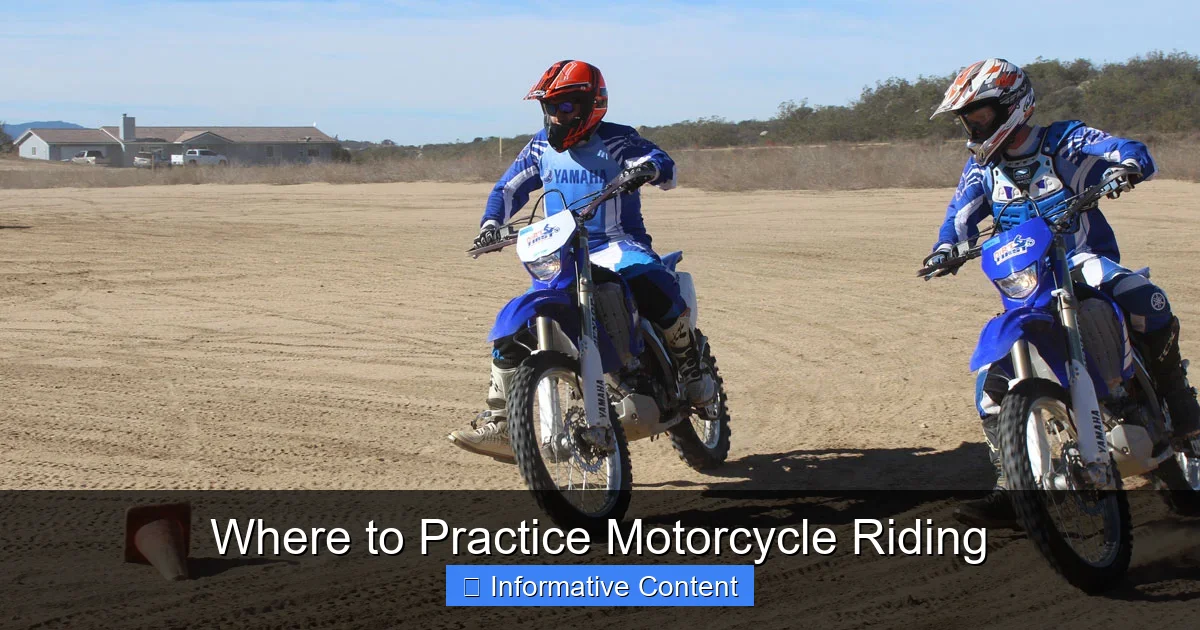
Visual guide about Where to Practice Motorcycle Riding
Image source: motorbikepassion.com
Tips for parking lot practice:
- Seek Permission: If possible, get permission from the property owner. This avoids any unpleasant surprises.
- Avoid Traffic: Choose times when the lot is truly empty. Even one car can be a distraction or a hazard.
- Bring a Buddy: It’s always safer to practice with an experienced rider who can offer tips and assist if something goes wrong.
- Set Up Cones: Simple plastic cones (or even old tennis balls) are invaluable for creating drills. Practice figure eights, tight turns, and straight-line braking.
- Stay Hydrated: Learning can be physically demanding. Bring water!
Abandoned Airfields or Private Land
If you’re lucky enough to know someone with private land, an unused airfield, or a large, fenced-off property, these can be fantastic, genuinely private locations where to practice motorcycle riding. The key here is absolute freedom from public traffic and often more space than a typical parking lot. Always ensure you have explicit permission and that the area is clear of hazards.
Low-Traffic Residential Streets & Rural Roads
Once you’ve mastered the basics in a controlled environment, it’s time to slowly introduce real-world elements. This stage is where to practice motorcycle riding with actual traffic considerations, albeit minimal ones.
Navigating Quiet Neighborhoods
When to use them: Choose quiet residential streets during off-peak hours (mid-day weekdays, early mornings). Look for areas with minimal parked cars, children playing, or complex intersections. The idea is to experience gentle curves, stop signs, and perhaps a traffic light or two without the intensity of busy city streets.
What to practice here: Focus on smooth gear changes, scanning intersections, executing proper turns (slow-look-press-roll technique), and reacting to common road features like potholes, sewer grates, and parked cars. This environment is crucial where to practice motorcycle riding while integrating awareness of your surroundings and other road users.
Exploring Rural Roads
Rural roads can offer an excellent next step, especially those with gentle curves and limited traffic. They allow you to practice maintaining speed through turns, understanding road camber, and dealing with varying road surfaces without the constant start-and-stop of urban driving. Be extra vigilant for wildlife, farm equipment, and gravel on these roads. This is a progressive step where to practice motorcycle riding with greater confidence in diverse road conditions.
Important considerations for public roads:
- Legal Requirements: Ensure you have your learner’s permit or full license, and that your bike is registered and insured. Abide by all traffic laws.
- Go with a Mentor: Having an experienced rider follow you or ride alongside you can provide an extra layer of safety and immediate feedback.
- Focus on Scanning: Develop the habit of constantly scanning for potential hazards, not just directly in front of you but to the sides and behind.
- Start Small: Don’t try to tackle major highways or complex urban intersections right away. Gradually increase the complexity of your routes.
Advanced Practice: Beyond the Basics
For experienced riders looking to push their limits or specialize, there are even more options where to practice motorcycle riding.
Track Days
If you’re interested in sportier riding, understanding your bike’s limits, or improving your cornering skills at higher speeds, track days are invaluable. Organized events at dedicated racetracks allow you to ride at speed in a controlled environment, free from opposing traffic, potholes, or speed limits. You’ll often find coaching available. This is the ultimate environment where to practice motorcycle riding for performance and advanced handling.
Off-Road Trails and Dirt Parks
For dual-sport or adventure bike riders, practicing off-road opens up a whole new world of skills. Dirt parks, designated off-road riding areas, or legal trails offer opportunities to learn how to handle sand, gravel, mud, hills, and obstacles. This requires a different set of skills than street riding, focusing on balance, throttle control, and body positioning for varied terrain. It’s a specialized area where to practice motorcycle riding that builds incredible bike control.
Group Rides and Club Events
While not strictly “practice” in the traditional sense, joining organized group rides or motorcycle clubs can significantly enhance your riding skills. You learn by observing others, practicing defensive riding in a group context, and adapting to different pace levels. Many clubs also organize training days or workshops where to practice motorcycle riding specific skills.
Essential Safety Considerations & Gear
No matter where to practice motorcycle riding, safety must always be your top priority.
Always Wear Proper Gear (ATGATT – All The Gear, All The Time)
This isn’t negotiable.
- Helmet: Full-face, DOT or ECE approved.
- Jacket: Armored, abrasion-resistant, full-length sleeves.
- Gloves: Full-fingered, armored, and designed for motorcycling.
- Pants: Abrasion-resistant motorcycle-specific pants, often with knee and hip armor. Denim offers minimal protection.
- Boots: Over-the-ankle boots designed for riding, with good grip and ankle protection.
Even for slow-speed parking lot practice, a fall can result in serious injury without the right gear. Protecting yourself means you can focus more on learning and less on fear of injury.
Pre-Ride Inspection (T-CLOCS)
Before every ride, especially before practice sessions, perform a quick T-CLOCS inspection:
- Tires and Wheels
- Controls (levers, pedals)
- Lights and Electrics
- Oil and Fluids
- Chassis (frame, suspension, chain)
- Stands
Ensuring your motorcycle is in good working order is a critical part of safe riding, regardless of where to practice motorcycle riding.
Go With a Buddy or Inform Someone
Especially when practicing alone, tell someone where you’re going and when you expect to be back. Better yet, ride with a friend or an experienced mentor. They can offer advice, critique your technique, and provide assistance if you encounter any issues.
Know Your Limits and Your Bike’s Limits
Don’t push yourself beyond your comfort zone too quickly. Learning is a gradual process. Also, understand that different bikes handle differently. A heavy cruiser practices differently than a lightweight sportbike. Respect the capabilities of your machine and your current skill level.
Conclusion
Learning to ride a motorcycle is an exciting journey that demands patience, persistence, and a smart approach to practice. By starting with formal training, leveraging controlled off-road spaces, gradually introducing yourself to low-traffic public roads, and always prioritizing safety, you’ll build the skills and confidence needed to enjoy motorcycling for years to come. Remember, the best place where to practice motorcycle riding isn’t just one spot; it’s a progression of environments tailored to your evolving abilities. Keep practicing, keep learning, and most importantly, stay safe out there!
Frequently Asked Questions
How often should I practice when learning to ride a motorcycle?
Consistency is key when learning to ride. Aim for frequent, shorter practice sessions (e.g., 30-60 minutes several times a week) rather than infrequent, long sessions. This helps build muscle memory and prevents fatigue, which can lead to mistakes.
Are there any specific drills I should focus on when practicing in a parking lot?
Absolutely! Focus on clutch control (friction zone), smooth starts and stops, slow-speed maneuvers (like figure eights and weaving through cones), emergency braking from low speeds, and controlled wide turns. These drills build fundamental control skills.
What if I don’t have access to an empty parking lot?
If private, empty parking lots are difficult to find, prioritize formal training courses as they provide a dedicated, safe environment. You might also explore industrial parks on weekends or look for designated motorcycle training areas if available in your region, always checking for access rules.
When is it safe to practice on actual public roads?
It’s safe to transition to public roads once you’ve achieved consistent control over your motorcycle’s basic functions in a controlled environment. You should feel comfortable with starting, stopping, shifting, turning, and emergency braking without hesitation or panic, and have a solid understanding of traffic laws.
Can I practice on my brand-new, expensive motorcycle?
While you can, it’s generally advised to start on a smaller, lighter, or less expensive bike if possible, especially during initial practice where falls are more likely. If your new bike is your only option, be extra cautious and consider adding crash protection like frame sliders or engine guards.
What’s the difference between practicing on rural roads and city streets?
Rural roads often have fewer intersections, traffic lights, and distractions, allowing you to focus on curves, road surfaces, and maintaining speed. City streets introduce more complex scenarios like heavy traffic, frequent stops, lane changes, and pedestrian interaction, requiring a higher level of awareness and skill.