How to Clean Exhaust Pipe Outside: Easy Steps for a Shiny Finish

Cleaning the outside of your exhaust pipe does more than just improve how your vehicle looks—it helps prevent rust, maintains value, and can even make your car smell fresher. Many car owners ignore this simple task, letting grime, tar, and rust build up over time. The truth is, with the right approach, you can restore your exhaust tip’s shine in under an hour. This guide will walk you through every step, from gathering materials to practical cleaning and protection tips. Even if you’re new to car care, you’ll find clear instructions, mistakes to avoid, and expert insights to help you get professional results.
Why Cleaning Your Exhaust Pipe Matters
People often focus on car paint and wheels, forgetting the exhaust pipe. Yet, road salt, tar, and carbon deposits collect quickly on the pipe’s surface, causing damage you might not notice at first.
Leaving the exhaust dirty can lead to:
- Rust and corrosion: Moisture and chemicals eat away at metal.
- Bad smells: Burned grime can create unpleasant odors.
- Reduced value: A dirty exhaust makes a car look neglected.
- Potential repairs: Severe corrosion may require expensive replacements.
Taking care of your exhaust pipe’s outside isn’t just about appearance. It’s a simple way to extend your vehicle’s life and avoid preventable costs.
Tools And Materials You Need
Before you start, make sure you have the right supplies. Using proper tools makes cleaning easier and protects your car’s finish.
You’ll need:
- Rubber gloves (to protect your hands)
- Microfiber cloths (at least 2–3)
- Soft brush or old toothbrush
- Mild car shampoo or soap
- Metal polish (suitable for chrome or stainless steel)
- Steel wool or non-scratch scrubbing pad (for tough stains)
- Bucket of warm water
- Masking tape (optional, to protect paint)
- Protective wax or sealant (optional, for lasting shine)
Some people use home items like baking soda or vinegar, but dedicated car products work best for tough grime. If your exhaust pipe is blackened or pitted, choose a stronger metal polish.

Credit: www.gotodobbs.com
Safety First: Preparing Your Workspace
Cleaning the exhaust pipe isn’t dangerous, but a few precautions make the job safer and easier:
- Let the car cool down: Exhausts can stay hot long after driving. Wait at least 30–45 minutes before touching.
- Work in a well-ventilated area: Cleaning products can create fumes. Outside or in a garage with open doors is best.
- Wear gloves: Even mild cleaners can irritate skin, and grime is hard to wash off bare hands.
- Protect nearby paint: If you’re using strong cleaners or steel wool, consider covering the area around the exhaust with masking tape.
Step-by-step: How To Clean The Outside Of An Exhaust Pipe
1. Rinse Away Loose Dirt
Start by spraying or rinsing the exhaust pipe with water. This removes sand and grit, so you don’t scratch the metal when you scrub. A garden hose works well, but a bucket will do.
2. Wash With Soap
Mix car shampoo and warm water in your bucket. Dip the soft brush or cloth into the soapy water and scrub the outside of the exhaust pipe. Work in circles to lift off dirt, tar, and road film.
- For stubborn dirt, let the soap sit for a minute.
- Avoid using dish soap, as it can leave residue.
3. Scrub Off Carbon And Rust
If you see black carbon buildup or orange rust spots, use a non-scratch scrubbing pad or fine steel wool. Wet the pad, add a little soap or metal polish, and gently scrub the affected area.
- Don’t press too hard—let the product do the work.
- For chrome, stick to the finest steel wool to avoid scratches.
- Wipe with a clean cloth to check your progress.
4. Apply Metal Polish
Once the surface looks clean, apply a small amount of metal polish to a microfiber cloth. Rub it onto the pipe, working in small circles. This removes any remaining stains and helps restore shine.
- For stainless steel, use a polish made for that metal.
- Polish chrome exhaust tips with a chrome-specific product.
Let the polish sit for a few minutes, then buff off with a clean, dry cloth.
5. Protect With Wax Or Sealant (optional)
To keep your exhaust pipe shiny and easier to clean next time, you can apply a thin layer of car wax or metal sealant. Use a separate cloth and follow the product instructions. This step is optional but highly recommended if you live in a wet or salty climate.
6. Final Inspection
Stand back and check your work. Make sure all residue is wiped off, and the exhaust pipe is dry. If you spot any missed areas, repeat the step as needed.

Credit: www.youtube.com
Comparing Cleaning Products For Exhaust Pipes
Choosing the right cleaner or polish can make a big difference, especially if your exhaust is heavily stained or rusted. Here’s a quick comparison of popular options:
| Product Type | Best For | Pros | Cons |
|---|---|---|---|
| Car Shampoo | Light dirt and dust | Gentle, easy to use | Won’t remove carbon or rust |
| Metal Polish | Stains, light oxidation | Restores shine, easy to buff | May need several applications |
| Steel Wool | Heavy rust or carbon | Removes tough buildup fast | Can scratch if used too hard |
| Dedicated Exhaust Cleaner | Severe buildup | Strong, fast results | More expensive |
If you’re unsure, start with the gentlest method and move up only if needed. This avoids accidental damage.
How Often Should You Clean Your Exhaust Pipe?
The answer depends on your driving habits and local environment. In rainy or snowy areas, or if you drive on salted roads, you should clean the pipe every 2–3 months. In dry climates, every 4–6 months is usually enough.
If you notice thick black soot or orange rust, clean sooner. Regular cleaning makes each job easier and prevents buildup.
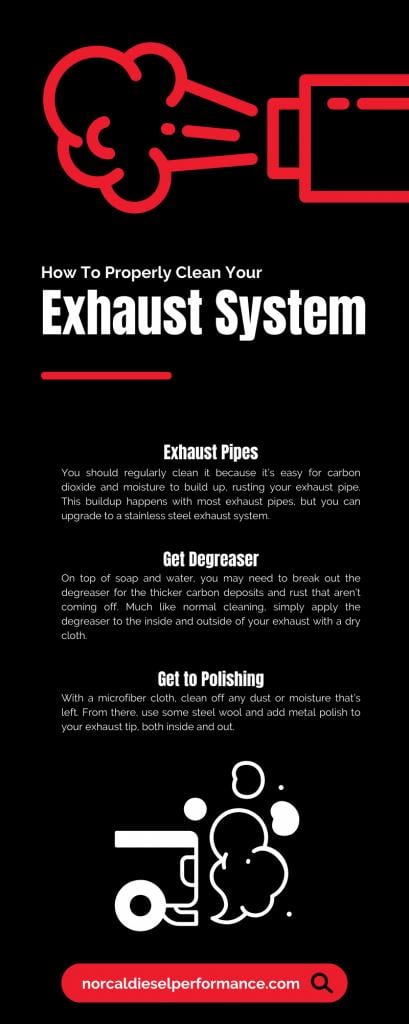
Credit: norcaldieselperformance.com
Common Mistakes To Avoid
Many beginners damage their exhaust pipes by making simple errors. Here’s what to watch out for:
- Using harsh chemicals: Some cleaners (like oven spray) can stain or corrode metal.
- Scrubbing with the wrong tools: Heavy steel wool or wire brushes scratch chrome and steel.
- Cleaning while hot: This can burn your skin and bake residue onto the pipe.
- Ignoring protection: Skipping wax or sealant leaves the metal exposed to quick rust.
- Missing the inner edge: The inner lip of the exhaust often collects soot—clean it with a toothbrush or small brush.
A small effort up front saves you time and money later.
Extra Tips For Stubborn Grime
Some exhaust pipes are neglected for years and need special tactics:
- Soak first: For heavy rust, soak a rag in vinegar, wrap it around the pipe, and leave for 10–15 minutes before scrubbing.
- Use baking soda paste: Mix baking soda with water to form a paste, apply, and scrub gently with a toothbrush.
- Rinse thoroughly: Any leftover cleaner or polish can burn off and smell bad the next time you drive.
If the pipe is badly pitted or rusted, polishing will improve it, but sometimes only replacement can restore the original look.
Table: Pros And Cons Of Different Exhaust Pipe Materials
Not all exhaust pipes are the same. Here’s how material affects cleaning and care:
| Material | Appearance | Cleaning Difficulty | Rust Resistance |
|---|---|---|---|
| Stainless Steel | Bright, modern | Easy | High |
| Chrome-plated Steel | Mirror finish | Moderate | Medium |
| Aluminized Steel | Dull silver | Harder | Low |
| Titanium | Blue/gold tint | Easy | Very High |
Knowing your exhaust pipe’s material helps you pick the safest cleaner and avoid scratches.
Real-world Example: Cleaning A Neglected Exhaust
Let’s say you bought a used car, and the exhaust pipe is black and rusty. Here’s what works best:
- Rinse off loose dirt with a hose.
- Apply car shampoo and scrub with a brush.
- Use fine steel wool with metal polish for the rust.
- Wipe clean with a microfiber cloth.
- Apply a layer of wax for protection.
After 30 minutes of effort, you’ll see a huge improvement. If you repeat every few months, the pipe will stay bright and resist rust.
Professional Vs. Diy Cleaning: What’s The Difference?
Some car owners consider paying for a professional detail. Here’s a quick comparison:
| Aspect | DIY Cleaning | Professional Service |
|---|---|---|
| Cost | Low (under $20 for supplies) | High ($50–$100 per visit) |
| Results | Very good with effort | Excellent, like-new finish |
| Time Needed | 30–60 minutes | None (wait for pickup) |
| Learning Curve | Easy after first time | None |
For most people, regular DIY cleaning is enough. Professional services are best for show cars or severe neglect.
How To Keep Your Exhaust Pipe Clean Longer
After you get the pipe looking good, a few habits help maintain it:
- Rinse the exhaust tip when you wash your car.
- Apply metal polish or wax every few months.
- Avoid parking over wet grass or muddy areas.
- Check for rust spots and clean them early.
These simple steps keep your exhaust pipe looking great and prevent most common problems.
Non-obvious Insights Most Beginners Miss
- Exhaust heat speeds up corrosion: The heating and cooling cycle makes metal expand and contract, opening small cracks. Regular cleaning and waxing fill these gaps, slowing rust.
- Road salts and chemicals stick to the underside: Even if the top of the exhaust looks clean, the bottom often collects more grime. Always feel under the pipe (when cool) and clean thoroughly.
Many guides skip these points, but they make a big difference in long-term care.
When To Replace Instead Of Clean
If your exhaust pipe shows deep pitting, holes, or flakes of rust coming off, cleaning will not restore it. In this case, replacement is safer and prevents leaks or further damage. Always check for structural issues as you clean.
For more on exhaust system care, visit the Wikipedia Exhaust System Guide.
FAQs (How to Clean Exhaust Pipe Outside)
How Often Should I Clean The Outside Of My Exhaust Pipe?
Most people should clean their exhaust pipe every 2–3 months, especially if they drive in wet or salty conditions. In dry climates, every 4–6 months is enough.
Can I Use Household Cleaners Like Vinegar Or Baking Soda?
Yes, but with care. Vinegar and baking soda can help remove rust and soot, but always rinse well to avoid residue. Dedicated car products are safer for regular use.
Will Cleaning My Exhaust Pipe Affect Performance?
No, cleaning the outside of the exhaust pipe will not change how your car runs. It only improves appearance and prevents rust.
What If My Exhaust Pipe Is Painted Black?
Use the gentlest cleaners and avoid abrasive pads. Test any product on a small area first to make sure it does not damage the paint.
Is It Safe To Use Steel Wool On Chrome Exhaust Tips?
Yes, but only the finest grade (0000) and with gentle pressure. Always use plenty of polish or soap as a lubricant to prevent scratches.
Caring for your exhaust pipe’s outside is an easy way to protect your car and show attention to detail. With these methods, you’ll get lasting results and avoid common mistakes—even if you’re new to car care.