How Often to Lube Motorcycle Chain: Essential Maintenance Tips 2026

Riding a motorcycle feels like freedom on two wheels. But keeping your bike running smoothly takes more than just fueling up. One small but essential task is lubing the motorcycle chain. Many riders, especially beginners, wonder how often they should do this and why it matters. If you lube too little, the chain wears out fast. If you over-lube, you waste time and money, and the chain attracts dirt. This guide explains everything you need to know—when, how, and why to lube your chain for the best performance and safety.
Why Lubing Your Motorcycle Chain Matters
The chain is the link between your engine and the rear wheel. If it fails, you can’t go anywhere. A dry or dirty chain increases friction, which wastes power and speeds up wear. Over time, neglecting chain care can lead to:
- Reduced performance: Power loss means your bike feels less responsive.
- Shorter chain and sprocket life: Replacing these parts is expensive.
- Higher fuel consumption: More friction means more energy is needed.
- Increased safety risks: A snapped chain can cause accidents.
When you ride, the chain spins thousands of times per minute. Each link rubs against the sprockets and other chain parts. Without the right lube, this metal-on-metal contact creates heat and grinds away the chain’s surfaces. Even a chain that looks fine on the outside can wear out inside if it’s not cared for.
Modern chains, like O-ring or X-ring types, are better at keeping out dirt and holding in grease. These chains have tiny rubber rings that seal grease inside the links. This helps them last longer than old-style chains. However, the outside of the chain is still exposed to rain, dust, and road grime. The rollers and side plates—parts that make contact with the sprockets—need fresh lube to prevent rust and stay flexible.
A well-lubed chain also improves your bike’s feel. Gear changes are smoother. You won’t hear grinding or squeaking from the back wheel. Many riders say their bike feels lighter and more responsive after a proper chain service.
Two things are easy to overlook: first, rust can start forming on the chain even after a single rainy ride if you don’t lube it soon after. Second, a dry chain can put extra stress on your transmission and engine, causing other parts to wear faster. That’s why chain care is about more than just the chain—it protects your whole bike.
How Often Should You Lube Your Motorcycle Chain?
There is no one-size-fits-all answer. The right interval depends on your riding style, weather, road conditions, and chain type. Here’s a practical breakdown.
Manufacturer Recommendations
Most motorcycle makers recommend lubing the chain every 300 to 600 miles (about 500 to 1,000 kilometers). Always check your owner’s manual for the exact number. This is a baseline for regular use on clean, dry roads.
Some brands are more specific. For example, Honda and Yamaha manuals usually suggest every 600 miles, but Kawasaki and Suzuki sometimes say every 400 miles. The idea is to keep the chain in good condition before it dries out or gets too dirty.
If you ride less than 100 miles a week, you might need to lube less often, but still check the chain regularly.
Key Factors That Affect Lubing Frequency
- Weather and Environment
- Rainy or wet roads: Water washes off lubricant. Lube the chain after every ride in the rain. Even a short ride in heavy rain can strip the lube, leaving the chain exposed. If you live in a region with frequent showers, be prepared to lube more often.
- Dusty or sandy conditions: Dirt sticks to the lube and can grind down the chain. Clean and re-lube more often, sometimes after each ride. Riding through construction zones, on gravel roads, or during dry, windy days increases the need for chain care.
- Hot, dry climates: Heat can dry out the chain, so inspect and lube more regularly. In desert-like areas, the lube evaporates or breaks down faster.
- Type of Riding
- Daily commuting: Stick close to the manufacturer’s interval. City riding exposes your chain to stop-and-go traffic, which can cause more rapid lube loss due to heat and friction.
- Off-road or adventure riding: Chains get dirty faster. Clean and lube after every ride. Mud, sand, and even grass can quickly work their way into the links.
- Long-distance touring: Check and lube every 300–400 miles if you ride all day. It’s smart to carry a small can of chain lube on trips, as gas stations often don’t have the right products.
- Chain Type
- Standard (non-sealed) chains: Need more frequent lubing, about every 250–400 miles. These are common on older or smaller bikes and are more affected by weather and road grime.
- O-ring or X-ring (sealed) chains: Better at holding internal grease, but still need external lubrication every 400–600 miles, or sooner in harsh conditions. The O/X rings only protect the inner parts; the outside needs attention.
- Visual Inspection
- If the chain looks dry, rusty, or noisy, lube it right away—even if you haven’t reached the mileage interval. Trust your eyes and ears—if the chain squeaks, it’s time for lube.
Real-world Examples
- You ride 30 miles daily to work on clean city roads. Lube every 2–3 weeks.
- You take a 600-mile weekend trip. Lube the chain at least once during the journey. If it rains, add an extra lube session.
- You ride off-road in mud. Clean and lube after every ride. It’s common for off-roaders to carry chain lube and cleaner with them and use a portable stand or even a sturdy stick to prop up the rear wheel.
The more challenging the riding, the more often you need to check and lube your chain. Some riders keep a small notebook or use their phone to track when they last lubed—this helps prevent forgetfulness.
When Mileage Doesn’t Matter
If you don’t ride often, lube the chain at least once a month to prevent rust—regardless of miles traveled. Even if your bike is parked for long periods, humidity and temperature changes can still cause rust. After washing your bike or storing it, always reapply lube.
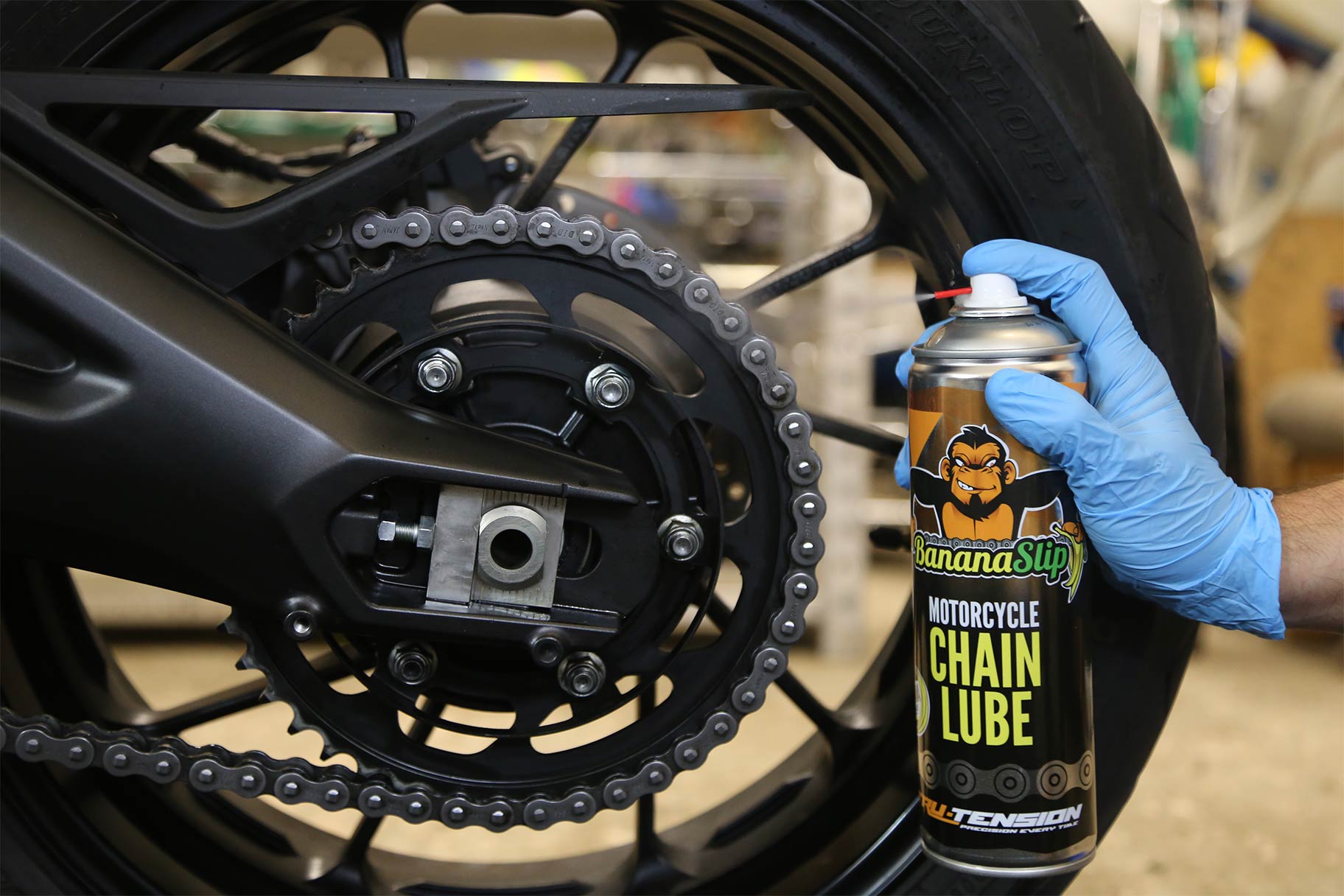
Credit: www.tru-tension.com
Signs Your Motorcycle Chain Needs Lube
Not sure if your chain needs attention? Look for these signs:
- Squeaky noises from the chain area when you ride. A well-lubed chain should run almost silently.
- The chain looks shiny, dry, or rusty. A healthy chain has a thin, slightly oily film.
- You see red or brown stains around the sprocket (rust). Rust often starts on the inside edges of the chain where it’s hard to see.
- The chain feels stiff or has tight spots when you rotate the wheel. This means the lube has dried out and the links aren’t flexing properly.
- There’s excess slack or the chain vibrates more than usual. A dry chain stretches faster and may need adjustment more often.
Relying on only mileage can miss these warning signs, especially if conditions change. A quick look before each ride can catch problems early.
Another thing beginners often miss: dark, sticky buildup on the chain is a sign of old, dirty lube. This can trap grit and speed up wear. If you notice this, clean the chain before applying new lube.
Step-by-step Guide: How To Lube A Motorcycle Chain
Lubing your chain is simple and only takes 15–20 minutes. Here’s how to do it properly for best results.
What You’ll Need
- Motorcycle chain lube (aerosol spray is easiest)
- Chain cleaner or kerosene (for cleaning first)
- Brush (old toothbrush or special chain brush)
- Gloves
- Rag or paper towels
- Rear paddock stand (optional, but makes the job easier)
A paddock stand lifts the rear wheel and makes it easy to spin the wheel. If you don’t have one, you can lube the chain by rolling the bike forward a bit at a time. Specialized chain brushes, like a “Grunge Brush,” clean all sides of the chain at once but a toothbrush works too.
Steps
- Warm Up the Chain
- Ride for 5–10 minutes. A warm chain helps the lube penetrate better. This also softens any old lube, making cleaning easier.
- Lift the Rear Wheel
- Use a paddock stand if you have one. If not, move the bike forward a little at a time as you work. Make sure the bike is stable and on level ground.
- Clean the Chain (if dirty)
- Spray chain cleaner or kerosene along the chain. Commercial motorcycle chain cleaners are safe for O/X rings. Avoid gasoline—it can damage rubber seals.
- Scrub with the brush to remove dirt and old lube. Get into the spaces between the plates and around the rollers.
- Wipe with a rag until clean. Pay attention to the area near the sprockets, where grime collects.
- Wait for it to dry. Letting the chain air dry for a few minutes prevents water from getting trapped under the lube.
- Apply Chain Lube
- Hold the spray nozzle close to the inside of the lower run of the chain (the part touching the sprocket). This allows gravity to help the lube soak in as you ride.
- Slowly rotate the rear wheel. Spray a thin, even layer along the length of the chain. One full rotation is usually enough.
- Aim for the rollers and side plates—not just the outside. Proper coverage is key for both protection and flexibility.
- Wipe Off Excess
- Let the lube sit for 10–15 minutes to penetrate. This gives it time to reach inside the rollers.
- Wipe off any extra with a clean rag. Too much lube attracts dirt. The chain should look lightly wet, not dripping.
- Inspect and Adjust Chain Tension
- After lubing, check the chain’s slack. Adjust if needed, following your bike’s specs. Proper tension prevents extra stress on the chain and sprockets.
See the 5 Best Non Fling Motorcycle Chain Lube 2026
Practical Tips
- Lube your chain after riding (not before) to avoid flinging oil everywhere. Riding immediately after lubing can throw lube onto the rear tire, which is dangerous.
- Wear old clothes and gloves—the process can get messy. Drips and splashes are common, especially during cleaning.
- Use a dedicated motorcycle chain lube (not WD-40 or motor oil). These are designed to stick to the chain and protect O/X rings.
Another useful tip: place cardboard or newspaper under the chain area to catch drips and make cleanup easier.

Credit: protecmadera.com
Choosing The Right Motorcycle Chain Lube
With so many products available, it’s easy to get confused. The right lube depends on your bike, riding style, and environment.
Types Of Chain Lube
| Type | Main Features | Best For |
|---|---|---|
| Spray (Aerosol) | Easy to apply, penetrates well, quick drying | Everyday use, sealed chains |
| Wax-based | Thicker, less fling-off, stays clean | Dry or dusty conditions |
| Paste/Gel | Very sticky, long-lasting, messy to apply | Long-distance touring |
| Dry (PTFE, Teflon) | Minimal dirt attraction, less protection from water | Off-road or dry climates |
Factors To Consider
- Chain type: Make sure the lube is safe for O-ring/X-ring if your chain is sealed. Some lubes say “O/X-ring safe” on the label.
- Weather: For rainy areas, choose a water-resistant lube. Wax and some gels wash off in heavy rain, so sprays designed for wet use are better.
- Ease of application: Aerosols are fast and convenient for most riders. Paste or gel takes longer but may last longer on long trips.
Common Mistakes
- Using automotive engine oil or WD-40 as chain lube—these don’t protect against high loads and can damage O-rings.
- Over-lubing, which attracts more dirt and causes extra wear.
- Ignoring the chain’s side plates—these need protection from rust too.
Many new riders also forget to check the lube’s compatibility with their environment. For example, a wax lube works well in dry climates but can build up and become sticky if you ride in the rain often.
Another insight: Some premium lubes include anti-fling formulas, which stick to the chain better and keep your rear wheel clean. This is useful if you ride a lot at high speeds.
Cleaning Vs. Lubing: What’s The Difference?
Some riders confuse cleaning with lubing. They are not the same.
- Cleaning: Removes old lube, dirt, and grime. Needed when your chain looks black, sticky, or is covered in mud.
- Lubing: Adds fresh lubricant to reduce friction and prevent rust.
A clean chain absorbs lube better and lasts longer. You don’t need to clean before every lube. Clean the chain every 500–1,000 miles, or sooner if it’s obviously dirty.
If you ride in very harsh conditions, you might need to clean and relube after every ride. For most street riders, cleaning every third or fourth lube is enough. One trick: if you wipe a rag along the chain and it comes away black, it’s time for a full clean.
See the Best Motorcycle Chain Cleaner Kits
Cleaning Frequency Table
| Riding Condition | Suggested Cleaning Interval |
|---|---|
| Dry, paved roads | Every 1,000 miles |
| Rainy or wet roads | Every 500 miles |
| Off-road/muddy | After every ride |
A useful tip: Never use harsh wire brushes or pressure washers on sealed chains. These can break the O/X rings and let dirt inside, ruining the chain.
Comparing Chain Life: Lubed Vs. Unlubed
How much difference does proper lubing make? A lot. Here’s a comparison based on real-world data.
| Maintenance | Average Chain Life | Cost Over 10,000 Miles |
|---|---|---|
| Properly lubed (every 400–600 miles) | 15,000–25,000 miles | $60–120 (lube) + $120 (1 chain replacement) |
| Rarely lubed | 5,000–8,000 miles | $30 (lube) + $300 (2–3 chains) |
| Never lubed | 2,000–4,000 miles | $0 (lube) + $400+ (chains & sprockets) |
Chains are not cheap. Spending a few dollars and minutes on maintenance saves hundreds over the life of your bike.
Here’s something beginners may not realize: a dry chain can also wear down your sprockets much faster. Often, riders think only the chain will be affected, but sprockets are softer metal and can become hooked or sharp-edged quickly if the chain is neglected.
See the: Premium Motorcycle Chain Lube Kits
Weather And Season: How They Change Your Lubing Routine
Different climates demand different care routines. Here’s how to adjust:
Wet Weather
Rain washes away chain lube quickly. Lubricate your chain after every wet ride. Use a water-resistant spray. Avoid wax lubes in wet seasons—they wash off faster. If you park outside, cover your bike to reduce rain exposure.
Winter
Salted roads can cause rapid rust. Clean and lube more frequently, even if you don’t ride far. Store your bike indoors if possible. Salt is very corrosive, so even a few days of exposure can harm the chain.
Summer And Heat
High temperatures can evaporate thinner lubes. Inspect the chain for dryness and apply more often if needed. If you notice the chain looking dusty or squeaky, it’s a sign the lube has broken down.
Dusty Or Sandy Places
Dirt acts like sandpaper. Use a dry or wax-based lube that doesn’t attract much grit. Clean and lube after each ride in these conditions. In dry, sandy areas, some riders use a soft brush to quickly wipe the chain after every ride before applying more lube.
Chain Maintenance Myths And Misconceptions
Many riders pick up bad habits from forums or friends. Let’s clear up the most common myths.
Myth 1: “sealed Chains Don’t Need Lube”
Even with O-rings or X-rings, chains need external lube for the rollers and side plates. Skipping this step leads to rust and increased friction.
Myth 2: “any Oil Works As Chain Lube”
Motor oil, WD-40, and gear oil are not made for chain loads. They can degrade seals and fail to protect under pressure. The wrong oil can also attract too much dirt or cause the chain to fling oil onto your tire.
Myth 3: “more Lube Is Better”
Too much lube attracts dirt, which acts as grinding paste. Always wipe off excess after application. The goal is a thin protective film, not a thick coating.
Myth 4: “chain Lube Is A Waste Of Time”
Skipping chain care shortens the life of your chain and sprockets—costing you more in the long run and risking your safety. A chain failure on the road can lead to crashes or being stranded far from home.
Another misconception: Some riders believe they don’t need to check the chain if it’s a new bike. Chains can dry out or stretch in the first few thousand miles, so early care is important.
Pro Tips For Maximum Chain Life
Here are some expert tips to get the most out of your motorcycle chain:
- Inspect the chain before every ride. Look for dryness, rust, or slack. Early detection is key.
- Lube after rides, not before. This helps the lubricant stay on the chain.
- Store your bike indoors to avoid moisture and rust. If you must park outside, use a cover that breathes to prevent condensation.
- Adjust chain tension according to your manual. Too tight or too loose can cause damage. Use the marks on your swingarm to help.
- Replace the chain and sprockets together. Mixing old and new parts causes faster wear. Sprockets wear to match the old chain’s shape, so new chains can wear unevenly if used with old sprockets.
Bonus tip: If you ride in a group, ask more experienced riders to check your chain and give feedback. Sometimes an outside eye catches problems you might miss.
Credit: www.tru-tension.co.uk
Frequently Asked Questions
How Do I Know If I’ve Over-lubed My Chain?
If you see thick blobs of lube or it’s flinging off onto your wheel and swingarm after riding, you’ve used too much. Excess lube attracts dirt and makes cleaning harder. Always wipe the chain with a rag after application to remove extra.
Can I Lube My Chain Without Cleaning It First?
Yes, if the chain is only a little dusty. But if it’s caked with grime or old, sticky lube, clean it first. Lubing a dirty chain can trap abrasive particles and speed up wear.
Is It Safe To Use Wd-40 As Chain Lube?
WD-40 is not a proper chain lubricant. It’s mainly a water-displacer and light cleaner. It can wash out internal grease from sealed chains and doesn’t protect well under high loads. Always use a product made for motorcycle chains.
What Happens If I Never Lube My Motorcycle Chain?
Your chain will wear out much faster, causing poor performance and risking breakage. You’ll also need to replace the chain and sprockets more often, which is costly. In extreme cases, a dry chain can snap and cause accidents.
Where Can I Find More Official Information On Motorcycle Chain Maintenance?
You can check your bike’s owner’s manual or visit trusted resources like the Wikipedia page on chain drives for in-depth technical details.
Caring for your motorcycle chain is one of the simplest ways to keep your bike running safely and smoothly. Lubing regularly doesn’t take much time, but it pays off in better performance, longer part life, and safer rides. Just a few minutes every few hundred miles makes all the difference.
Whether you’re new to riding or have years of experience, making chain care a habit will save you money and trouble down the road.