
How Often to Lube Motorcycle Chain at Home for Peak Performance

Keeping your motorcycle running smoothly isn’t just about changing the oil or checking the brakes. One task stands out for both new and experienced riders: lubricating the chain. Many riders know they should lube the chain, but the big question is, how often should you do it if you’re maintaining your bike at home?
Doing this job right can make your bike last longer, feel smoother, and keep you safer on the road. But if you’re new to motorcycle maintenance, the answers you find online can be confusing. Some people say every 300 miles; others say after every ride.
So, what’s the real answer for home maintenance? This article breaks down the details, gives you practical advice, and explains the science behind chain care—using clear, simple English.
Why Chain Lubrication Matters
Your motorcycle chain transfers power from the engine to the rear wheel. If the chain is dry, rusty, or dirty, it can stretch or wear out. This means you lose power, your ride feels rough, and you might even experience dangerous chain failure.
Regular chain lubrication:
- Reduces friction between the chain and sprockets
- Prevents rust and corrosion
- Extends chain life (sometimes doubling it compared to a dry chain)
- Improves riding smoothness
- Reduces noise
A poorly lubed chain can lose up to 20% efficiency in power transfer, especially at higher speeds. This loss doesn’t just waste fuel; it can damage the sprockets and even put you at risk of a snapped chain.
How Often Should You Lube Your Motorcycle Chain?
There isn’t a single answer for every rider or every bike. However, most experts recommend you should lube your motorcycle chain every 300–600 miles (480–960 km), or after riding in rain, mud, or dusty conditions. But there are reasons to adjust this interval.
Factors That Influence Lubrication Frequency
- Riding Conditions
- Wet weather: Rain washes away lube quickly. Lube your chain after every wet ride.
- Dusty roads: Dirt sticks to the chain, turning lube into a gritty paste. Lube more often in these conditions.
- Off-road: Mud and water demand more frequent attention.
- Chain Type
- Standard chains: Need lubing more often because they have no internal lubrication.
- O-ring/X-ring chains: They have seals to keep grease inside. Still, you must lube the outer parts and the seals.
- Bike Usage
- Commuters: Riding daily in city traffic means more chain movement and exposure to elements.
- Weekend riders: Less frequent riding can mean less frequent lubing, but don’t let the chain sit dry for weeks.
- Lube Type
- Spray lubricants: Easy to apply but wash off faster.
- Wax-based lubes: Last longer but need proper cleaning before re-application.
Common Mileage Recommendations
| Condition | Recommended Interval |
|---|---|
| Normal/Dry Roads | Every 500 miles (800 km) |
| Wet or Dusty Conditions | Every 200–300 miles (320–480 km) |
| After Rain | Immediately after ride |
| Off-Road | After every ride |
Simple Rule Of Thumb
If you’re unsure, lube your chain every 2-3 tanks of gas or at least once per month—whichever comes first. If you ride in harsh conditions, increase the frequency.
Signs Your Chain Needs Lubrication
You don’t always have to count miles. Your bike will give you signals if the chain needs attention:
- Squeaky or grinding noise coming from the chain area
- Visible rust or dryness on the chain
- Chain feels stiff or has tight spots when rotating the wheel
- Black, gritty build-up on the chain links
If you notice any of these signs, it’s time to clean and lube—even if you haven’t reached the “scheduled” interval.
Tools And Supplies For At-home Chain Lubing
You don’t need a professional workshop to lube your chain. Here’s what you’ll need:
- Motorcycle chain lube (spray or liquid, O/X-ring safe for modern chains)
- Chain cleaner or kerosene (never use gasoline)
- Stiff-bristle brush (like a grunge brush)
- Rags for wiping off excess lube and dirt
- Gloves to keep your hands clean
- Motorcycle stand (center or paddock stand for easier wheel rotation, optional but very helpful)
Chain Lube Types Compared
Not all lubes are equal. Here’s a quick comparison:
| Type | Pros | Cons |
|---|---|---|
| Spray Lube | Easy to use, quick drying | Washes off in rain, needs more frequent application |
| Wax-Based | Lasts longer, less fling | Harder to clean, can build up |
| Oil-Based | Deep penetration, cheap | Flings off, attracts dirt |
Non-obvious tip: Avoid WD-40 as a chain lube; it’s a cleaner, not a true lubricant for motorcycle chains.
Step-by-step: Lubing Your Motorcycle Chain At Home
1. Preparation
- Park your motorcycle on a flat, stable surface.
- If you have a paddock or center stand, use it to lift the rear wheel.
- Let the chain cool down if you’ve just ridden (hot chains can expand, hiding problems).
2. Cleaning The Chain
Before lubing, always clean the chain:
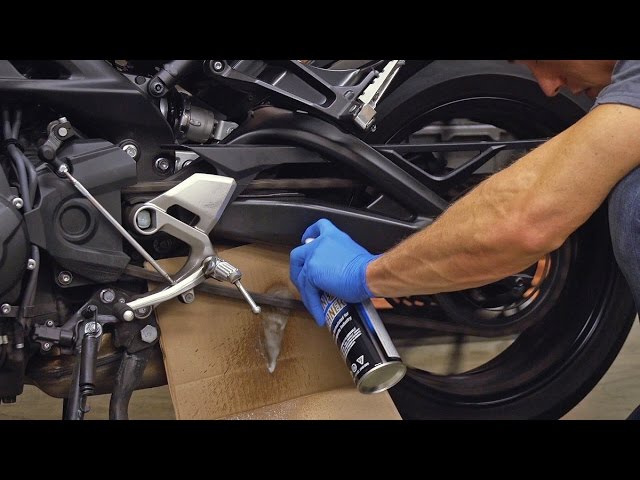
- Place an old rag under the chain to catch drips.
- Spray chain cleaner or kerosene onto the chain while rotating the wheel.
- Scrub the chain gently with a stiff brush, making sure to clean all sides.
- Wipe off all the dirt and old lube with a clean rag.
- Let the chain dry (about 10–15 minutes).
Insight: Many beginners skip cleaning, thinking more lube means better protection. In reality, dirt and old lube can trap grit, wearing your chain faster.
See the Best Motorcycle Chain Cleaner Kits
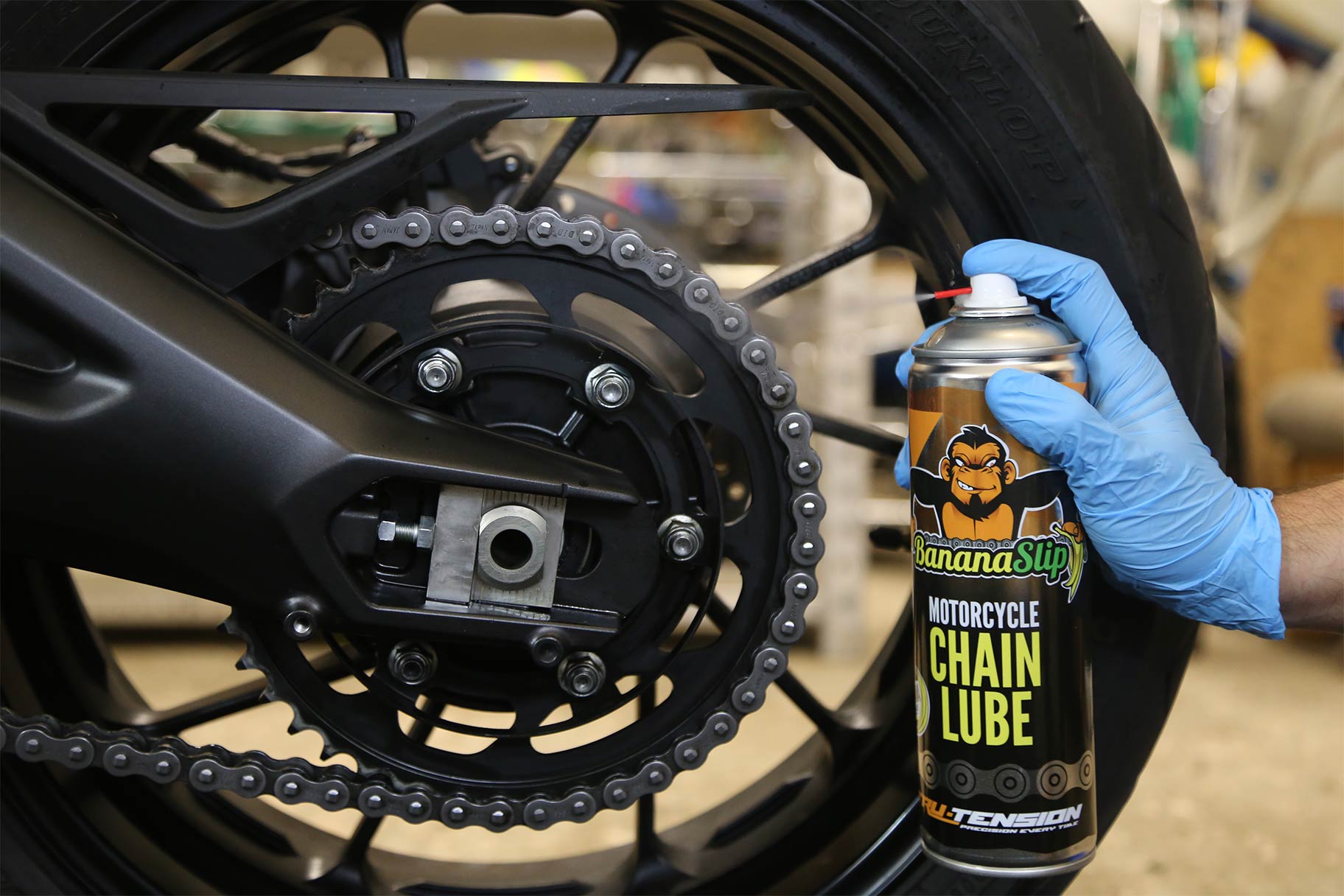
3. Applying Lube
- Shake your chain lube can well.
- Hold the nozzle close to the inside of the lower chain run (this is where the chain meets the sprocket).
- Rotate the wheel slowly by hand, applying a thin, even layer to the whole length.
- Focus on the rollers and the O/X-rings.
- Wipe off excess lube with a rag.
Non-obvious tip: Lubing the inside of the chain (closest to the wheel) is more effective. Centrifugal force spreads the lube outward as you ride.
See the Premium Motorcycle Chain Lube Kits
4. Let It Set
- Wait at least 15 minutes before riding. This allows the lube to penetrate and stick, reducing sling-off.
Mistakes To Avoid When Lubing Your Chain
Even experienced riders make mistakes. Here are some to watch for:
- Over-lubing: Too much lube attracts dirt and causes build-up.
- Lubing without cleaning: Old lube plus new lube equals sticky mess.
- Using wrong products: Some household oils harm O/X-rings.
- Not lubing after rain: Water washes away lube and leaves the chain exposed.
- Ignoring the owner’s manual: Each bike can have special needs.
How Chain Lubrication Affects Longevity And Performance
A well-lubed chain can last 15,000–30,000 miles or more, depending on the chain quality and riding habits. A neglected chain may need replacement at just 5,000 miles.
Real-world Example
A rider who lubes every 500 miles and after every rainstorm can see their chain and sprockets last twice as long as someone who only lubes every 2,000 miles. Over five years, this can save hundreds of dollars in parts and labor.
Cost Of Skipping Lubrication
- Chain and sprocket set: $150–$300
- Labor (if done at a shop): $80–$150
- Potential towing: $100+ if the chain fails on the road
The small cost and time spent lubing is nothing compared to these expenses.
How To Track Chain Lube Intervals
Many riders simply guess when they last lubed their chain. There are better ways:
- Keep a logbook: Write the date and odometer reading after each lube.
- Set reminders on your phone calendar.
- Use stickers on your bike with the next lube due date.
Some motorcycle maintenance apps even let you track chain care.
Pro tip: After a long or wet ride, check your chain before parking. This habit catches problems early.
Special Cases: Lube Intervals For Different Motorcycles
Sport Bikes
High-performance bikes put more stress on the chain. Lubing every 300–500 miles is smart, even if you ride only on clean pavement.
Adventure And Off-road Bikes
These bikes face mud, water, and dirt. Lube after every ride for best protection.
Cruisers And Touring Bikes
Long-distance riding means longer intervals, but always lube before and after long trips.
Electric Motorcycles
Some electric bikes use belt or shaft drive, which don’t need chain lube. If your electric bike has a chain, treat it like a regular motorcycle chain.
Older Bikes
Vintage motorcycles often have non-sealed chains. These need more frequent lubing, sometimes every 100–200 miles.
Chain Lubrication And Chain Tension: Are They Related?
Chain tension and lubrication are connected. A dry chain can develop tight spots, making it hard to keep the correct tension.
- A well-lubed chain stretches evenly and is easier to adjust.
- A dry chain can cause uneven wear, leading to sudden slack or tightness.
Always check chain tension after cleaning and lubing—not before.
See the Best Motorcycle Chain Cleaner Kits
How Environmental Factors Change Your Schedule
Rain And Wet Roads
Rain is the number one reason for frequent chain lubing. Water pushes lube off the chain, leaving it unprotected. If you ride in rain, always lube when you get home.
Dust And Sand
Fine dust gets trapped in chain lube, creating a paste that wears the chain faster. Clean and lube more often if you ride in dusty areas.
Cold Weather
Cold weather makes lube thicker. Warm the chain with a short ride before cleaning and lubing.
Hot Weather
Heat can thin out some lubes, causing them to fling off. Check your chain more often during summer.
Cleaning Frequency: How Often To Clean Vs. Lube
Many riders wonder if they should clean the chain every time they lube. The answer depends on your riding conditions.
- Clean your chain every 2-3 lubes if you ride on clean, paved roads.
- Clean after every ride if you go off-road, ride in rain, or on salted winter roads.
- Always clean if the chain looks dirty, rusty, or has lots of old lube build-up.
Insight: Over-cleaning with harsh chemicals can damage O/X-rings. Use gentle chain-specific cleaners.
Credit: www.tru-tension.com
Chain Lube Myths That Can Hurt Your Bike
There’s a lot of bad advice online. Here’s what you should ignore:
- “WD-40 is the best chain lube.” WD-40 is a great cleaner, but not a long-term lube for modern chains.
- “You never need to lube O-ring chains.” O/X-rings hold grease inside, but you still need to lube the outside to protect from rust and friction.
- “More lube is better.” Excess lube only attracts dirt and makes cleaning harder.
- “You can use any oil.” Motor oil, cooking oil, or car oil lack the additives motorcycle chains need.
Comparing Diy Chain Lubing Vs. Shop Service
Is it better to lube your chain yourself or pay a shop? Here’s a simple comparison:
| Method | Cost per Service | Time Needed | Convenience |
|---|---|---|---|
| DIY at Home | $2–$4 (materials only) | 15–20 minutes | Anytime, saves money |
| Shop Service | $20–$40 | 1–2 hours (including travel/wait) | Less effort, but more cost |
Experience-based insight: DIY chain lubing is one of the easiest and most cost-effective motorcycle maintenance jobs. Even beginners can learn it in less than an hour.
What Happens If You Over-lube Or Under-lube?
Both mistakes can cause problems.
Over-lubing
- Attracts more dust, sand, and grime
- Can fling onto your tire or rim, making a mess
- Harder to clean on the next service
Under-lubing
- Increases chain and sprocket wear
- Causes chain “stretch” (actually wear, not true stretching)
- Can lead to rust and chain failure
Best practice: Apply a thin, even layer and wipe off the excess.
Recommended Chain Lube Brands For Home Use
Choosing the right brand helps you get the most from your maintenance. Here are some popular and trusted options:
- Motul Chain Lube
- Maxima Chain Wax
- Bel-Ray Super Clean
- PJ1 Blue Label
- DuPont Teflon Chain-Saver
Look for products labeled as “O/X/Z-ring safe” if your bike uses a sealed chain.
How To Store Chain Lube And Cleaner
- Keep cans upright in a cool, dry place.
- Check expiry dates on the can.
- Keep away from flames—chain lube is flammable.
- Store out of reach of children and pets.
How To Lube A Motorcycle Chain Without A Stand
Not everyone has a paddock or center stand. You can still do the job:
- Move the bike forward a few feet at a time, lubing a section of the chain each time.
- Use a rolling assistant (small roller under the rear tire) if available.
- Ask a friend to help balance the bike while you spin the wheel.
Safety tip: Never run the engine and put the bike in gear to rotate the wheel while working on the chain. This is very dangerous.
Essential Safety Tips For At-home Chain Lubing
- Wear gloves to protect your skin from chemicals.
- Work in a well-ventilated area (fumes can be strong).
- Do not lube a hot chain—let it cool first.
- Keep lube off tires and brake parts—it reduces grip.
Environmental Impact: How To Dispose Of Old Chain Lube And Rags
Chain lube contains chemicals that shouldn’t go in regular trash or drains.
- Collect used rags in a sealed bag.
- Take them to a hazardous waste facility (many cities have them).
- Never pour leftover lube down the drain.
Check your local rules for safe disposal.
Non-obvious Insights For Chain Lubing Success
- Lube after rides, not before. The chain is warm, which helps lube penetrate better. If you lube before a ride, most of it can fling off before it does any good.
- Check chain slack after lubing. A well-lubed chain might need a slight tension adjustment, as cleaning can remove built-up grit that was making it tight.
When To Replace The Chain Instead Of Just Lubing
Lubing won’t fix a chain that’s already worn out. Replace the chain if:
- You see kinks or links that won’t bend
- There are cracks in the O/X-rings
- The chain has excessive slack even after adjustment
- Sprocket teeth are sharp or hooked
If you’re unsure, have a mechanic inspect your chain.
Credit: www.youtube.com
Where To Find More Information
Your owner’s manual is the best source for your bike’s specific chain care needs. For general guidance, the Motorcycle Safety Foundation offers practical tips for new and experienced riders. For further reading, check out this Wikipedia article on motorcycle chains.
FAQs (How Often to Lube Motorcycle Chain at Home)
How Do I Know If I’m Using Too Much Chain Lube?
If you see thick, sticky build-up on your chain or find lube splattered on your wheel or tire, you’re using too much. Apply a thin, even coat and always wipe off excess with a rag.
Can I Use Car Engine Oil As Motorcycle Chain Lube?
No, car engine oil is not designed for the high-speed, exposed environment of a motorcycle chain. It attracts more dirt and does not protect O/X-rings well. Use a motorcycle-specific chain lube.
Is It Okay To Lube The Chain Without Cleaning It First?
You can, but it’s not ideal. Old lube and dirt can trap grit, causing faster wear. Clean the chain first for best results, especially if it looks dirty or gritty.
Can I Ride My Motorcycle Immediately After Lubing The Chain?
It’s best to wait at least 15 minutes after lubing. This gives the lube time to penetrate and stick, reducing the amount that flings off when you start riding.
How Long Does A Well-maintained Motorcycle Chain Last?
With proper cleaning and lubing, a quality chain can last 15,000–30,000 miles. Chains that are neglected may need replacement as soon as 5,000 miles.
Keeping your motorcycle chain well-lubed at home isn’t just about following a rule—it’s about understanding your bike, your riding style, and the conditions you face. With a little attention to detail, you can ride smoothly, save money, and enjoy peace of mind on every journey.

Credit: www.wikihow.com


