How to Apply Chain Lube Motorcycle: Step-by-Step Guide for Beginners

Maintaining your motorcycle isn’t just about keeping it clean and looking good. One of the most important things you can do for your bike’s health and performance is to apply chain lube regularly and correctly. Many riders, especially beginners, don’t realize how crucial this step is—or they rush through it, missing key details. A well-lubricated chain means smoother rides, longer chain life, and lower repair costs. Neglecting it can lead to chain wear, poor power transfer, and even safety risks. But what’s the right way to do it? How often should it be done? Which lube works best? This guide will answer those questions and walk you through every step, whether you’re a new rider or just want a refresher.
Why Chain Lube Matters For Motorcycles
Motorcycle chains are exposed to the elements—dust, water, road grime, and all kinds of debris. The chain is constantly moving and rubbing against metal sprockets. This friction creates heat and slowly wears out both the chain and the sprockets.
Chain lube serves several important purposes:
- Reduces friction between the chain and sprockets.
- Prevents rust and corrosion caused by moisture.
- Keeps the chain flexible, improving power transfer.
- Helps clean off dirt and debris.
- Extends the life of your chain and sprockets.
A dry or dirty chain can lose up to 20% of a motorcycle’s power through friction and heat. Worse, a poorly maintained chain can snap, causing accidents or expensive damage.
Types Of Motorcycle Chains And Lubes
There are a few different types of motorcycle chains, and not all lubes are the same. Understanding what’s on your bike helps you choose the right chain lube and apply it the correct way.
Chain Types
Most motorcycles use one of three main chain types:
| Chain Type | Features | Common Bikes |
|---|---|---|
| Standard Chain (Non-sealed) | Simple construction, no internal seals | Older bikes, small commuters |
| O-ring Chain | Rubber O-rings between links, keeps grease in | Modern street bikes, touring motorcycles |
| X-ring/Z-ring Chain | Advanced seal design, better at keeping dirt out | High-performance, off-road bikes |
Non-sealed chains need more frequent lubrication since nothing protects the pins inside from moisture or dirt. O-ring and X-ring chains have built-in seals, so they keep their internal grease, but they still need external lubrication.
Chain Lube Types
Not all lubes are created equal. The main categories are:
| Lube Type | Best For | Pros | Cons |
|---|---|---|---|
| Wax | Dry environments, clean roads | Stays clean, doesn’t fling much | Can build up, less water resistance |
| Oil-Based (Wet) | Wet weather, off-road | Great penetration, good water resistance | Attracts dirt, can fling off |
| Spray/Aerosol | Quick application, all-around use | Easy to apply, some are dry-type | Overspray, may need more frequent reapplication |
| Paste/Brush-on | Precise application | Less mess, targeted coverage | Takes more time, hard to reach tight spots |
Most modern riders use spray lubes for convenience, but each type has its place. Always check that your lube is safe for O-ring or X-ring chains if that’s what your bike uses—some solvents can damage the rubber seals.
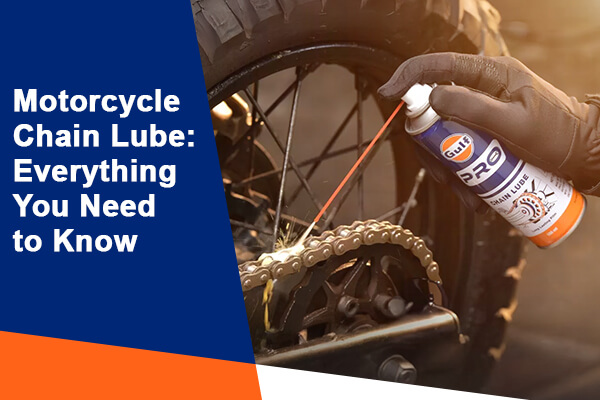
Credit: india.gulfoilltd.com
See the Best Motorcycle Chain Cleaner Kits
When To Apply Chain Lube
Many beginners wonder, “How often should I lube my chain? ” The answer depends on your riding style, mileage, and weather conditions.
Here are general guidelines:
- Every 300–600 miles (500–1,000 km) of riding.
- After riding in rain or wet conditions.
- After washing your bike—water can wash off old lube.
- Before long trips or after heavy off-road use.
Some sport and off-road bikes need even more frequent attention. If your chain looks dry, rusty, or squeaks, don’t wait—lube it.
A non-obvious tip: Lubing after a ride (when the chain is warm) helps the lube penetrate deeper. The heat causes the metal to expand slightly, allowing better absorption.
What You Need Before You Start
Applying chain lube is simple, but having the right tools and setup makes it much easier and cleaner.
Here’s what you’ll need:
- Chain lube (matched to your chain type and conditions)
- Motorcycle stand (paddock stand or center stand) for rear wheel elevation
- Gloves (disposable or work gloves)
- Chain cleaner or kerosene (never gasoline)
- Brush (specially designed chain brush or old toothbrush)
- Rag or towel for wiping off excess lube and grime
- Cardboard or plastic sheet to protect the floor from drips
A paddock or center stand lets you rotate the rear wheel easily. If you don’t have one, you can roll the bike forward a bit by hand during the process, but it’s trickier.
See the Premium Motorcycle Chain Lube Kits
Step-by-step: How To Apply Chain Lube To Your Motorcycle
1. Prepare Your Motorcycle
Move your bike to a well-ventilated area—a garage with the door open or outside. Avoid windy spots to prevent lube spray from blowing everywhere. Put the bike on its center stand or use a paddock stand to lift the rear wheel.
Lay down cardboard or a plastic sheet under the chain area to catch drips.
2. Inspect The Chain
Before adding any lube, check your chain’s condition:
- Look for rust, tight spots, or kinks.
- Check for excessive slack or looseness (refer to your owner’s manual for the correct tension).
- Spin the wheel and watch the chain move. It should run smoothly without jerking.
If your chain is very rusty, has missing O-rings, or is stretched beyond limits, it might need replacing instead of lubing.
3. Clean The Chain (if Needed)
Never apply new lube over a dirty chain. Dirt and old lube mix into a paste that wears out your chain faster.
To clean:
- Spray chain cleaner or kerosene generously onto the chain.
- Use a chain brush to scrub all sides—top, bottom, and sides of the links.
- Rotate the wheel to clean the entire chain.
- Wipe off residue with a rag.
Let it dry completely before applying fresh lube.
Common Mistake: Using Gasoline
Gasoline is too harsh. It can damage rubber O-rings and seals. Always use a proper chain cleaner or plain kerosene.
4. Apply Chain Lube
Now for the main step:
- Hold the can or applicator about 2 inches (5 cm) from the chain.
- Begin spraying or brushing on the inside of the lower run (the section that touches the sprockets first when the bike moves).
- Slowly spin the rear wheel to move the chain, applying a steady, even coat as you go.
- Cover the entire length, focusing on the side plates and rollers.
Why the inside? Gravity pulls the lube through the chain as you ride, spreading it to the most critical surfaces.
For O-ring/X-ring chains, it’s important to lube the outside, too, but do not use harsh solvents. Only use O-ring safe products.
How Much Is Enough?
The chain should look “wet” but not dripping. Over-lubing creates a mess and attracts dirt. Less is more—aim for a thin, even layer.
5. Wipe Off Excess Lube
After applying, wait 5–10 minutes to let the lube set (refer to the product instructions). Then, use a clean rag to gently wipe away any extra lube from the chain’s outside and surrounding parts. This prevents fling-off and keeps your bike cleaner.
6. Let It Cure (if Required)
Some chain lubes, especially wax-based or “dry” types, need a little time to set. Avoid riding for at least 15–30 minutes after application for best results. This helps the lube bond to the metal and reduces splatter.
Pro Tips For Chain Lubing Success
Applying chain lube is simple, but doing it well takes a little practice. Here are some expert tips for better results:
- Lube after riding when the chain is warm—it absorbs better.
- Rotate the wheel slowly for even coverage; don’t rush.
- Don’t skip cleaning—old lube and dirt reduce effectiveness.
- Protect your brake disc from overspray with cardboard or a towel.
- Wear gloves—chain lube is sticky and hard to wash off skin.
- Check the chain tension after lubing. Sometimes cleaning removes grime that was tightening the chain.
- For off-road bikes, consider a thicker, “sticky” lube that resists mud and water.
- For sport bikes, use a lube that doesn’t fling at high speeds.
- Don’t forget the front sprocket area—dirt can collect here.
- Track how often you lube. Set a reminder on your phone or use a log.
A surprising insight: If your rides are short (under 5 miles/8 km), moisture can build up in the chain, so lubing may need to be more frequent—even if you’re not riding far.
Comparing Chain Lube Products
With so many options on the market, choosing the right chain lube can be confusing. Here’s a comparison of popular types and brands to help you decide:
| Product | Type | Best For | Approx. Price (USD) |
|---|---|---|---|
| Motul Chain Lube Road | Spray (O-ring safe) | Street, touring, all-weather | $12 |
| Maxima Chain Wax | Wax | Dry climates, sport bikes | $13 |
| Bel-Ray Super Clean | Dry/Semi-wet | Clean look, minimal fling | $11 |
| DuPont Teflon Chain-Saver | Dry Teflon | All-weather, dust-prone areas | $9 |
| PJ1 Blue Label Chain Lube | Wet | Off-road, wet weather | $10 |
Always check reviews and your bike’s manual before choosing a lube. Not all products are available in every country, so local options may vary.
See the 5 Best Dry Motorcycle Chain Lube
Mistakes To Avoid When Lubing Your Chain
Even experienced riders sometimes make mistakes with chain care. Avoid these common errors:
- Lubing a dirty chain: This traps grit and wears out the chain faster.
- Using too much lube: More is not better. Excess attracts dirt and makes a mess.
- Forgetting the inside run: Lubing only the outside doesn’t reach critical areas.
- Using the wrong product: Some lubes are not safe for O/X/Z-ring chains.
- Skipping reapplication after rain: Water washes off lube quickly.
- Spraying the brakes: Chain lube on brake discs or pads can cause brake failure.
- Ignoring chain tension: A loose or tight chain can be dangerous, even if well-lubed.
How To Tell If Your Chain Needs Lubing
Not sure when it’s time to reapply? Look for these signs:
- Squeaking or grinding noises when riding.
- Chain looks dry, rusty, or dusty.
- Notchy feeling when spinning the rear wheel.
- Visible buildup of black grime or old lube.
- Spray marks on the swingarm (from lube fling-off—means too much lube, or wrong lube for your style).
If you see these, it’s time to clean and re-lube.
How Chain Lube Affects Performance And Safety
A well-lubed chain doesn’t just last longer—it makes your motorcycle ride better. You’ll notice:
- Smoother throttle response: Power transfers efficiently from the engine to the rear wheel.
- Quieter operation: Less metal-on-metal noise.
- Safer riding: A poorly maintained chain can snap or come off, especially at high speeds.
- Better gas mileage: Less friction equals less wasted energy.
A study by the Motorcycle Industry Council found that regular chain maintenance can extend chain life by 50% or more. That means less money spent on replacement parts and fewer breakdowns.

Credit: www.youtube.com
Environmental And Safety Considerations
Modern chain lubes are safer than they used to be, but you should still handle them with care.
- Always wear gloves to protect your skin.
- Dispose of old rags and cardboard with chain lube on them as hazardous waste (check local rules).
- Never spray near open flames—many lubes are flammable.
- Avoid inhaling fumes—always work in a well-ventilated space.
Some lubes are now biodegradable. If you ride off-road or care about minimizing your environmental impact, look for these options.
Real-world Example: Routine Chain Lubing
Let’s walk through a real-world scenario. Alex rides a Yamaha MT-07, mostly on city roads and occasional highway trips. He puts about 150 miles a week on his bike.
Every two weeks, Alex:
- Puts the bike on a paddock stand after his Sunday ride.
- Inspects the chain and sprockets for wear.
- Sprays the chain with kerosene and scrubs with a chain brush.
- Wipes off the dirt and lets the chain dry.
- Applies a thin, even coat of Motul Chain Lube Road spray to the inside of the chain while slowly spinning the wheel.
- Waits 15 minutes, then wipes off excess.
- Checks the chain tension before his next ride.
Alex’s chain has lasted over 20,000 miles—much longer than average—thanks to careful, regular maintenance.
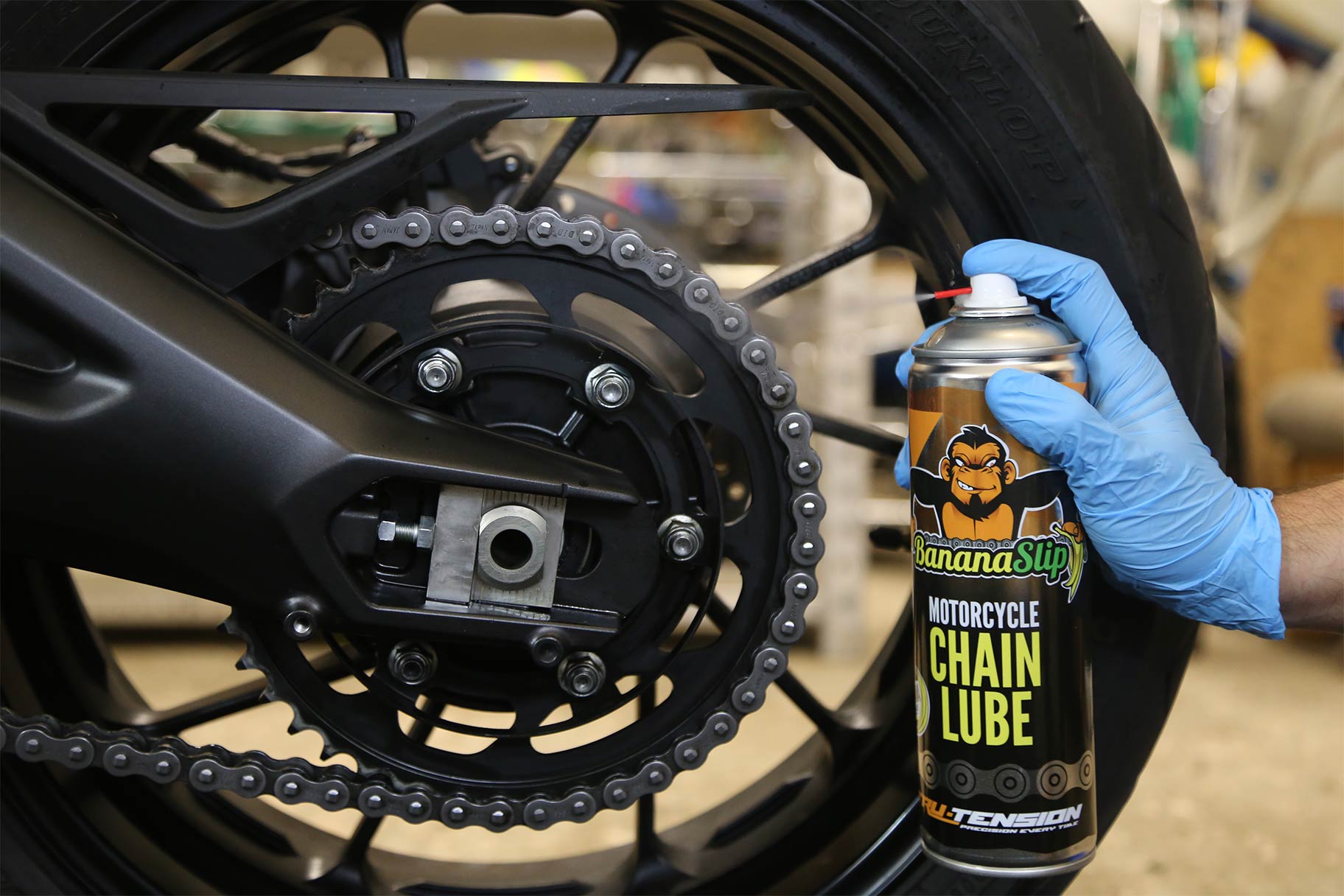
Credit: www.tru-tension.com
FAQs (How to Apply Chain Lube Motorcycle)
How Often Should I Apply Chain Lube To My Motorcycle?
It depends on your riding style and conditions. For most street riders, every 300–600 miles (500–1,000 km) is best. Always lube after riding in the rain or washing your bike, and before long trips.
Can I Use Wd-40 As Chain Lube?
WD-40 is not a true chain lube. While it can clean and temporarily protect chains, it doesn’t provide long-lasting lubrication. For best results, use a dedicated motorcycle chain lube that matches your chain type.
What Happens If I Don’t Lube My Motorcycle Chain?
A dry or dirty chain wears out much faster, loses efficiency, can rust, and might even break. This can cause expensive damage to your bike and is a serious safety risk.
Is It Necessary To Clean The Chain Before Every Lube?
If your chain is visibly dirty or caked with old lube, clean it first. For light dust or after a dry ride, you can sometimes just wipe and re-lube. However, regular cleaning (every few lubes) improves performance and chain life.
Where Can I Learn More About Chain Maintenance?
For further details and advanced tips, check your motorcycle’s owner’s manual and visit trusted sources like Motorcyclist Magazine.
A little time spent on chain maintenance goes a long way in keeping your motorcycle running at its best. With the right tools, products, and technique, applying chain lube becomes a quick and satisfying part of your riding routine. Ride safe and enjoy the road ahead!