Can You Use Motorcycle Coolant in a Car?

If you’ve got an extra bottle of motorcycle coolant sitting in your garage, you might wonder: can you use motorcycle coolant in a car? It’s a fair question. After all, both vehicles use coolant to keep engines from overheating.
I’m Robert Jackson, and I’ve spent years researching vehicle maintenance products and helping everyday drivers and riders make smart decisions. While motorcycle and car coolants often look similar, there are a few important things you should know before pouring one into the other.
In this guide, I’ll explain when motorcycle coolant may work in a car, when it shouldn’t be used, and how to check compatibility the right way.
Quick Answer
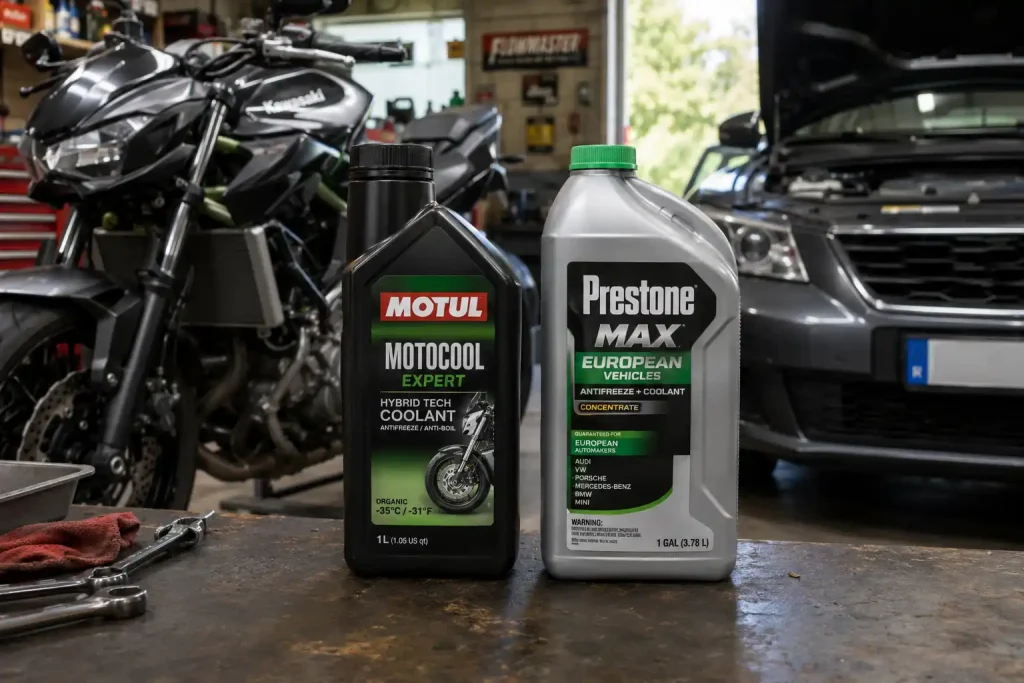
Yes, you can sometimes use motorcycle coolant in a car if the coolant meets your vehicle manufacturer’s specifications. The important factor is compatibility, not whether the bottle is labeled for motorcycles or cars.
Many motorcycle coolants use similar glycol-based formulas found in automotive coolants. However, some products use different additive packages that may not be ideal for certain automotive cooling systems.
Before using motorcycle coolant in a car, always verify that it meets the coolant requirements listed in your owner’s manual.
Why Coolant Compatibility Matters
Engine coolant does much more than prevent overheating. It protects metal parts, lubricates the water pump, helps prevent corrosion, and protects against freezing temperatures.
Modern cooling systems are designed around specific coolant formulas. Using the wrong type can reduce protection and shorten component life.
Good coolant helps:
- Control engine temperature
- Prevent corrosion
- Protect aluminum components
- Lubricate the water pump
- Reduce internal deposits
- Prevent freezing damage
The Consumer Reports maintenance resources emphasize following manufacturer-recommended fluids whenever possible.
Robert’s Tip: The label on the bottle matters less than the specifications listed on the back. Always compare those specifications with your owner’s manual.
Can You Use Motorcycle Coolant in a Car Safely?
The short answer is that sometimes you can, but not automatically.
Most motorcycle coolants are based on either ethylene glycol or propylene glycol. Many automotive coolants use the same basic ingredients. The differences usually come from the additives designed to protect certain metals and cooling system components.
You may be able to use motorcycle coolant safely if:
- The coolant meets the car manufacturer’s requirements.
- The formula is compatible with aluminum components.
- The coolant type matches the existing coolant.
- The product provides proper corrosion protection.
- The cooling system is in good condition.
You should avoid using it if compatibility cannot be verified.
| Situation | Recommended? |
|---|---|
| Matches vehicle specifications | Usually Yes |
| Emergency top-off | Possibly |
| Unknown coolant type | No |
| Different coolant technology | No |
| Manufacturer approves compatibility | Yes |
What Is the Difference Between Motorcycle and Car Coolant?
Many people assume motorcycle coolant and car coolant are completely different products. That’s not always true.
In many cases, they share similar base ingredients. The biggest differences often involve:
- Corrosion inhibitor packages
- Service life expectations
- Manufacturer-specific requirements
- Cooling system design considerations
- Intended operating environments
Motorcycles often use smaller cooling systems and may operate at higher engine speeds. Some motorcycle coolants are designed with these conditions in mind.
That doesn’t automatically make them unsuitable for cars. It simply means compatibility must be verified.
How to Check Coolant Compatibility
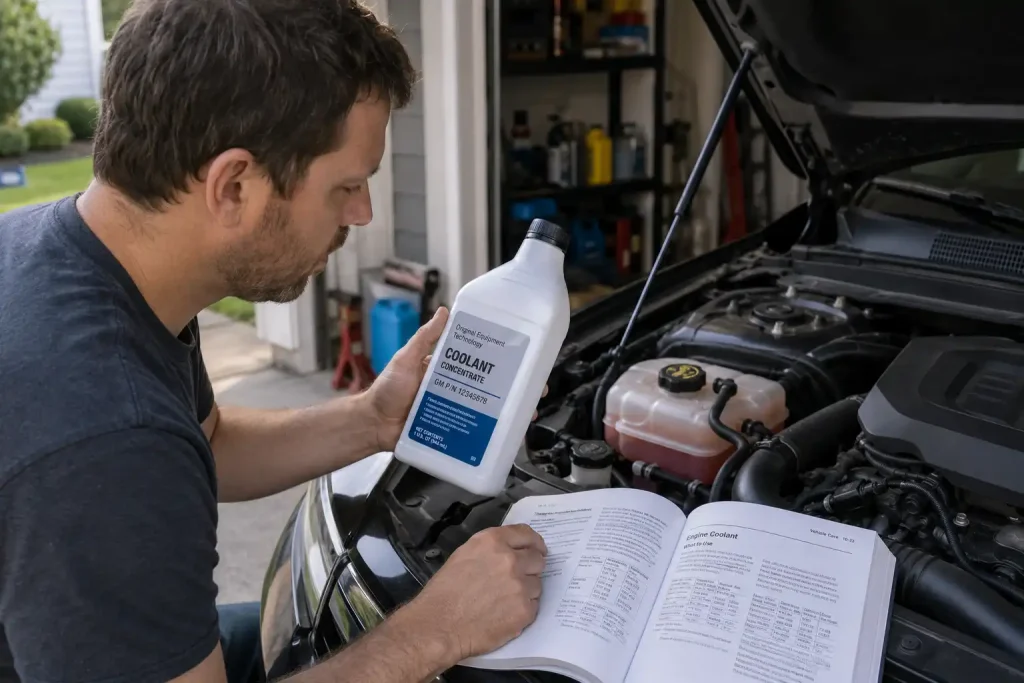
If you’re thinking about using motorcycle coolant in a car, here’s the process I recommend.
- Locate your vehicle owner’s manual.
- Find the recommended coolant specification.
- Read the coolant bottle label carefully.
- Compare standards and approvals.
- Confirm compatibility with existing coolant.
- Avoid guessing when information is unclear.
The Edmunds maintenance guides and manufacturer service information can also help identify the correct coolant type.
Can Motorcycle Coolant Be Used as an Emergency Top-Off?
Sometimes drivers discover a low coolant level while traveling. In that situation, motorcycle coolant may seem like the only option available.
If the motorcycle coolant closely matches the vehicle’s required specifications, a temporary top-off may be acceptable until the cooling system can be serviced properly.
However, if compatibility is uncertain, it is usually better to use the correct coolant as soon as possible and avoid long-term mixing.
Warning: Never add coolant to a hot engine. Wait for the cooling system to cool completely before opening the radiator cap or reservoir.
Can You Mix Motorcycle Coolant with Car Coolant?
This is where problems often begin.
Even if two coolants look similar, they may use different additive technologies. Mixing incompatible coolants can reduce corrosion protection and create deposits inside the cooling system.
Potential problems include:
- Sludge formation
- Reduced cooling efficiency
- Accelerated corrosion
- Shorter coolant life
- Water pump wear
If you’re switching coolant types, a complete cooling system flush is usually the safest approach.
| Coolant Practice | Risk Level |
|---|---|
| Using compatible coolant | Low |
| Mixing verified compatible products | Moderate |
| Mixing unknown coolants | High |
| Ignoring manufacturer requirements | High |
| Flushing before changing types | Low |
Signs the Wrong Coolant May Be in Your Car
Using the wrong coolant doesn’t always cause immediate issues. Problems often appear gradually.
Watch for these warning signs:
- Engine running hotter than normal
- Rust-colored coolant
- Sludge inside the reservoir
- Frequent overheating
- Coolant leaks
- Water pump noise
If you notice these symptoms after a coolant change, inspect the cooling system promptly.
You may also want to read our guide on coolant flush intervals and maintenance for additional cooling system care tips.
Expert Tips from Robert
Tip #1: I always tell people to trust the specification sheet more than the marketing label on the front of the bottle.
Tip #2: If you don’t know what coolant is currently in the vehicle, consider a full coolant flush before changing products.
Tip #3: Don’t rely on coolant color. Different brands use different dyes.
Tip #4: Keep a spare bottle of the correct coolant in your garage for future top-offs.
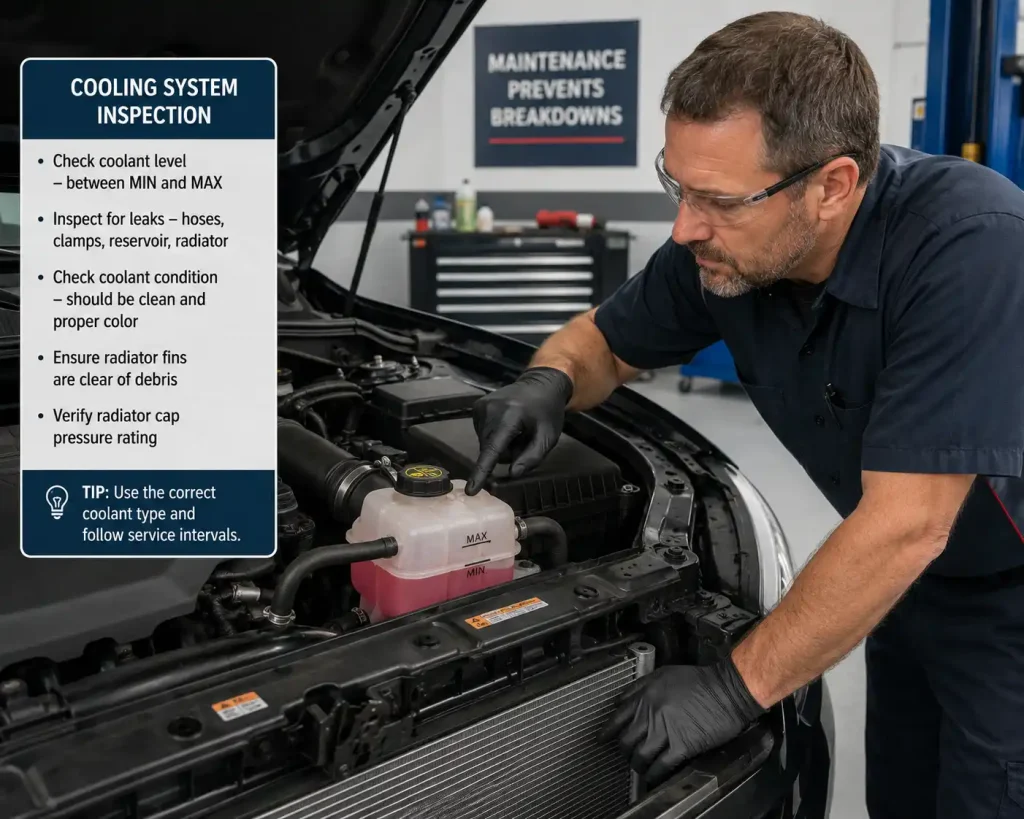
Tip #5: Check hoses and coolant levels regularly. Small cooling system problems often become expensive repairs if ignored.
Key Takeaways
- Motorcycle coolant can sometimes be used in a car if it meets manufacturer specifications.
- Compatibility is more important than the product label.
- Never assume coolant color indicates compatibility.
- Avoid mixing unknown coolant types.
- Always follow the vehicle owner’s manual whenever possible.
Frequently Asked Questions
Can motorcycle coolant damage a car engine?
It can if the coolant is incompatible with the vehicle’s cooling system requirements. Always verify specifications before use.
Is motorcycle coolant stronger than car coolant?
Not necessarily. Most differences involve additive packages rather than cooling strength. Compatibility remains the most important factor.
Can I use motorcycle coolant for an emergency top-off?
Possibly. If the coolant meets the required specifications, a temporary top-off may be acceptable until proper service can be performed.
Can I mix motorcycle coolant with automotive coolant?
Only if compatibility is confirmed. Mixing unknown coolant types can cause cooling system problems.
Does coolant color determine whether it can be used in my car?
No. Color is not a reliable compatibility indicator. Always check the specifications and approvals listed on the product.
Should I flush the cooling system before changing coolant types?
Yes. A full flush helps remove old additives and reduces the risk of incompatibility issues.
Where can I find the correct coolant specification for my vehicle?
Your owner’s manual is the best source. Manufacturer websites and service information can also help.
Conclusion
So, can you use motorcycle coolant in a car? In some cases, yes. The key is making sure the coolant meets your vehicle’s requirements.
Don’t focus on whether the bottle says “motorcycle” or “automotive.” Focus on the specifications, compatibility, and manufacturer recommendations.
If you’re unsure, check your owner’s manual and compare the coolant carefully. A few minutes of research can help you avoid expensive cooling system repairs. You may also find our guide on how to choose the right coolant for your vehicle useful.