<title>How Long Does a Motorcycle Helmet Last? A Complete Safety Guide</title>

<p>If you ride a motorcycle, your helmet is one of the most important pieces of safety gear you own. It protects your head in a crash, helps reduce serious injury, and can even save your life. But like all protective equipment, a motorcycle helmet does not last forever. So, how long does a motorcycle helmet last?</p>

<p>In most cases, experts recommend replacing a motorcycle helmet every 5 years from the date of purchase, or sooner if it has been damaged, dropped, or involved in a crash. The exact lifespan depends on how often you use it, how you store it, and how well you care for it.</p>

<h2>Why Motorcycle Helmets Matter</h2>
<p>A motorcycle helmet is designed to absorb impact and protect your skull and brain during an accident. Even a minor crash can cause severe injury if your helmet is old, damaged, or not fitted properly. That is why choosing a quality helmet and replacing it at the right time is essential for rider safety.</p>

<h2>How Long Does a Motorcycle Helmet Last?</h2>
<p>Most motorcycle helmets last about 5 years under normal use. Some riders may need to replace theirs sooner, especially if the helmet is exposed to harsh conditions or suffers impact damage. Even if a helmet looks fine on the outside, the materials inside can break down over time.</p>

<p>The outer shell may weaken, and the inner EPS foam liner can lose its ability to absorb impact. Padding and straps may also wear out, affecting both comfort and safety. Because of this, helmet age matters even if there are no visible signs of damage.</p>

<h2>What Affects a Helmet’s Lifespan?</h2>
<p>Several factors can shorten or extend the life of a motorcycle helmet:</p>
<ul>
  <li><strong>Frequency of use:</strong> Daily use causes more wear and tear.</li>
  <li><strong>Sun exposure:</strong> UV rays can degrade materials over time.</li>
  <li><strong>Heat and moisture:</strong> These can damage foam, lining, and adhesives.</li>
  <li><strong>Accidents or drops:</strong> Impact can compromise the helmet’s structure.</li>
  <li><strong>Storage conditions:</strong> Poor storage can lead to premature aging.</li>
  <li><strong>Cleaning and maintenance:</strong> Proper care helps preserve the helmet.</li>
</ul>

<h3>Daily Use and Wear</h3>
<p>If you wear your helmet often, it naturally experiences more stress. Sweat, friction, and repeated handling can wear down the interior padding and strap materials. Over time, this can affect both fit and protection.</p>

<h3>Sun, Heat, and Moisture Exposure</h3>
<p>Leaving your helmet in direct sunlight or in a hot environment, such as the back of a motorcycle or inside a car, can weaken the helmet shell and interior foam. Moisture from rain, sweat, or damp storage can also lead to odor, mold, and material breakdown.</p>

<h3>Accidents and Impacts</h3>
<p>If your helmet has been in an accident, it should usually be replaced immediately, even if there is no visible damage. The force of impact may compress the inner foam liner, making it less effective in a future crash. The same applies if the helmet is dropped hard onto a surface.</p>

<h3>Storage Conditions</h3>
<p>Proper storage can help extend the life of your helmet. Keep it in a cool, dry place away from direct sunlight, sharp objects, and chemicals. Avoid hanging it on mirrors or handlebars for long periods, as this can distort the lining and shape over time.</p>

<h3>Cleaning and Maintenance</h3>
<p>Regular cleaning helps keep your helmet in good condition. Dirt, sweat, and oils can damage the interior materials if left too long. Always follow the manufacturer’s instructions and avoid harsh chemicals that could weaken the shell or padding.</p>

<div>
  <figure class="wp-block-image size-large">
    <img decoding="async" src="https://www.chromeburner.com/media/wysiwyg/foto-4.jpg" alt="How Long Does a Motorcycle Helmet Last" title="">
  </figure>
  <p class="wp-block-paragraph">Credit: www.chromeburner.com</p>
</div>

<h2>Signs It’s Time to Replace Your Motorcycle Helmet</h2>
<p>Even if your helmet is under 5 years old, it may still need to be replaced if you notice any of the following signs:</p>
<ul>
  <li><strong>It is over 5 years old:</strong> The materials may have degraded.</li>
  <li><strong>Visible cracks or damage:</strong> Even small cracks can reduce protection.</li>
  <li><strong>It was involved in a crash:</strong> Impact can weaken the structure.</li>
  <li><strong>Loose or worn padding:</strong> A poor fit reduces safety.</li>
  <li><strong>Damaged straps or buckles:</strong> A secure fit is critical.</li>
  <li><strong>It no longer fits properly:</strong> A loose helmet may shift during a crash.</li>
</ul>

<h3>Age</h3>
<p>If your helmet is older than 5 years, it is a good idea to replace it, even if it appears to be in good condition. Hidden wear inside the helmet can make it less protective than it looks.</p>

<h3>Damage</h3>
<p>Inspect your helmet regularly for cracks, dents, worn straps, frayed stitching, or broken buckles. Any visible damage is a warning sign that the helmet may not protect you as intended.</p>

<h3>Crash Impact</h3>
<p>After any significant impact, replace the helmet. A helmet is designed to absorb force once, and its ability to protect may be reduced after a collision.</p>

<h3>Fit Problems</h3>
<p>A motorcycle helmet should fit snugly without causing discomfort. If it becomes loose over time, the padding may have compressed and the helmet may no longer provide proper protection.</p>

<h2>How to Take Care of Your Motorcycle Helmet</h2>
<p>Good maintenance can help your helmet last longer and perform better. Follow these tips to keep it in safe condition:</p>
<ul>
  <li><strong>Clean it regularly:</strong> Use mild soap and water.</li>
  <li><strong>Inspect it often:</strong> Look for cracks, wear, or loose parts.</li>
  <li><strong>Store it properly:</strong> Keep it in a cool, dry place.</li>
  <li><strong>Avoid harsh chemicals:</strong> They can damage the shell and liner.</li>
  <li><strong>Keep it away from heat:</strong> High temperatures can weaken materials.</li>
</ul>

<h3>Cleaning Your Helmet</h3>
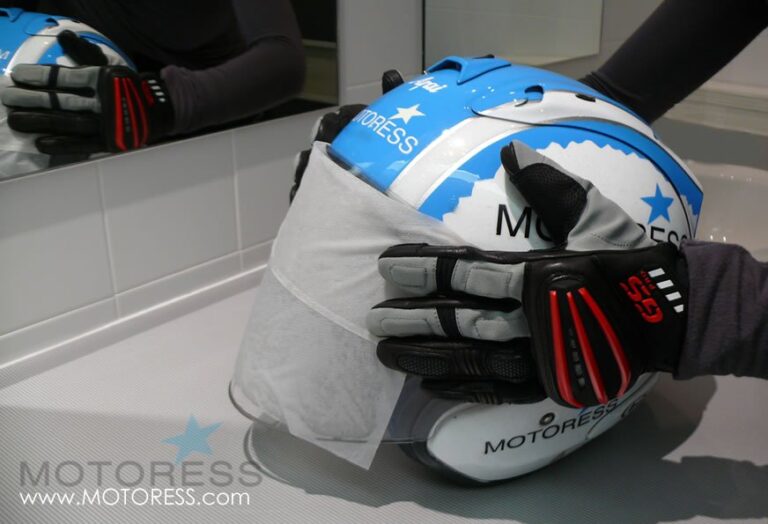
<p>Use a soft cloth, mild soap, and water to clean the outer shell and removable padding. Avoid strong solvents, bleach, or abrasive cleaners, as these can damage the finish and reduce the lifespan of the helmet.</p>

<h3>Inspecting for Damage</h3>
<p>Take a few minutes every month to check your helmet. Look closely at the shell, visor, straps, buckles, and inner liner. If anything seems loose, cracked, or worn out, consider replacing the helmet.</p>

<h3>Proper Storage</h3>
<p>Store your helmet indoors in a dry, ventilated place. A helmet bag or dedicated shelf can help protect it from dust, sunlight, and accidental drops.</p>

<h3>Avoiding Heat and Chemicals</h3>
<p>Never leave your helmet near heaters, engines, or in a closed car on a hot day. Heat can weaken adhesives and foam. Likewise, avoid cleaning products that contain harsh chemicals, since they can damage protective materials.</p>

<div>
  <figure class="wp-block-image size-large">
    <img decoding="async" src="http://www.moto1.nz/cdn/shop/articles/how_long_do_motorcycle_helmets_last.jpg?v=1656910144" alt="How Long Does a Motorcycle Helmet Last" title="">
  </figure>
  <p class="wp-block-paragraph">Credit: www.moto1.nz</p>
</div>

<h2>Frequently Asked Questions</h2>

<h3>How Often Should You Replace a Motorcycle Helmet?</h3>
<p>Most experts recommend replacing a motorcycle helmet every 5 years, or sooner if it has been damaged, dropped, or involved in a crash.</p>

<h3>Can a Motorcycle Helmet Expire?</h3>
<p>Yes. Motorcycle helmets can expire in the sense that their protective materials degrade over time, which reduces their effectiveness.</p>

<h3>What Affects the Lifespan of a Motorcycle Helmet?</h3>
<p>Sun exposure, heat, sweat, moisture, poor storage, frequent use, and impact damage can all shorten a helmet’s lifespan.</p>

<h3>How Do You Know If a Helmet Is Too Old?</h3>
<p>Signs include cracks, worn padding, faded or damaged straps, a poor fit, or a helmet that is more than 5 years old.</p>

<h2>Conclusion</h2>
<p>Motorcycle helmets are designed to protect your head, but they do not last forever. In general, most helmets should be replaced about every 5 years, and sooner if they show signs of damage or have been in a crash.</p>

<p>To get the most out of your helmet, take good care of it. Clean it regularly, store it properly, and inspect it for wear. Most importantly, replace it when it is old, damaged, or no longer fits correctly.</p>

<p>Choosing the right time to replace your motorcycle helmet is one of the simplest ways to stay safer on the road.</p>