How to Clean Motorcycle Fuel Injectors: A Friendly Guide

Hey there! If you’re like me, you love your motorcycle but hate when it acts up for no clear reason. One common culprit that often gets overlooked is dirty fuel injectors. Those little parts are super important because they deliver fuel to your engine just right. When they get clogged or dirty, your bike might start sputtering, lose power, or just run rough.
So, today, I want to share how to clean motorcycle fuel injectors step-by-step. It’s not as scary as it sounds, and with some patience, you can get your bike running smoother again without having to shell out for expensive repairs. I’ve been through it, so I know how confusing it can be at first.
Why Should You Care About Fuel Injectors?
Fuel injectors spray fuel into your engine in a fine mist. This allows the fuel to mix well with air for better combustion. When injectors get dirty, the spray pattern messes up, causing poor fuel flow. This leads to:
- Rough idling
- Hesitation when you twist the throttle
- Poor fuel economy
- Sometimes, even engine misfires
Your motorcycle’s performance drops and it might feel like your bike is losing power for no reason. Cleaning those injectors can fix these issues and improve your ride.
Signs Your Motorcycle Fuel Injectors Need Cleaning
Before diving in, let’s make sure your bike really needs this. Not all problems mean dirty injectors. Here are some common signs I noticed on my own bike that pointed me toward injector cleaning:
- Rough idle: Your engine feels shaky or uneven when you’re just sitting still.
- Hard starting: You have to crank the engine more than usual before it fires up.
- Poor throttle response: When you twist the throttle, the bike hesitates or stutters before accelerating.
- Reduced fuel economy: Your mileage drops noticeably, even though your riding habits haven’t changed.
- Check Engine Light: Sometimes your bike’s computer will detect injector problems and trigger the light.
If you spot a few of these, there’s a good chance the injectors need some love.
Symptom Checker for Clogged Fuel Injectors
| Symptom | Possible Indication Related to Fuel Injectors | Other Potential Causes |
|---|---|---|
| Loss of Engine Power | Insufficient fuel delivery, poor atomization | Clogged fuel filter, weak fuel pump, clogged air filter, exhaust restriction, incorrect ignition timing, sensor issues |
| Rough Idling or Stalling | Inconsistent fuel delivery, leaking injector | Vacuum leaks, faulty Idle Air Control (IAC) valve, dirty throttle body, incorrect spark plugs, ignition system fault |
| Poor Fuel Efficiency | Leaking injector, inefficient spray pattern causing rich mixture | Incorrect tire pressure, dragging brakes, oxygen sensor malfunction, aggressive riding style, old engine oil |
| Engine Misfires or Knocking | Lean mixture from clogged injector, improper spray pattern | Worn spark plugs, faulty ignition coil/wire, low fuel pressure, carbon buildup in cylinders, incorrect octane fuel |
| Hard Starting | Insufficient fuel delivery, leaking injector (flooding) | Weak battery, faulty starter motor, ignition system problems, fuel pump issue, compression loss |
| Increased Emissions / Fuel Smell | Incomplete combustion due to poor atomization or leaking injector | Exhaust leak, rich fuel mixture from other causes (e.g., bad O2 sensor), evaporative emission system fault |
| Hesitation During Acceleration | Delayed or insufficient fuel delivery, poor spray pattern | Throttle position sensor fault, fuel pump issue, clogged fuel filter, air intake restriction |
| Check Engine Light Illuminated | ECU detected fuel delivery anomaly (e.g., misfire, lean/rich condition) | Numerous potential causes; requires diagnostic code reading (e.g., O2 sensor, MAF sensor, ignition faults) |
What You’ll Need to Clean Fuel Injectors
Cleaning injectors is pretty straightforward once you have the right tools. Here’s what I used:
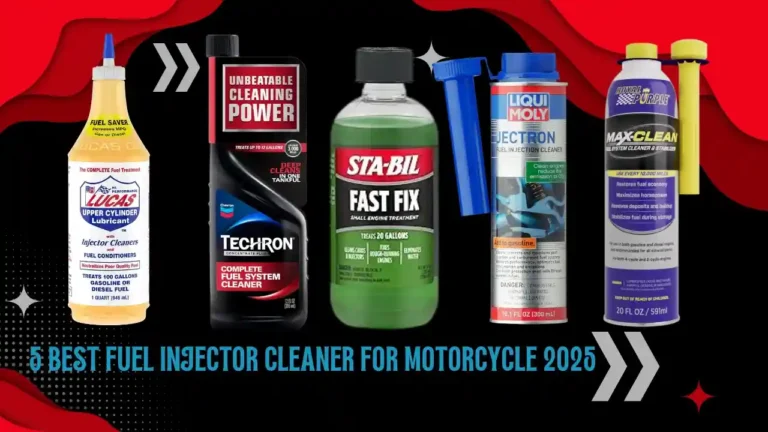
- Fuel injector cleaner (the liquid kind that you add to your gas tank)
- A fuel injector cleaning kit (for more thorough cleaning — includes adapters and pressurized cans)
- Basic tools (screwdrivers, wrenches) to access injectors
- Safety gear (gloves, goggles)
I started with the simple fuel injector cleaner additive. It’s the easiest way and works well for mild buildup. For stubborn grime, I tried the cleaning kit, which involves connecting the kit directly to the fuel rail for a deep clean.
Step-by-Step Guide: How to Clean Motorcycle Fuel Injectors
Now, let’s get hands-on. I’ll walk you through two methods — the easy tank additive method and the more detailed cleaning kit approach. Both work well depending on how dirty your injectors are.
Method 1: Using Fuel Injector Cleaner Additive
This is the simplest way. Here’s what I did:
- Fill the tank: Top off your gas tank with fresh fuel.
- Add the injector cleaner: Pour the recommended amount of cleaner into your tank. The instructions will usually say how much for a full tank.
- Ride as usual: The cleaner works as you ride. Try to keep your engine running for a good 30-50 miles. This gives the cleaner time to break down deposits inside the injectors.
- Repeat if needed: If your symptoms don’t improve, you can try this a couple of times.
I liked this method because it’s low effort, and it’s great for preventive maintenance. But if your bike is really sputtering or stalling, the next method might be better.
Method 2: Using a Fuel Injector Cleaning Kit
This method takes a bit more time and some basic mechanical skills, but it’s more thorough.
- Safety first: Make sure your bike is cool. Disconnect the battery to avoid sparks.
- Access the injectors: Locate your fuel injectors — usually near the intake manifold. You might need to remove some panels or the airbox.
- Disconnect the fuel supply: Carefully disconnect the fuel line from the fuel rail. Be ready with a rag because some fuel may spill.
- Attach the cleaning kit: Connect the cleaning kit’s adapter to the fuel rail where you removed the fuel line.
- Pressurize and run cleaner: The cleaning kit uses a pressurized can of cleaner. Turn on the bike so it runs on the cleaner instead of gasoline. Let it run until the cleaner is used up or symptoms improve.
- Reassemble: Disconnect the kit, reconnect the fuel lines and battery, and put everything back.
This method can remove heavy deposits that the additive alone can’t handle.
Comparison of Fuel Injector Cleaning Methods
| Method | Typical Cost Range | Skill Level Required | Key Pros | Key Cons | General Effectiveness |
|---|---|---|---|---|---|
| Fuel Additives (In-Tank) | $5 – $20 per treatment | Very Low | Easiest to use, no disassembly, good for prevention, relatively inexpensive. | May not clear heavy clogs, results not immediate or verifiable, potential to dislodge large debris in very dirty systems. | Good for maintenance and light cleaning; limited for moderate to severe clogs. |
| On-Vehicle Pressurized Cleaning | $50 – $150 (kit/service) | Moderate | More potent than additives, cleans injectors in place, can address moderate clogs. | More complex, requires tools and some skill, risk of fuel leaks, no individual injector testing (spray/flow). | Moderate; effectiveness can vary. |
| Off-Vehicle DIY Manual Cleaning | $10 – $30 (materials) | Moderate to High | Low material cost. | High risk of fire/damage, often ineffective, no proper testing (flow/spray/leak), time-consuming, generally not recommended by experts. | Very Low; often does more harm than good. |
| Professional Ultrasonic Cleaning | $45 – $85+ per injector | N/A (Service) | Most thorough cleaning, restores flow/spray pattern, includes pre/post testing, identifies faulty injectors. | Injectors must be removed, mail-in service involves downtime, highest cost per injector. | Very High; considered the gold standard for restoring injector performance. |
Tips to Keep Your Fuel Injectors Clean Longer
Cleaning is great, but prevention is better. Here’s what helped me keep mine cleaner for longer:
- Use high-quality fuel: Cheaper gas often has more contaminants.
- Regular maintenance: Follow your bike’s service schedule and change fuel filters as recommended.
- Avoid sitting with a full tank for too long: Old gas can gum up injectors.
- Use injector cleaner additives occasionally: Even if your bike runs fine, adding cleaner once every few thousand miles can help prevent buildup.
Keeping your injectors happy means fewer issues and better rides.
You can also see: How to Adjust Idle on Fuel Injected Harley Davidson?
Overview of Professional Fuel Injector Testing
| Test Type | What It Checks | Why It’s Important for Your Motorcycle |
|---|---|---|
| Electrical Resistance Test | The integrity of the injector’s internal coil winding. | A coil with incorrect resistance (too high or too low) indicates an impending or existing electrical failure. The injector may not open reliably or at all. This test spots electrically “dead” injectors. |
| Leak Test (Static & Dynamic) | Whether the injector leaks fuel from its nozzle when closed (under pressure) or from its body/seals. | Leaking injectors cause rich running conditions, poor fuel economy, hard starting (flooding), increased emissions, and are a significant fire hazard. |
| Spray Pattern Analysis | The shape, uniformity, and atomization quality of the fuel spray as it exits the nozzle. | A poor spray pattern (e.g., streaming, jetting, uneven cone) leads to inefficient combustion, loss of power, hesitation, increased emissions, and carbon buildup. Proper atomization is crucial. |
| Volumetric Flow Test | The precise amount of fuel delivered by the injector over a set period of time at a specific fuel pressure. | Ensures each injector delivers the correct fuel volume. Under-delivery (clogged) causes lean conditions and power loss. Over-delivery causes rich conditions. Balanced flow across all cylinders is vital |
Frequently Asked Questions
1. How do I know if my motorcycle fuel injectors need cleaning?
If your motorcycle hesitates, idles rough, or uses more fuel than usual, dirty fuel injectors might be the cause.
2. What is the easiest way to clean motorcycle fuel injectors at home?
You can remove them and use a 9V battery and carb cleaner spray to pulse and flush them safely.
3. Can I clean motorcycle fuel injectors without removing them?
Yes, you can use a fuel system cleaner added to the gas tank, but it’s less effective than a direct clean.
4. How often should I clean my motorcycle fuel injectors?
For most riders, cleaning every 10,000 to 15,000 miles helps prevent buildup and keeps fuel flow smooth.
5. Do I need special tools to clean motorcycle fuel injectors?
You’ll need a 9V battery, carb cleaner spray, and some basic hand tools to remove the injectors.
6. Is it safe to use carb cleaner on motorcycle fuel injectors?
Yes, but only when removed from the bike. Don’t spray carb cleaner into a live fuel system.
7. Can bad fuel cause dirty motorcycle fuel injectors?
Yes, low-quality fuel and debris can clog injectors over time, leading to poor performance.
8. What happens if I don’t clean my motorcycle’s fuel injectors?
Dirty injectors can cause misfires, hard starts, poor throttle response, and reduced fuel economy.
9. Is ultrasonic cleaning better for motorcycle fuel injectors?
Yes, ultrasonic cleaning is more thorough, but usually done by a professional with special tools.
10. Can I clean fuel injectors on a fuel-injected Harley-Davidson the same way?
Yes, the method is similar across brands like Harley-Davidson, Yamaha, and Honda. Always check the service manual first.
Final Thoughts
Sometimes, cleaning fuel injectors yourself isn’t enough. If you’ve tried the steps above and still notice problems, it might be time to visit a mechanic. Professionals have special ultrasonic cleaning machines that can deep-clean injectors more thoroughly. Plus, they can test the injector flow to make sure everything is working perfectly.
Remember, fuel injectors are small but crucial parts of your motorcycle’s engine. Taking care of them can boost your bike’s performance and save you money in the long run. Cleaning fuel injectors isn’t too hard once you know how, and it’s definitely worth the effort.
Thanks for sticking with me through this! If you follow these tips, your bike will thank you with smoother rides and better fuel efficiency. Have you cleaned your injectors before? What tips worked for you? I’d love to hear your stories.