Oil change Time vs Mileage: What’s the real rule?

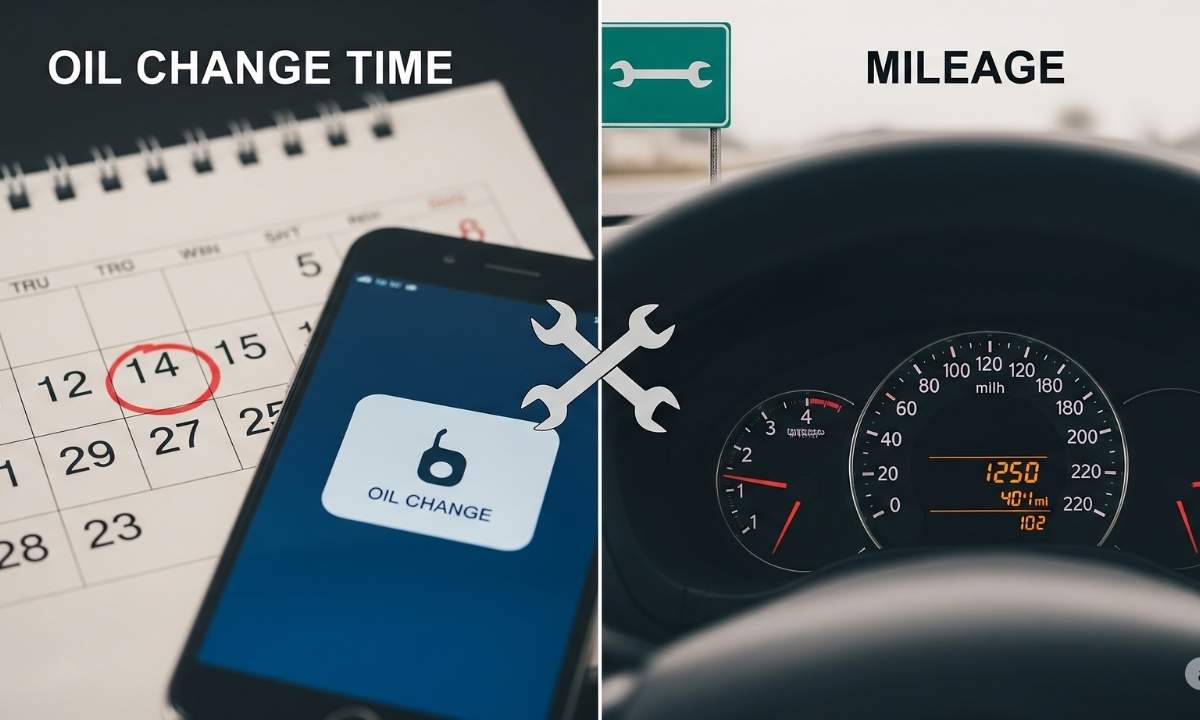
If you’ve ever wondered whether you should change your oil based on time or mileage, you’re not alone. It’s one of the oldest debates in car care. The truth is, both matter. But how much each one matters depends on how you drive, the type of oil you use, and even where you live.
I’ve had this same question myself. My car doesn’t rack up miles like it used to. Some years I barely put 3,000 miles on it, and other years it’s closer to 10,000. At first, I thought I could just stick to mileage. But then I learned that oil doesn’t only wear out from driving. It also changes with time, even if the car is sitting still.
Think about it like this: engine oil is more than just a lubricant. It also carries away heat, traps dirt, and neutralizes acids. When oil sits in your engine for months at a time, moisture and contaminants can build up. That’s especially true if you take lots of short trips where the oil never gets hot enough to burn that moisture off. Over time, that can make the oil turn acidic and slowly corrode engine parts.
On the other hand, if you drive longer trips and the oil gets fully warmed up, it lasts much longer. That’s why two people with the same car and the same oil can have very different oil change needs.
So, when it comes to oil change time vs mileage, the answer isn’t “one or the other.” It’s more about your habits, your climate, and the kind of oil you’re using.
The Foundational Role of Engine Oil
Oil puts a thin film on engine parts. This lowers friction. Without it, metal parts would grind. This makes a lot of heat and causes major wear. Oil also takes in heat from the engine. It acts as a second cooling system. Oil has special cleaners. These additives pick up dirt and carbon. They keep these bad things from causing damage. That is why changing oil on time is a must for your car’s health.
Why Mileage Matters
Mileage is the most common measure for oil changes, and for good reason. Every mile you drive puts your oil to work—absorbing heat, reducing friction, and holding contaminants in suspension.
Most manufacturers recommend an oil change interval somewhere between 3,000 and 10,000 miles, depending on the car and oil type. For example:
- Conventional oil usually needs to be changed sooner (3,000–5,000 miles).
- Synthetic oil can last much longer (7,500–10,000 miles or even more).
If you’re a high-mileage driver—say you rack up 15,000 miles a year—then mileage will likely be the factor that triggers your oil changes first. Waiting too long means the oil can break down, lose viscosity, and stop protecting your engine the way it should.
But what if you don’t drive much? That’s where time comes in.
Mileage-Based Degradation: The Science of Use
Driving a car breaks down the oil. Each mile puts stress on the oil. This stress comes from heat, friction, and engine load. The oil’s molecules break apart. This makes the oil lose its thickness. This thickness is called viscosity. Thin oil can’t lubricate well. This leaves the engine open to wear.
The engine’s work puts bad things into the oil. Exhaust gases get into the oil. These are called blow-by gases. They carry carbon, fuel, and water. Soot can be a big problem. It makes the oil work too hard to clean it. This causes wear. It also makes the engine run poorly. This happens most when the engine is cold. This is before the parts get hot and fit together well.
Modern oil has many additives. These help fight the stress. They have anti-wear parts like Zinc Dialkyldithiophosphate (
ZDDP). They also have cleaners and alkaline parts. The alkaline parts stop acids from forming. They are measured by the oil’s Total Base Number, or TBN. The additives get used up over time. When they are gone, the oil needs to be changed.
Time-Based Degradation: The Chemistry of Stagnation
Some people think a car that sits still doesn’t need new oil. That is not true. Time itself breaks down oil. Even if a car is not moving, the oil can oxidize. This is when oil mixes with air. This makes organic acids. These acids mix with water. They form strong acids that cause rust. These acids can hurt engine parts. This is why oil needs to be changed based on time, too.
Water is the main cause of time-based problems. Water vapor is a normal part of the engine’s work. If the engine doesn’t get hot enough, this water stays in the oil. This is a big problem for short trips. The engine gets warm, but not hot enough to make the water evaporate. This trapped water makes acids faster. It also mixes with additives to make sludge. This sludge can clog engine parts. So, the problem isn’t just a car sitting still. It is a bad kind of use. This use makes the oil dirty but does not let it get clean. It shows a clear link between time and mileage.
These complex problems mean you need more than a simple schedule. To show what hurts your engine, this table lists common contaminants. It shows where they come from and the damage they can do.
Why Time Matters
Even if your car sits in the driveway most of the week, the oil inside it doesn’t just “pause.” Over time, oil slowly breaks down due to oxidation, moisture buildup, and temperature changes.
Think about short trips—like running errands or commuting a few miles. The engine may not get hot enough to burn off condensation and fuel vapors, which then mix with the oil. Leave that oil sitting for months, and it can become acidic and less effective at protecting your engine.
That’s why most manufacturers set a time limit, often six months to a year, even if you haven’t hit the mileage interval. In fact, if you only drive a few thousand miles per year, time will almost always be the deciding factor.
So while mileage measures how much work the oil has done, time measures how long the oil has been exposed to degrading factors. Both matter.
Engine Oil Degradation: Contaminants and Their Effects
| Contaminant | Source/Cause | Effect on Oil & Engine |
| Soot | Incomplete fuel combustion and blow-by gases | Increases oil viscosity, leads to abrasive wear, and clogs filters if dispersion additives are depleted |
| Water/Moisture | Combustion byproduct, condensation, and humidity | Forms corrosive acids, promotes sludge formation, and impairs lubrication |
| Acids | Oxidation of the oil over time and the neutralization of combustion by-products | Corrodes engine parts, accelerates oil aging, and depletes critical additives |
| Fuel | Incomplete combustion and blow-by gases | Dilutes the oil, severely reducing its viscosity and leading to engine wear |
| Glycol | Leaks in the cooling system, such as a ruptured head gasket | Forms glycolic acids that are highly corrosive to non-ferrous bearings and combine with water and additives to create sludge |
Beyond the Basics: Factors Influencing Oil Change Intervals
Mileage and time are not the only things that break down oil. Other factors can make oil break down faster. These include how you drive and the climate. One size does not fit all for car care.
The Impact of Driving Habits and Duty Cycles
Car makers list driving as “normal” or “severe”. “Severe” means many things. It includes short trips or idling in traffic. It also means towing or driving on dusty roads. In these cases, the engine works harder. This makes the oil break down faster.
Highway driving is the easiest on the oil. On long trips, the engine gets hot. It stays at the right temperature. This burns off water and other bad things. This makes the oil last longer. The oil can last for more miles. For many people, “severe” driving is normal. These are people who live in cities. They may drive in bad weather or run short errands. The normal schedule is not right for them. This is why a personal plan for car care is needed.
Environmental and Climatic Conditions
The environment can also affect oil life. In hot weather, oil can get thin. Thin oil cannot protect engine parts. This can lead to engine damage. It can also cause the engine to overheat.
Cold weather brings other issues. In freezing temps, oil can get thick. Thick oil moves slowly. This makes it hard for it to get to engine parts. This causes bad lubrication when you start the car. A cold start is a time of high wear. Humid air also adds to the problem. It can put more moisture in the engine. This makes more acids in the oil.
Engine and Oil Type
The type of oil is key to when you change it. Normal oil comes from crude oil. It has a simple structure. It breaks down faster under stress. It needs changing every 3,000 to 5,000 miles.
Full synthetic oil is made in a lab. It has a better structure and is purer. This oil fights heat and friction better. This gives it a longer life and better engine protection. You can change it every 7,500 to 15,000 miles. This depends on the car and how you drive it. Synthetic blend oil is a mix of both types. It is a middle choice for cost and use. It is changed every 6,000 to 8,000 miles.
The engine’s design and age also matter. Old cars may have more blow-by. This needs more oil changes. Turbocharged engines get hotter. They need more from the oil. This means more changes are needed.
Which Comes First?
The simple rule is: follow whichever comes first—time or mileage.
If you hit 5,000 miles in three months, it’s time for an oil change. If you only drove 2,000 miles in six months, it’s still time for an oil change.
Think of it like food in your fridge. You wouldn’t eat something just because you haven’t finished it if the expiration date has passed. Oil works the same way—it has both a “use by” (time) and a “use up” (mileage) limit.
By respecting whichever limit comes first, you ensure your oil always stays fresh and protective. This habit not only keeps your engine running smoothly but also saves you from expensive repairs down the road.
How Driving Habits Affect Oil Changes
Not every driver’s oil ages the same way. Your habits play a big role in whether time or mileage comes first.
- Short-trip drivers: If you mostly take quick drives under 10 miles, your oil wears out faster with time. The engine never fully warms up, so moisture and fuel dilution build up.
- Highway commuters: Long highway miles are easier on oil. If you rack up miles quickly, you’ll likely hit the mileage limit first.
- Seasonal drivers: If your car sits for weeks or months (like a convertible in winter), the oil still ages with time—even if you barely drive it.
- Towing or heavy loads: Heat puts extra stress on oil, so you may need more frequent changes regardless of time or distance.
In short, your lifestyle determines which clock runs out first.
Signs You May Need an Oil Change Sooner
Even if you haven’t hit the mileage or time limit, your car may give you hints that the oil is wearing out. Watch for these signs:
- Dark, dirty oil: Fresh oil is golden brown. If it looks thick and black, it’s losing effectiveness.
- Louder engine noise: Oil cushions moving parts. When it breaks down, you may hear ticking or knocking.
- Oil change light or check engine light: Modern cars often track oil life. Don’t ignore these warnings.
- Exhaust smoke: Blue or dark smoke could mean oil isn’t doing its job and is burning up.
- Burning smell: If oil is old or low, it may overheat and give off a burnt odor.
Catching these signs early can save you from serious engine trouble.
The Cost of Delaying Oil Changes
Skipping or delaying oil changes may seem harmless, but the risks add up fast:
- Engine wear: Old oil loses its lubricating power, leading to metal-on-metal contact.
- Sludge buildup: Contaminants settle and thicken, clogging oil passages.
- Overheating: Without proper lubrication, friction raises engine temperatures.
- Expensive repairs: A neglected oil change can shorten engine life or even cause failure—costing thousands to fix.
In the long run, regular oil changes are far cheaper than major engine repairs.
Balancing Time vs. Mileage: A Practical Guide
So, which should you follow—time or mileage? The truth is, both matter. Oil wears out from use (mileage) and from sitting idle (time).
Here’s a simple way to decide:
- If you drive a lot: Follow the mileage interval closely.
- If you drive less: Don’t ignore the time limit, even if mileage is low.
- Check your manual: Always use your car’s manufacturer guidelines as the baseline.
- Adjust for conditions: Frequent short trips, extreme heat or cold, towing, or dusty roads call for more frequent oil changes.
Think of it this way: mileage tells you how hard the oil worked, while time shows how long it’s been exposed to wear factors.
Modern Solutions and Official Guidance
The old 3,000-mile rule is gone. Today’s cars have better ways to tell you when to change oil. They use data to give you a personal plan.
The Owner’s Manual: Your Primary Authority
The car’s manual is the main guide. It gives a specific plan for your car. For instance, a Ford might say 7,500 miles or six months, whichever comes first. This rule shows that both miles and time matter. The manual also gives a “severe service schedule” for hard use.
Oil Life Monitoring Systems (OLMs): The Smart Approach
Many cars now tell you when to change the oil. They use an Oil Life Monitoring System (OLM). These systems used to be simple mile counters. Now, they use data from many sensors. The OLM watches engine temp, load, idle time, and speed. This gives a custom schedule based on how you drive. For example, short trips make the OLM ask for an earlier change.
OLMs help you save money. They also create less waste. But, these systems are not perfect. They do not check the oil’s quality directly. They guess based on data. The system’s accuracy relies on its sensors. The sensors can wear out. The math inside the OLM may not be right for all driving. Still, OLMs are a big change. They move car care from a fixed plan to a smart one. This makes care cheaper and better for the planet.
The Obsolescence of the 3,000-Mile Rule
For many years, people said to change oil every 3,000 miles or three months. This rule came from a time with simpler engines and oils. Today, this rule is old. It is often pushed for money, not need. Better engines and synthetic oils changed this. The 3,000-mile rule is not right for most modern cars. Now, cars can go 5,000, 7,500, or even 15,000 miles between changes.
How Modern Engines and Oils Affect Intervals
Today’s cars are far more efficient than older models, and oil technology has improved too.
- Synthetic oils: They resist breakdown, handle heat better, and can last up to 10,000–15,000 miles in some cars.
- Engine design: New engines run cleaner, with tighter tolerances, reducing the stress on oil.
- Oil life monitoring systems (OLMS): Many modern cars track driving style, temperature, and mileage to tell you when an oil change is due.
Even with these advances, experts still recommend a yearly oil change minimum for low-mileage vehicles, since no technology stops oil from aging with time.
The Consequences of Neglect: Risks and Costs
Not changing your oil on time can be a big problem. It can lead to expensive repairs. It can even cause the engine to fail.
Short-Term Performance Impacts
You can often tell when oil is old. Old oil loses its thickness and its ability to lubricate. The engine must work harder. This uses more fuel. The car might feel slow. Bad lubrication can also cause strange sounds. You might hear ticking or knocking. This is from metal parts rubbing together.
Long-Term Engine Damage and Financial Cost
If you wait too long, problems get worse. Old oil can’t get rid of heat. This makes the engine overheat. Overheating can warp parts and cause big damage. Bad oil also forms sludge and varnish. This sludge can clog parts and the filter. This stops oil from getting to the engine. This can cause the engine to fail. This is very expensive to fix.
Oil breakdown is a bad cycle. When an engine starts cold, blow-by gases get into the oil. The oil gets dirty and loses its thickness. The bad oil causes more wear on engine parts. The extra wear then lets in more blow-by. This makes the oil even worse. This cycle can cause big engine damage. It can even lead to total engine failure.
There are also money and legal risks. Not following the oil change schedule can void your car’s warranty. You would have to pay for any repairs. This could be thousands of dollars.
Practical Guide for Vehicle Owners and Fleet Managers
Oil breakdown has many causes. The best plan is a full one. It must use official advice. It must also look at how you drive.
Synthesizing Recommendations: A Hybrid Approach
The best way to know when to change oil is to use the “whichever comes first” rule. Most experts agree on this. Here are three steps to follow:
- Use the Manual or OLM First: Your car’s manual is the main source. The OLM is also a key source. The OLM is the Oil Life Monitoring System. For new cars, this advice is for your exact engine and oil type.
- Change the plan for how you drive: Change your schedule for “severe” driving. This means frequent short trips, traffic, or towing. Many people drive this way. So, it is smart to change your oil more often than the manual’s normal schedule.
- Use time for low-mile drivers: If you don’t drive many miles, time is key. It is best to change your oil at least once a year. This helps stop problems from oxidation and moisture.
Beyond the Dashboard: Visual and Auditory Indicators
Besides the schedule, you can check your oil yourself. Oil on the dipstick should be a light amber color. If it looks dark, black, or gritty, it needs to be changed. Also, listen to your engine. Strange noises can mean the oil is not working well.
Oil Change Interval Guidelines by Oil Type and Driving Condition
| Oil Type | Normal Driving (Miles) | Severe Driving (Miles) | Time Interval (All Types) |
| Conventional | 3,000-5,000 miles | 3,000-5,000 miles | 6-12 months |
| Synthetic Blend | 5,000-7,500 miles | 5,000-7,500 miles | 6-12 months |
| Full Synthetic | 7,500-15,000 miles | 5,000-10,000 miles | 6-12 months |
Maintaining Oil Quality
Use the right oil type and filter for your car. This helps oil last longer. It is not enough to just add more oil. This does not fix the dirty, old oil. The only way to get fresh oil is to drain the old oil. Then you must put in new oil and a new filter.
Expert Opinions: What Mechanics Say
Most mechanics agree that oil should be changed by whichever comes first—time or mileage. Ignoring either factor can shorten your engine’s life.
- On mileage: Mechanics see sludge and wear in cars that stretch oil far beyond the recommended miles.
- On time: They also warn that cars sitting for long periods suffer from oil breakdown and moisture buildup, even with low miles.
- On modern cars: With synthetic oils and better engines, intervals are longer, but the principle still holds—don’t skip too long on time or miles.
In short, professional advice is simple: don’t gamble with oil changes.
FAQs for Oil change time vs mileage
Why should I care about oil change time if I don’t drive much?
Even when not in use, oil breaks down over time from moisture and oxidation. This can lead to rust and damage to your engine parts. So, a time-based oil change is key.
What happens if I miss my oil change time or mileage?
Missing an oil change can lead to engine overheating and reduced fuel efficiency. Old oil can also form sludge and cause engine parts to wear out.
How do different types of oil affect my oil change schedule?
Synthetic oil lasts longer than conventional oil. Synthetic oil can go 7,500 to 15,000 miles. Conventional oil is typically changed every 3,000 to 5,000 miles.
Do my driving habits impact my oil change time?
Yes. Frequent short trips or city driving in traffic can cause oil to break down faster. In these cases, you may need a more frequent oil change.
How do I know the right oil change time for my car?
Always follow the “whichever comes first” rule from your owner’s manual. Pay attention to your car’s oil life monitor, if it has one.
Conclusion
The debate of “oil change time vs. mileage” is not simple. Both time and mileage matter a lot. They both cause oil to break down. The old 3,000-mile rule is outdated. Modern cars use smarter plans. These plans are found in manuals and in-car systems.
A car owner should be proactive. You must not just use one number. You must look at how you use your car. You should also check the oil type and the manual. Ignoring this can be costly. It can lead to less power and engine damage. Your warranty can also be voided. By knowing how oil breaks down, you can keep your car healthy. Use a flexible schedule. Go with what comes first: time or miles. This will help your engine last a long time.