How Often to Clean And Lube Motorcycle Chain for Peak Performance

Every motorcycle rider knows that a well-maintained chain means a smoother ride, longer bike life, and fewer breakdowns. Yet, many riders—both beginners and experienced—struggle to answer a simple question: How often should you clean and lube your motorcycle chain? The answer is not as straightforward as a single number. It depends on your riding style, weather, chain type, and even the brand of lubricant you use.
This article will guide you through everything you need to know about motorcycle chain care. You’ll learn how to find the best cleaning interval for your bike, avoid costly mistakes, and keep your chain running quietly and efficiently. With clear steps, practical advice, and tips you won’t see in your owner’s manual, you’ll ride with more confidence and less worry.
Why Motorcycle Chain Maintenance Matters
The chain is the heart of your bike’s drive system. It transfers power from the engine to the rear wheel. If you ignore it, the chain can stretch, rust, or even snap, putting you and your motorcycle at risk.
Regular cleaning and lubrication help your chain last longer—sometimes even doubling its lifespan. A dirty or dry chain wears out both itself and the sprockets much faster. This can lead to expensive repairs, poor fuel economy, and reduced performance.
Many new riders don’t realize that neglecting chain care affects more than just the chain. It can damage the engine, increase vibration, and even lead to accidents if the chain fails at high speeds. That’s why regular chain maintenance should be as routine as checking your tire pressure or oil.
How Often To Clean And Lube A Motorcycle Chain
There’s no single answer that fits all bikes and riders. Still, you can use a few simple rules to find the best schedule for your situation.
General Guidelines
Most manufacturers recommend cleaning and lubricating the chain every 300–600 miles (about 500–1,000 km). However, if you ride in wet, dusty, or off-road conditions, you may need to do it more often—sometimes after every ride.
Here’s a quick overview:
| Condition | Clean & Lube Interval |
|---|---|
| Dry, clean roads | Every 600 miles (1,000 km) |
| Rainy or wet conditions | Every 300 miles (500 km) or after each wet ride |
| Dirt, dust, or off-road | After every ride |
| High-speed or track use | Every 200–300 miles (300–500 km) |
Chain Type Makes A Difference
Motorcycles use different types of chains: standard (non-sealed), O-ring, X-ring, and newer specialty chains. Sealed chains (O-ring and X-ring) keep lubricant inside the links but still need cleaning and fresh lube outside.
- Standard chains: Need more frequent care because they have no internal seals.
- O-ring/X-ring chains: Hold lube inside, but the outside still collects dirt and needs regular attention.
Other Factors That Change The Interval
- Weather: Riding in rain, mud, or snow washes away lubricant and adds grit. Clean and lube more often.
- Riding style: Aggressive riding or frequent high-speed runs heat the chain, making lube break down faster.
- Chain quality: Cheap chains may need more attention than high-end brands.
- Lubricant type: Wax-based lubes stay on longer in dry weather but can wash off quickly in rain.
Signs It’s Time To Clean Or Lube
Even with a schedule, you should check your chain regularly. Here’s what to watch for:
- Visible dirt or rust
- Chain looks dry or squeaks
- Black grease buildup
- Stiff chain links
- Noise when riding
If you notice any of these, clean and lube your chain—even if you haven’t reached the next scheduled interval.
See the Premium Motorcycle Chain Lube Kits
Step-by-step: How To Clean And Lube Your Motorcycle Chain
Keeping your chain in top shape is easy with the right steps and tools. Here’s how to do it safely and efficiently.
What You’ll Need
- Motorcycle chain cleaner or kerosene (never use gasoline)
- Chain brush (a special three-sided brush works best)
- Clean rags
- Motorcycle chain lube (O-ring safe if you have a sealed chain)
- Gloves
- Paddock stand (optional but makes the job easier)
Cleaning Process
- Park the bike securely. Use the center stand or a paddock stand. Make sure the engine is off and the bike is stable.
- Inspect the chain. Look for damage, rust, or missing O-rings. If you find major problems, consider replacing the chain.
- Apply chain cleaner. Spray or brush on your chosen cleaner. Let it soak for a few minutes to loosen grime.
- Scrub the chain. Use the brush to clean all three sides of the chain. Rotate the wheel to clean the entire length.
- Wipe off debris. Use a clean rag to remove loosened dirt and excess cleaner.
- Rinse (if needed). If the cleaner requires rinsing, use a gentle stream of water. Dry the chain thoroughly afterward.
- Inspect again. Make sure the chain moves freely and looks clean.
Lubrication Process
- Choose the right lube. Check if your chain is sealed (O-ring, X-ring) or standard. Use a lube that matches your chain type.
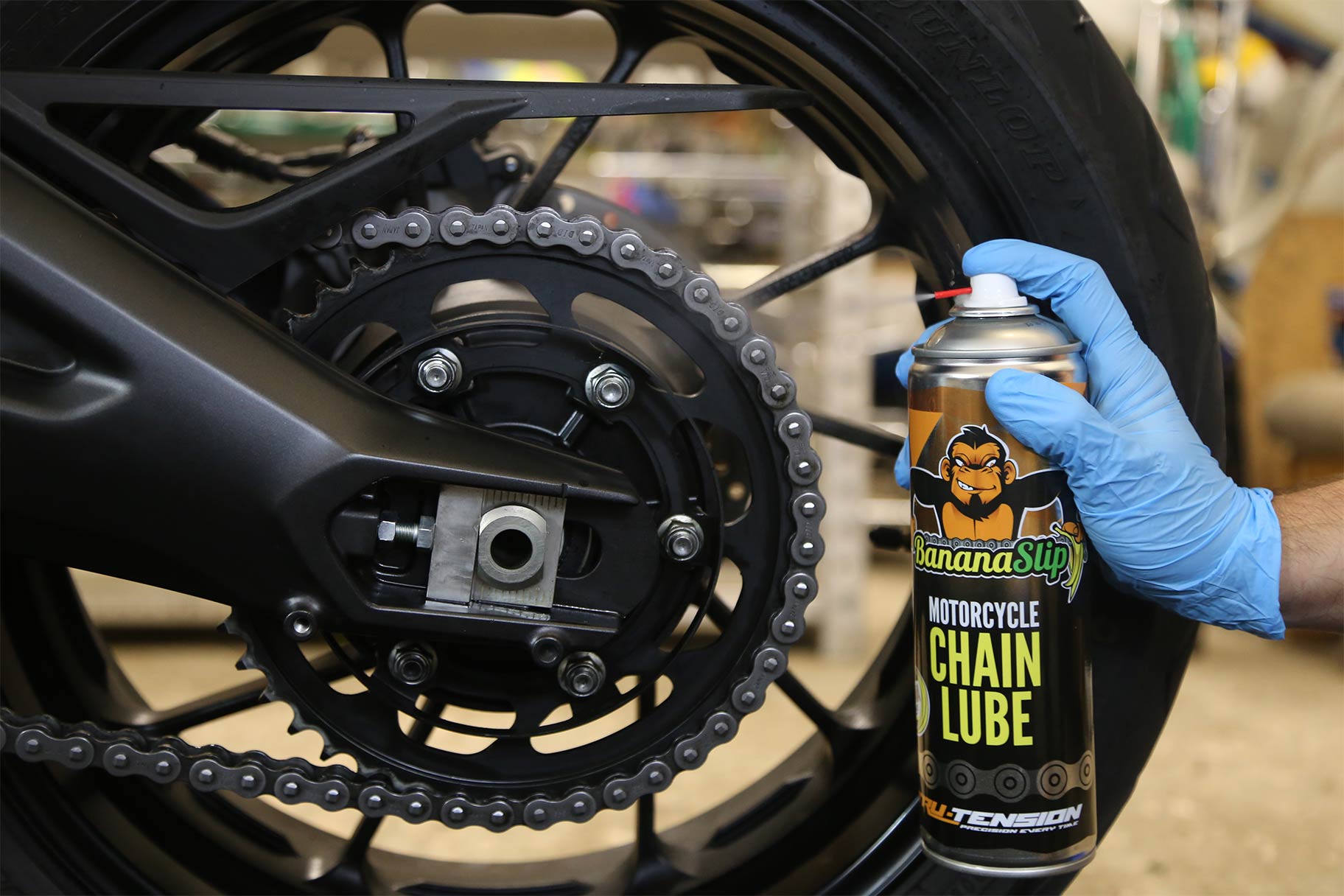
- Apply lube to the inside of the chain. This is the part that contacts the sprocket teeth. Spray or drip the lube while turning the wheel.
- Rotate the wheel. Make at least one full rotation to spread the lube evenly.
- Wipe off excess. Use a rag to remove extra lube from the outside of the chain. This prevents dirt from sticking.
- Let it set. Wait at least 10–15 minutes before riding. This gives the lube time to penetrate.
Practical Tip
Many beginners lube the outside or top of the chain. This wastes lube and does not protect the moving parts. Always lube the inside (lower run) of the chain for the best results.
See the
How To Check Chain Tension And Condition
While cleaning and lubing, always check the chain’s condition and tension. Too tight or too loose chains can cause problems.
How To Check Chain Slack
Most bikes have a recommended slack of 1 to 1.5 inches (25–40 mm). Check your owner’s manual for the correct number.
- Press the chain up and down at the midpoint between the front and rear sprockets.
- Measure the distance the chain moves.
- Adjust if needed.
When To Replace Your Chain
A chain that’s cleaned and lubed regularly will last much longer. Still, watch for these signs it’s time to replace:
- Stretched chain (can’t be adjusted tighter)
- Kinked or stiff links
- Excessive rust
- Damaged or missing O/X-rings
- Sharp sprocket teeth
If you spot these, replace the chain and sprockets together for best results.

Credit: wd40.com.au
Choosing The Right Chain Lube And Cleaner
Not all chain lubes are the same. Picking the right one helps your chain last longer and makes cleaning easier.
Chain Lube Types
| Lube Type | Best Use | Pros | Cons |
|---|---|---|---|
| Spray | All weather, quick application | Easy to use, covers well | May fling off if over-applied |
| Wax | Dry weather, long trips | Stays on, less mess | Harder to clean, can build up |
| Oil-based | Classic bikes, wet climates | Good penetration | Attracts dirt, more frequent cleaning |
| Dry film | Dusty or sandy conditions | Doesn’t attract dirt | Shorter lasting, not for rain |
What To Avoid
- WD-40: Not a chain lube. It can dry out O-rings and remove important grease.
- Gasoline: Damages O/X-rings and is dangerous.
- Household degreasers: Some can harm chain seals.
Cleaning Products
Special chain cleaners are safe for all chain types and won’t damage seals. Kerosene is a good alternative if you’re on a budget. Always avoid harsh chemicals.
See the Best Motorcycle Chain Cleaner Kits
How To Choose For Your Bike
- For sealed chains: Pick a lube labeled “O-ring safe.”
- For wet climates: Look for water-resistant lubes.
- For high performance: Use a lube designed for sport or racing.
Common Mistakes When Cleaning And Lubing Motorcycle Chains
Even experienced riders sometimes make small errors that can shorten chain life or cause safety issues. Here’s what to watch out for.
Using The Wrong Products
Many people use whatever they have at home—WD-40, engine oil, or even cooking oil. These do not protect the chain and can damage O/X-rings.
Over-lubing Or Under-lubing
Too much lube causes dirt to stick and makes a mess. Too little lube means the chain runs dry and wears out quickly.
Not Cleaning Before Lubing
Applying lube to a dirty chain just locks in grit and causes faster wear. Always clean before you lube.
Skipping Chain Checks
Some riders lube the chain but never check for tension, rust, or stiff links. A quick inspection during every clean can prevent breakdowns.
Neglecting After Wet Rides
Rain or washing your bike removes lube fast. Always clean and lube the chain as soon as possible after riding in the wet.
How Weather And Riding Conditions Affect Chain Care
Your environment has a big impact on how often you need to clean and lube your chain.
Wet Or Rainy Climates
Water washes away chain lube and can cause rust quickly. If you ride in the rain often, check your chain after every wet ride. Use a lube designed for wet weather and apply it more often.
Dusty Or Sandy Environments
Dust and sand act like sandpaper and grind away at your chain. Clean and lube after every ride in these conditions. Wax or dry-film lubes can help reduce grit sticking to the chain.
Cold And Snowy Areas
Salt on roads in winter can eat away at metal and seals. Clean the chain thoroughly after each ride and use a corrosion-resistant lube.
High-speed Or Track Riding
Chains heat up and lose lube faster at high speeds. If you ride hard, lube more often—even every 200 miles (300 km).
How Chain Maintenance Affects Motorcycle Performance
A clean, well-lubed chain does more than just last longer. It changes the way your bike feels and performs.
Smoother Power Delivery
A dry or dirty chain creates friction, causing uneven power transfer. This can feel like the bike is “jerking” or hesitating, especially at low speeds.
Better Fuel Economy
A well-lubed chain reduces drag, helping your engine work less. Studies show a poorly maintained chain can reduce fuel economy by up to 5–10%.
Less Wear On Sprockets
Sprockets are expensive to replace. A clean, lubed chain protects their teeth from grinding and wearing out early.
Quieter Ride
A noisy chain is usually a dry chain. Regular care means less clatter and more enjoyable rides.
Improved Safety
Chains that break or come off at speed can cause crashes. Regular cleaning and lubing help you spot problems before they become dangerous.
Credit: www.tru-tension.co.uk
Chain Maintenance For Different Motorcycle Types
Not all motorcycles are used the same way. Your maintenance schedule may change depending on what you ride.
Sport Bikes
Sport bikes often use high-performance chains and see more aggressive riding. Clean and lube every 300–400 miles (500–650 km), or even more often if you ride on the track.
Cruisers And Tourers
These bikes may cover long distances on highways. If conditions are dry, you can stretch intervals to every 600 miles (1,000 km). Check after every trip.
Off-road And Dual Sport
Dirt, mud, and water mean you need to clean and lube after every ride. Use a lube that resists dirt and washes off easily for frequent cleaning.
Scooters And Commuters
If your bike has a fully enclosed chain, intervals can be much longer—sometimes up to 1,000 miles (1,600 km). Open chains need the same care as any motorcycle.
How To Set A Chain Maintenance Schedule
It’s easy to forget chain care, especially if you ride daily. Set a routine that works for you and your bike.
Use Your Odometer
Pick an interval that matches your conditions and reset your trip meter after each clean.
Make It Part Of Other Maintenance
Combine chain care with oil changes, tire checks, or washing your bike. This helps you remember.
Note Changes In Chain Condition
If you notice the chain is dirty, noisy, or dry, clean and lube it—even if you haven’t reached the interval.
Seasonal Adjustments
In wet or dusty seasons, shorten your interval. In dry, clean weather, you may extend it.
Tracking Example
Here’s a sample maintenance schedule for a daily commuter:
| Task | Interval | Notes |
|---|---|---|
| Clean & lube chain | Every 500 miles (800 km) or 2 weeks | Shorter if wet or dirty |
| Check chain slack | Every 250 miles (400 km) or weekly | Adjust as needed |
| Inspect for wear | Every clean | Replace if needed |

Credit: muc-off.com
Advanced Tips For Longer Chain Life
Experienced riders and mechanics know a few extra tricks that can help your chain last even longer.
Warm Chain Before Lubing
If possible, lube the chain after riding, when it’s warm. The lubricant penetrates deeper and spreads better.
Avoid Pressure Washers
High-pressure water can force dirt and water into the chain and past O/X-rings. Use a gentle rinse or just a brush and rag.
Use A Catch Pan
Place a small tray or cardboard under the chain when cleaning or lubing. This keeps your floor clean and helps spot leaks or rust.
Rotate Your Rear Wheel
If you have a center or paddock stand, rotate the rear wheel for faster and more even cleaning and lubing.
Replace Chain And Sprockets Together
A worn chain can damage new sprockets and vice versa. For best results, replace both at the same time.
Environmental Impact And Disposal
Cleaning and lubing your chain creates waste—old rags, dirty cleaner, and used lube. Handle these responsibly.
- Dispose of used rags in sealed bags.
- Old chain lube and cleaner: Most can be thrown away with household trash, but check local rules.
- Never pour cleaner or oil down drains or onto the ground.
- Recycle metal parts: When replacing chains or sprockets, take them to a recycling center.
For more on safe disposal, see the EPA’s guide at EPA.gov.
Chain Maintenance Vs. Shaft And Belt Drives
Not all motorcycles use chains. Some use shaft drive or belt drive systems. Here’s how chain care compares:
- Shaft drives: Almost no maintenance, but more expensive and heavier.
- Belt drives: Quiet and clean, but can slip and wear out if not adjusted.
- Chain drives: Most common, lighter, more power efficient, but need regular cleaning and lubing.
Chains require more attention but offer the best performance for most bikes.
FAQs (How Often to Clean And Lube Motorcycle Chain)
How Do I Know If I’m Using Too Much Chain Lube?
If you see lube flinging onto your wheel or frame after riding, you’re using too much. Also, a sticky buildup on the chain means you should use less and wipe off the extra.
Can I Use Wd-40 To Clean My Motorcycle Chain?
WD-40 can be used for cleaning, but it’s not a lubricant. If your chain is O/X-ring, use a dedicated chain cleaner and lube labeled “O-ring safe. ” WD-40 can dry out the seals over time.
What Happens If I Never Clean Or Lube My Chain?
Dirt and rust will build up, causing the chain to stretch, seize, or even snap. This can damage your bike and lead to dangerous situations while riding.
How Long Does A Motorcycle Chain Last With Regular Maintenance?
With proper care, a quality chain can last 15,000 to 20,000 miles (24,000 to 32,000 km). Poor maintenance can cut this in half or worse.
Is It Safe To Ride Immediately After Lubing The Chain?
It’s best to wait at least 10–15 minutes after lubing before riding. This lets the lube soak in and prevents flinging. If you must ride right away, go slowly for the first few miles.
Regular motorcycle chain cleaning and lubrication are simple habits that protect your bike, save money, and keep you safe. Make chain care part of your riding routine, and you’ll enjoy smoother, more reliable rides for years to come.