How to Transport a Motorcycle Safely: My Hard-Learned Tips 2025

I still remember the first time I had to figure out how to transport a motorcycle without riding it. I thought it would be simple, but once I stood there with my bike, a ramp, and no clue, reality hit me fast.
Over the years, I’ve tried everything—loading a sport bike into a pickup truck, strapping a cruiser inside a van, hauling a dirt bike on a trailer, and even renting a U-Haul to move a bike across state lines. Each method has its own challenges, and I’ve made my fair share of mistakes along the way.
In this guide, I’ll break down the safest and easiest options—whether you’ve got a truck, a car, or no truck at all—so you can move your motorcycle with confidence. Let’s dive in.
Also read : How to Be a Good Motorcycle Passenger: My Honest Guide
1. What to Consider Before Transporting a Motorcycle
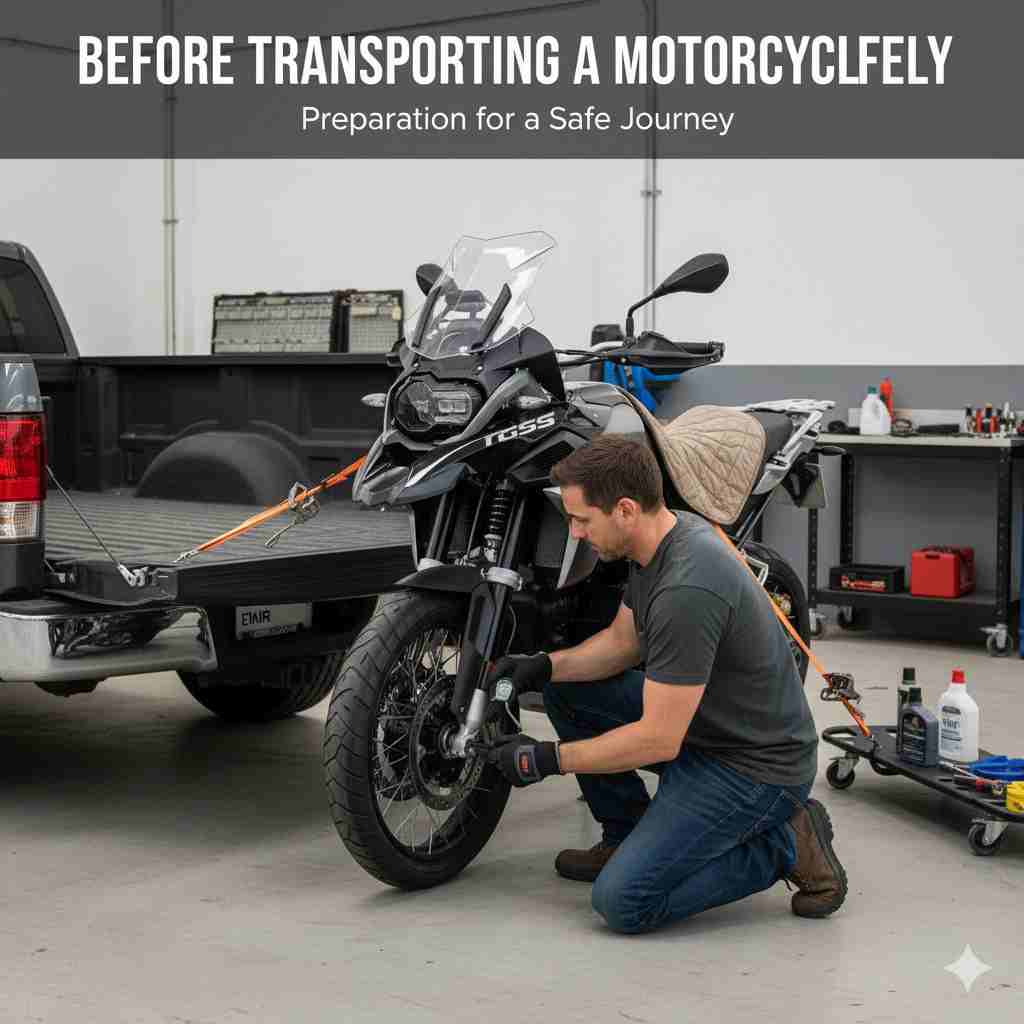
Before figuring out ramps or trailers, think about the basics: what kind of motorcycle are you moving, how far, and with what gear? A lightweight dirt bike doesn’t need the same setup as a heavy touring bike. The bigger the machine, the sturdier your straps, ramps, and tie-down points need to be.
Distance also plays a big role. For a quick local move, a pickup truck or small trailer can do the job. But if you’re going across the state or cross-country, you’ll need better weather protection and stronger security. The longer the haul, the more important it is to think about stability and shielding.
Your budget matters too. I’ve done the “cheap and scrappy” route with borrowed ramps and a friend’s help, and it worked. But I’ve also learned the hard way that cutting corners with weak straps or short ramps can lead to damage. At the very least, spend on good-quality tie-downs.
And don’t forget your comfort level. If you’re new to this, don’t ride the bike up the ramp. Walk it up slowly with help, or rent a U-Haul motorcycle trailer—it’s built for beginners and makes life a lot easier.
Quick answer: Before transporting a motorcycle, think about the bike’s weight, distance, budget, and your experience level. These four points decide whether you’ll need a truck, van, trailer, or professional transport.
Motorcycle Transport Checklist
- ✅ Know your bike’s weight and size (sport, cruiser, dirt, or touring).
- ✅ Decide on distance (local trip vs. long haul).
- ✅ Set a budget for straps, ramps, or rentals.
- ✅ Match gear to your experience level—don’t overestimate.
- ✅ Always have a safe loading/unloading plan.
2. How to Transport a Motorcycle with a Pickup Truck
Using a pickup truck is one of the most practical and budget-friendly ways to move a motorcycle. All you need are a sturdy ramp, quality ratchet straps, and ideally a wheel chock to keep the bike stable. The most important part is loading and securing the bike safely.
Short answer: Use a long ramp, walk the bike into the truck bed, and secure it with at least four straps to transport a motorcycle safely.
Step 1: Make Loading Safe
The ramp is where most people run into trouble. A short ramp means a steep climb, which can be risky with heavier bikes. I once tried loading my Yamaha with a short ramp, and it almost tipped halfway up. Now, I always use a longer ramp or back the truck into a slope or ditch to reduce the angle.
Tip: Secure the ramp to the truck with a chain or strap so it doesn’t slip.
Step 2: Get the Bike into the Bed
Never ride the bike up the ramp—it looks cool but goes wrong fast. Instead, walk it up slowly with a helper. If you’re alone, keep it in first gear and walk beside it while using the clutch and brake for control.
Tip: Walk the bike up instead of riding it to prevent accidents.
Step 3: Strap It Down
Once in the bed, balance is everything. Use at least four ratchet straps:
- Two on the handlebars or lower fork tubes.
- Two at the rear of the bike.
Compress the suspension just enough to keep the bike stable, but don’t bottom it out. This allows the suspension to absorb bumps on the road without loosening the straps.
Tip: Lightly compress the suspension so the bike stays stable over bumps.
Pro Tips for Pickup Truck Transport
- ✅ Use the longest ramp you can.
- ✅ Strap or chain the ramp to the truck.
- ✅ Place the front wheel against the bed wall or use a wheel chock.
- ✅ Stop after 10–15 miles and re-check all straps.
- ✅ Keep the tailgate down if needed, but secure everything tightly.
Pros & Cons of Using a Pickup Truck
Pros:
- Convenient if you already own a truck.
- Cheaper than renting a trailer.
- Great for short or medium distances.
Cons:
- Loading can be risky without help.
- Less protection from weather compared to an enclosed trailer.
- Bed space limits how many bikes you can move.
3. How to Transport a Motorcycle in a Van
Transporting a motorcycle in a van is one of the safest and most secure options. It keeps the bike out of the rain, away from curious eyes, and adds an extra layer of protection compared to open trailers or truck beds.
Short answer: Use a van with proper tie-down points and secure the bike inside with straps to prevent shifting.
Best for Weather Protection and Security
A van is like a rolling garage. Your bike stays dry, clean, and hidden while you travel. I once moved my bike during a storm, and watching it stay spotless inside the van while cars passed by covered in mud felt like a win.
Short answer: A van protects your motorcycle from bad weather and theft better than most transport methods.
How to Use Tie-Down Points Inside Vans
Most vans have built-in tie-down points or rails on the floor and walls. These are lifesavers because you can hook ratchet straps to them and keep the bike from sliding. If your van doesn’t have them, a portable wheel chock or even a heavy-duty strap kit can make loading safer.
Short answer: Hook straps to floor or wall tie-down points and use a wheel chock to keep the bike stable in a van.
Why Panel Vans Are Popular in the U.S. and EU
In the U.S., cargo vans like the Ford Transit or Dodge Ram ProMaster are everywhere, often used by delivery drivers and small businesses. In Europe, panel vans like the Mercedes Sprinter or VW Transporter are just as common. Riders love them because they’re tall, spacious, and can fit even big adventure bikes without issue.
Short answer: Panel vans are popular because they’re spacious, tall, and widely available in both the U.S. and EU.
Quick Van Transport Checklist
- ✅ Park on level ground before loading.
- ✅ Use a ramp or lift if the van floor is high.
- ✅ Strap the bike to at least four tie-down points.
- ✅ Lightly compress the suspension for stability.
- ✅ Check straps after 15–20 minutes of driving.
4. How to Transport a Motorcycle on a Trailer
Transporting a motorcycle on a trailer is one of the most flexible and affordable methods. You don’t need a van or a big pickup—just a tow hitch and a steady trailer.
Short answer: Secure your bike with straps on an open or enclosed trailer, making sure it’s balanced and stable for the road.
Open vs. Enclosed Trailers
Open trailers are light, easy to hook up, and usually cheaper. The downside is your bike is exposed to weather and road grime. Enclosed trailers, on the other hand, are like mobile garages—great for long trips or expensive bikes but heavier and pricier.
Short answer: Use an open trailer for short, fair-weather trips and an enclosed trailer for maximum protection.
Safety Tips: Strapping Techniques and Balancing Multiple Bikes
The trick with trailers is proper strapping. Use four ratchet straps—two on the front, two on the rear—while lightly compressing the suspension so the bike doesn’t bounce loose. If hauling two or more bikes, stagger them slightly so handlebars don’t clash, and strap each one down separately. I once helped a buddy haul three dirt bikes this way, and the key was double-checking the straps every fuel stop.
Short answer: Always use four tie-down points, compress suspension slightly, and recheck straps during the trip.
The U-Haul Motorcycle Trailer Option ($15/day)
Not everyone owns a trailer, and that’s where U-Haul shines. They rent out motorcycle-specific trailers with built-in wheel chocks and easy loading ramps. At around $15 a day, it’s a budget-friendly way to move your bike without investing in your own setup.
Short answer: If you don’t have a trailer, rent a U-Haul motorcycle trailer—it’s safe, cheap, and made for the job.
Quick Trailer Transport Checklist
- ✅ Use a ramp for safe loading.
- ✅ Strap the front wheel into a chock if possible.
- ✅ Tighten straps evenly on both sides.
- ✅ Check tire pressure on the trailer before leaving.
- ✅ Recheck straps after 15–20 minutes on the road.
4. How to Transport a Motorcycle on a Trailer
Using a trailer is one of the easiest ways to move a motorcycle. You don’t need a big pickup or a van—just a steady trailer and some straps.
Short answer: Strap the bike down at four points, balance the load, and check the straps often for a safe trip.
Open vs. Enclosed Trailers
I’ve used both, and each has its place. Open trailers are lighter, cheaper, and simple to use. The downside? Your bike is open to rain, wind, and road dust. Enclosed trailers are like a moving garage—perfect for long trips or when you want full protection.
Short answer: Open trailers are budget-friendly, while enclosed trailers give the best protection.
Safety Tips: Strapping and Balancing
Strapping the bike is where most people get nervous, and I was the same at first. The trick is using four ratchet straps—two at the front, two at the back—while compressing the suspension a little so the bike won’t bounce loose. If you’re carrying more than one bike, stagger them so handlebars don’t clash.
Short answer: Always use four straps, compress the suspension slightly, and double-check every stop.
The U-Haul Motorcycle Trailer Option
Not everyone owns a trailer, and that’s okay. U-Haul rents motorcycle-specific trailers with built-in wheel chocks and ramps. They’re sturdy, easy to load, and cost around $15 a day. I’ve rented one before for a weekend trip, and it felt almost effortless compared to strapping a bike into a regular trailer.
Short answer: U-Haul motorcycle trailers are cheap, safe, and designed for the job.
Quick Checklist Before Hitting the Road
- ✅ Use a ramp for safe loading and unloading.
- ✅ Secure the front wheel with a chock if possible.
- ✅ Tighten straps evenly on both sides.
- ✅ Check trailer tires before leaving.
- ✅ Stop after 15–20 minutes to recheck straps.
Transporting a motorcycle on a trailer can feel intimidating the first time, but once you get the hang of strapping and balancing, it becomes second nature. Think of the trailer as an extension of your garage on wheels—it’s all about stability and peace of mind.
5. How to Transport a Motorcycle with a Car (Without a Truck)
Not everyone owns a truck, and that’s fine. You can still move a bike safely with a car using a hitch carrier or a small trailer. Short answer: The best way to transport a motorcycle with a car is by using a hitch carrier for lighter bikes or a small trailer for heavier ones.
Hitch Carriers for Lightweight Motorcycles
If your motorcycle is small—like a dirt bike or a lightweight street bike—a hitch carrier is a solid option. It attaches to the car’s tow hitch and holds the bike off the ground. I’ve tried this with a 250cc dual-sport, and it felt stable once strapped down. Short answer: Use a hitch carrier only for lightweight motorcycles, and always check your car’s tow rating first.
Small Trailers Towed by a Car
For bigger bikes, a small trailer is the safer choice. Even a compact car can tow a single-bike trailer if it’s rated for the weight. I once borrowed a buddy’s small utility trailer to haul a cruiser with my sedan—it worked, but I had to take turns much slower than usual. Short answer: A small trailer behind a car can carry heavier bikes, but safe driving is key.
Safety and Legal Weight Limits
This is the part many riders overlook. Every car has a towing limit, and every hitch has a weight rating. Go over those numbers, and you risk damaging your car—or worse, losing control on the road. Short answer: Always know your car’s tow rating, trailer weight, and bike weight before hitting the road.
Quick Checklist for Car Transport
- ✅ Use a hitch carrier only for lightweight bikes.
- ✅ Confirm your car’s towing capacity before loading.
- ✅ Balance the bike properly on the carrier or trailer.
- ✅ Use at least 4 straps to keep it steady.
- ✅ Drive slower than usual, especially when braking or turning.
6. Long-Distance Transport: Another State or Cross-Country
If you’re wondering how to transport a motorcycle to another state, the short answer is this: you can either hire a professional shipping company or handle it yourself with a trailer, moving truck, or van. Both work—it just depends on your budget, time, and comfort level.
Professional Motorcycle Shipping Companies
The easiest way is to let the pros handle it. These companies use enclosed trailers designed for motorcycles, complete with wheel chocks and soft straps. You can choose door-to-door service or drop-off at a terminal. Short answer: Professional shipping is stress-free but usually costs between $500–$1,000 for cross-country moves.
DIY Options: Trailer, Moving Truck, or Van
If you’d rather stay in control (and save some cash), DIY is the way to go. Renting a trailer from U-Haul or loading your bike into a moving truck gives you flexibility. I’ve seen riders use cargo vans too—it keeps the bike out of the weather and adds security. Short answer: DIY is cheaper but takes more effort, and you need to drive carefully with the extra weight.
My Experience Moving a Bike to Another State
A couple of years ago, I had to move my sport bike from Florida to Georgia. I rented a U-Haul motorcycle trailer for $15 a day, picked up a set of quality ratchet straps, and hit the road. The hardest part wasn’t the ride—it was double-checking the tie-downs every 50 miles. Short answer: Renting a trailer worked for me because it was affordable, safe, and I could take my time.
Quick Tips for Long-Distance Motorcycle Transport
- ✅ Decide early: pro shipping for convenience, DIY for savings.
- ✅ Always use at least four straps, no matter the method.
- ✅ Protect fairings and paint with soft cloths or covers.
- ✅ Check tie-downs regularly during long drives.
- ✅ Budget for extra fuel—towing reduces mileage.
7. How to Transport a Motorcycle with U-Haul
If you’ve ever wondered how to transport a motorcycle with U-Haul, the good news is—they actually make it pretty simple. U-Haul offers motorcycle trailers designed with built-in chocks and tie-down points. If you don’t want to rent a trailer, you can also use their box trucks or cargo vans, though that takes a bit more planning.
Quick answer: The easiest and safest way is to use U-Haul’s motorcycle trailer, but a truck or van works fine if you load carefully.
U-Haul Trailer vs. Truck Options
The motorcycle trailer is purpose-built, which makes life easier. It has a ramp that folds down, a wheel chock to keep the front tire in place, and tie-down hooks already set up. For most riders, this is the safest bet.
If you go with a truck or van, you’ll need your own ramp and extra straps. I’ve done it both ways, and while the trailer is less stressful, the truck worked when I had to move during bad weather.
Short answer: Use the U-Haul trailer if available; use a truck or van only if you’re prepared with gear.
Step-by-Step Loading Tips for Beginners
Loading a bike for the first time can feel nerve-racking, but here’s a simple process that works:
- Use a stable ramp – Don’t risk a shaky board; rent or buy a proper ramp.
- Ask for help – Having one friend push while you guide the bars makes it much smoother.
- Engage the wheel chock – Roll the bike forward until the front tire locks in place.
- Secure with ratchet straps – Attach to the handlebars or triple tree and compress the suspension slightly.
- Double-check – Give the bike a gentle shake before driving off.
Quick takeaway: Keep the process slow, use quality straps, and never rush the tie-downs.
Pros and Cons vs. Owning a Trailer
Renting from U-Haul is cheap and convenient if you only move your bike occasionally. You don’t have to store a trailer or worry about maintenance. Plus, most locations have trailers ready to go.
On the flip side, if you’re someone who transports your motorcycle often—say, to tracks or rallies—buying your own trailer might be smarter long-term. It gives you more flexibility and saves repeated rental costs.
Answer in short: Rent for one-off moves, buy a trailer if you’ll use it often.
👉 Checklist Before Hitting the Road with U-Haul:
- Inspect the trailer or truck for damage.
- Bring at least four quality ratchet straps.
- Test the ramp for stability.
- Check tire pressure on your bike before loading.
- Do a short test drive to confirm straps are tight.
8. Tips for Safe Motorcycle Transport
When it comes to moving your bike, a few small details make all the difference between a smooth trip and a stressful one. I’ve learned the hard way that rushing the setup can cost you scratched paint or a loose strap mid-ride. So here are my go-to tips that keep every transport safe and stress-free.
Quick answer: Always use good straps, avoid stands, protect the bodywork, and drive with patience.
Use at Least Four Tie-Down Straps
Two straps won’t cut it. Your bike can lean or shift even on a short drive. Four straps—two at the front and two at the rear—keep it locked in place like it’s part of the trailer. I once tried just three straps, and one slipped; luckily, I caught it during a gas stop before things went bad.
Answer in short: Four straps are the minimum for stability and peace of mind.
Skip the Side and Center Stands
It’s tempting to leave the bike on the side stand, but that actually creates uneven pressure. Hitting one pothole can bend the stand or tip the bike. Instead, keep the bike upright and let the straps do the work.
Quick takeaway: Stands add risk—upright and strapped is always safer.
Protect Paint and Plastics
Ratchet straps can rub against fairings or gas tanks, leaving ugly marks. A simple trick is to place soft cloths, old T-shirts, or microfiber rags where the straps touch. When I moved my bike across state lines, I wrapped a towel around the tank strap, and it saved me from scratches.
Short answer: Use cloth as a buffer between straps and bodywork.
Drive Cautiously with Extra Weight
Towing a bike changes how your car or truck handles. Braking distances grow longer, turns feel heavier, and sudden lane changes can cause sway. I remind myself it’s not a race—it’s about getting the bike there safely. Slow, steady driving beats hurrying every time.
Answer in short: Adjust your driving—more weight means slower stops and smoother turns.
👉 Quick Checklist for Safe Motorcycle Transport:
- Secure with at least 4 ratchet straps.
- Keep the bike upright—no side or center stands.
- Pad straps with cloths to protect paint.
- Double-check strap tension after 10–15 minutes of driving.
- Drive slower than usual, especially on turns and stops.
9. Common Mistakes to Avoid
Transporting a motorcycle looks simple, but it’s easy to get careless and pay the price later. I’ve made a few of these mistakes myself, and trust me, once is enough to learn the hard way. Here are the big ones you’ll want to steer clear of.
Quick answer: Don’t ride up the ramp, don’t cheap out on straps, recheck tie-downs, and don’t crush the suspension.
Riding the Bike Up the Ramp
I get it—it feels faster and maybe even a little cool. But one slip and you’re looking at broken plastics, a bruised ego, or worse, a trip to the ER. The safe move is to walk the bike up with help or use a winch if you’re alone.
Short answer: Never ride your bike up the ramp—walk it instead.
Using Poor-Quality Straps
Those $5 straps at the hardware store won’t cut it. I once trusted cheap straps, and halfway through my drive one snapped, leaving my bike leaning dangerously. Good ratchet straps aren’t expensive, and they’re worth every penny.
Answer in short: Invest in strong, reliable straps—your bike’s safety depends on it.
Forgetting to Check Tie-Downs After 15–20 Miles
Even if you strap everything down perfectly, vibrations and bumps can loosen them. I make it a rule to stop after the first 15–20 miles, step out, and tighten things up. It only takes two minutes, but it could save your whole trip.
Quick tip: Always recheck straps early in the journey.
Over-Compressing the Suspension
It’s tempting to crank the straps down until the bike looks rock solid, but that puts too much stress on the forks and shocks. Over-compressing can actually damage your suspension. Instead, snug it just enough to keep the bike stable without squashing the suspension flat.
Answer in short: Tighten straps firmly, but never crush the suspension.
10. My Recommendation: What Works Best for Most Riders
After trying just about every method out there, I’ve learned that the “best” way really depends on what you have available. Still, there are a few options that stand out as the most practical for most riders.
Quick answer: If you have a truck, use ramps and straps. No truck? U-Haul trailers are the safest and cheapest. For long-distance moves, professional shipping saves the most stress.
If You Have a Truck
Honestly, nothing beats a pickup with a good ramp and quality ratchet straps. It’s quick, flexible, and you’re in full control. The only downside? Loading can be nerve-wracking the first few times, especially with heavier bikes.
Short answer: A truck + ramp + straps is the easiest setup if you already own one.
No Truck? U-Haul Works Best
When I didn’t have a truck, renting a U-Haul motorcycle trailer was a lifesaver. They’re affordable, purpose-built with built-in chocks, and much safer than improvising. The con is you need to pick it up and return it, which adds a little hassle.
Answer in short: U-Haul trailers are the cheapest and safest option if you don’t own a truck.
Long-Distance Moves
For cross-country or out-of-state transport, I’ll be honest—professional motorcycle shipping is worth every dollar. I once hauled my bike with a rented truck for over 800 miles, and the stress of worrying about tie-downs wasn’t worth it. With a shipping company, the bike arrives safe and you save yourself the headache.
Quick tip: For long-distance, professional shipping is the least stressful option.
Pros and Cons at a Glance
Truck + Ramps + Straps
✔ Cheap if you own a truck
✔ Flexible, no rental needed
✘ Risky loading alone
✘ Requires strong tie-down skills
U-Haul Trailer
✔ Safe and affordable rental
✔ Built-in motorcycle chock
✘ Pick-up and return required
✘ Not ideal for very long trips
Professional Shipping
✔ Stress-free and insured
✔ Best for long distances
✘ More expensive
✘ Less control over timing
👉 My take: For local moves, a truck is best if you’ve got one. If not, U-Haul is a safe bet. But if you’re going across the country, pay for shipping—it saves your nerves and your bike.
FAQs: How to Transport a Motorcycle
What is the cheapest way to transport a motorcycle?
The cheapest way is usually renting a U-Haul motorcycle trailer. At around $15 a day, it’s hard to beat the price, and the trailer is designed specifically for bikes with a built-in wheel chock. If you already own a truck, that’s even cheaper—just grab some ramps and straps, and you’re good to go.
Quick answer: U-Haul trailers are the cheapest safe option for most riders.
Can you transport a motorcycle without a truck?
Yes, you can. A hitch carrier works well for lighter bikes, and small trailers can be towed with many cars. I’ve personally moved a 300cc bike this way, and it felt secure as long as the weight stayed within legal limits.
In short: You don’t need a truck—cars with hitch carriers or trailers can handle the job safely.
Is it safe to use a hitch carrier for a motorcycle?
It’s safe if you follow weight ratings and use proper straps. Hitch carriers are best for lightweight motorcycles like dirt bikes or small commuters. I wouldn’t recommend them for heavy cruisers or adventure bikes—they can stress the hitch and make driving less stable.
Answer first: Hitch carriers are safe for small bikes but not ideal for heavy ones.
How do you strap down a motorcycle in a trailer?
Always use at least four ratchet straps—two at the front, two at the back. Compress the front suspension slightly, but don’t overdo it. I like to place a soft cloth under the straps to protect paint and plastics. Stop after 15–20 miles to recheck the tension because straps often loosen once you hit bumps.
Simple answer: Use four straps, compress suspension slightly, protect the bike, and recheck after the first few miles.
How much does it cost to ship a motorcycle to another state?
On average, it costs between $400 and $800 depending on distance, weight, and whether you choose open or enclosed transport. I once paid around $600 to send my bike two states away, and it arrived safe and sound. Professional shipping may feel pricey, but it saves time, stress, and wear on your vehicle.
Short answer: Expect $400–$800 for shipping a motorcycle to another state.
Conclusion
Moving a motorcycle can feel tricky, but once you know your options, it’s all about choosing what fits your situation. You’ve got trucks and ramps for the classic setup, vans for weather protection, trailers for flexibility, cars with hitch carriers for lighter bikes, U-Haul rentals for budget-friendly moves, and professional shipping for long hauls. Each has its place, and none is a one-size-fits-all answer.
For me, my go-to is loading into a truck with good ramps and ratchet straps. It’s simple, quick, and I like having control over my own bike during the trip. But when I’ve had to move across states, professional shipping gave me peace of mind—it was worth every dollar.
If there’s one takeaway, it’s this: don’t cut corners with safety. A dropped bike or loose strap is far more expensive than doing it right the first time. Choose the method that works best for your ride, your budget, and your distance—and your motorcycle will thank you by arriving in one piece, ready to ride.