Is Riding a Motorcycle Harder Than a Bike in 2026

Riding a motorcycle isn’t just about power—it’s about control, awareness, and coordination. While bicycles rely on balance and pedaling, motorcycles demand clutch control, gear shifting, and traffic navigation. In 2026, advancements in tech and safety gear are making both easier, but motorcycles still require more skill and training.
Key Takeaways
- Motorcycles require more technical skill: Clutch control, gear shifting, and throttle management add complexity not found in biking.
- Bikes are easier to learn: Most people can ride a bicycle by age 10, while motorcycles need formal training and licensing.
- Balance and coordination differ: Bikes use body weight and steering; motorcycles rely on gyroscopic stability and handlebar input.
- Safety gear is more critical for motorcycles: Helmets, jackets, and boots are essential due to higher speeds and road risks.
- 2026 tech is leveling the playing field: Electric motorcycles and smart bike systems are making both rides smoother and safer.
- Traffic and road awareness are higher for motorcyclists: Motorcycles are less visible and more vulnerable in traffic, requiring sharper situational awareness.
- Physical effort varies: Biking is a full-body workout; riding a motorcycle is more about mental focus and fine motor control.
Quick Answers to Common Questions
Is it harder to learn a motorcycle than a bike?
Yes. Motorcycles require mastering clutch control, gear shifting, and throttle management, while bikes rely on balance and pedaling, which most people learn as children.
Do you need a license to ride a motorcycle in 2026?
Yes, in most countries, including the U.S., a motorcycle license is required, involving written and riding tests, often after completing a certified training course.
Are electric motorcycles easier to ride than gas ones?
Generally, yes. Electric motorcycles often have simpler transmissions, instant torque, and no clutch, making them more beginner-friendly.
Can bike riding experience help with learning a motorcycle?
Partially. Balance and traffic awareness transfer, but mechanical skills like clutch and gear control must be learned from scratch.
Which is safer: a bike or a motorcycle?
Bikes are generally safer due to lower speeds, but motorcycles can be safe with proper training, gear, and defensive riding techniques.
📑 Table of Contents
- Is Riding a Motorcycle Harder Than a Bike in 2026?
- Understanding the Core Differences
- Learning Curve and Training Requirements
- Safety, Gear, and Risk Factors
- Technology in 2026: Leveling the Playing Field
- Physical vs. Mental Demands
- Cost, Maintenance, and Accessibility
- Final Thoughts: Harder Doesn’t Mean Better
Is Riding a Motorcycle Harder Than a Bike in 2026?
So, you’re thinking about hitting the road—but which ride should you choose? A bicycle or a motorcycle? It’s a common question, especially in 2026, when both options are more advanced, eco-friendly, and accessible than ever. While they might look similar at a glance—two wheels, handlebars, and a seat—the experience of riding each is worlds apart.
In short, yes—riding a motorcycle is generally harder than riding a bike. But “harder” doesn’t just mean physical effort. It means mental focus, technical skill, and responsibility. A bicycle is something most of us learned as kids. We wobbled, fell, and got back up until we got the hang of it. But a motorcycle? That’s a whole different beast. It’s heavier, faster, and far more complex to operate. And in 2026, with rising urban traffic, electric models, and smart safety features, the gap between the two is both narrowing and widening in surprising ways.
Understanding the Core Differences
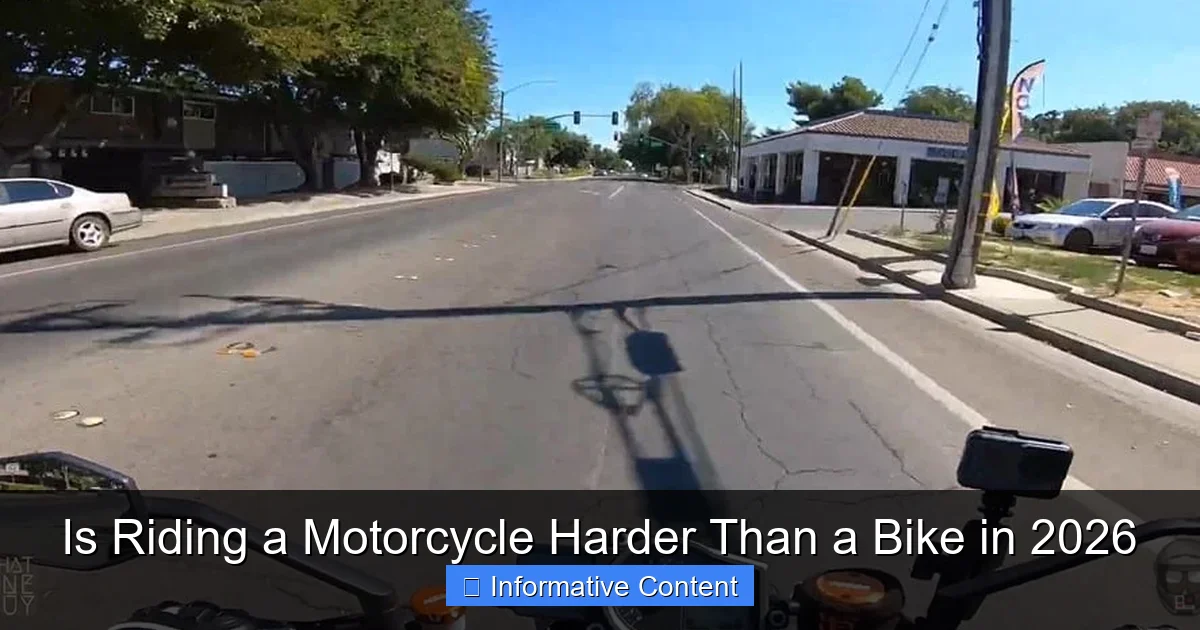
Visual guide about Is Riding a Motorcycle Harder Than a Bike in 2026
Image source: motorcycleguidelines.com
Power Source and Control
The most obvious difference? How they move. A bicycle is human-powered. You pedal, you go. Simple. Your legs do the work, and your body naturally adjusts for balance. A motorcycle, on the other hand, uses an engine—gas or electric—to propel you forward. That means you’re not just steering; you’re managing power delivery, which requires precise throttle control.
For example, imagine starting from a stoplight. On a bike, you push off with your foot and start pedaling. On a motorcycle, you have to release the clutch slowly while giving it a little gas. Get it wrong, and the engine stalls. Do it right, and you glide forward smoothly. This coordination—clutch, throttle, and balance—isn’t intuitive. It takes practice, patience, and often formal training.
Weight and Stability
Motorcycles are significantly heavier than bicycles. A typical commuter bike weighs around 25–30 pounds. A standard motorcycle? Anywhere from 350 to 600 pounds. That extra weight affects how you handle the vehicle. Bikes are light and agile—great for weaving through traffic or making quick turns. Motorcycles are more stable at speed thanks to gyroscopic forces, but they’re harder to maneuver at low speeds or when stopped.
Think of it like this: balancing a broomstick on your hand is easier when it’s moving. Same with motorcycles. At a standstill, they can feel wobbly. That’s why many new riders struggle with slow-speed maneuvers like U-turns or parking. Bikes? You just step off and walk them.
Learning Curve and Training Requirements
How Long Does It Take to Learn?
Most people learn to ride a bike by age 8 or 10. It’s a childhood milestone. Motorcycles? Not so much. In 2026, most countries still require a motorcycle license, which involves written tests, riding exams, and often a certified training course. In the U.S., for example, the Motorcycle Safety Foundation (MSF) offers beginner courses that take 15–20 hours to complete.
Why the difference? Because motorcycles are faster, louder, and more dangerous when mishandled. A small mistake at 40 mph can have serious consequences. Bikes, even at high speeds, rarely exceed 20–25 mph without serious effort. The risk profile is just different.
Skill Transfer: Can Bike Experience Help?
If you’re already a confident cyclist, does that make learning a motorcycle easier? Yes—but only to a point. Balance and road awareness help. You already know how to scan for cars, signal turns, and ride in traffic. But the mechanical skills? Those are new. You’ll still need to master the clutch, gears, and braking techniques unique to motorcycles.
For instance, braking on a bike is straightforward: squeeze the levers. On a motorcycle, you use both front and rear brakes, and the front brake does most of the work. But applying too much front brake too hard can cause a front-wheel skid or even a flip. It’s a delicate balance that takes practice.
Safety, Gear, and Risk Factors
Protective Equipment Matters More on Motorcycles
Safety gear is non-negotiable for motorcyclists. In 2026, advanced helmets with heads-up displays (HUDs), airbag jackets, and smart gloves are becoming more common. These aren’t just for comfort—they’re lifesavers. At highway speeds, a fall can mean sliding across asphalt at 60 mph. Without proper gear, injuries can be severe.
Bikers wear helmets too, of course, but the risk level is lower. A fall from a bike at 15 mph is very different from a motorcycle crash at 50 mph. That’s why motorcyclists invest in full-face helmets, armored jackets, gloves, and boots. It’s not just about looking cool—it’s about survival.
Visibility and Road Awareness
Motorcycles are small and fast, which makes them hard for drivers to see. In 2026, despite better lighting and reflective gear, “looked but failed to see” accidents still happen. That’s why motorcyclists are trained to assume they’re invisible. They ride in the part of the lane where they’re most visible, avoid blind spots, and never rely on eye contact with drivers.
Bikes face similar issues, but their slower speeds give drivers more time to react. Plus, many cities now have protected bike lanes, reducing interaction with cars. Motorcycles, however, usually share the same lanes as cars, increasing exposure to risk.
Technology in 2026: Leveling the Playing Field
Electric Motorcycles Are Easier to Ride
One of the biggest changes in 2026? The rise of electric motorcycles. Brands like Zero Motorcycles, Harley-Davidson LiveWire, and new startups are making bikes that are smoother, quieter, and easier to control. Electric motors deliver instant torque without the need for complex gear shifting. Some models even have automatic transmissions or single-speed setups, reducing the learning curve.
For new riders, this is a game-changer. No more stalling at stoplights. No more worrying about clutch control. Just twist the throttle and go—similar to an e-bike. This tech is making motorcycles more accessible, especially in urban areas where stop-and-go traffic is common.
Smart Bikes and Connected Safety
Bikes aren’t being left behind. In 2026, smart bicycles with GPS, collision alerts, and automatic lights are becoming standard. Some even have regenerative braking and pedal-assist motors that adjust based on terrain. These features make biking safer and more enjoyable, especially for commuters.
But even with tech, bikes still require physical effort. You’re still pedaling. Motorcycles, especially electric ones, can do much of the work for you. That said, the mental load of riding a motorcycle—watching for cars, managing speed, navigating complex traffic—remains higher.
Physical vs. Mental Demands
Which Is More Physically Demanding?
Biking wins here. It’s cardio. It builds leg strength, burns calories, and gets your heart pumping. A 30-minute bike ride can burn 200–400 calories, depending on intensity. Motorcycles? Not so much. You’re sitting. Your arms and core are engaged, but it’s not a workout.
However, riding a motorcycle is mentally taxing. You’re constantly processing information: traffic signals, road conditions, other vehicles, your speed, your gear. It’s like playing a high-stakes video game in real life. Fatigue sets in faster because of the concentration required.
Which Is More Relaxing?
This one’s subjective. Some people find the wind in their face and the hum of the engine on a motorcycle incredibly freeing. Others prefer the quiet, meditative rhythm of pedaling a bike through a park. In 2026, with noise-reducing helmets and smoother electric motors, motorcycles are quieter than ever. But bikes still offer a more immersive, sensory experience—birds, trees, the feel of the road beneath you.
Cost, Maintenance, and Accessibility
Upfront and Ongoing Costs
Bikes are cheaper. A decent commuter bike costs $300–$800. A motorcycle? Even an entry-level model starts around $5,000–$7,000. Add insurance, registration, gear, and maintenance, and the cost climbs quickly. Electric motorcycles are improving, but batteries still need replacement every 5–7 years, adding to long-term expenses.
Bikes need minimal maintenance—tire checks, chain lubrication, brake adjustments. Motorcycles require regular oil changes, brake inspections, and engine tune-ups. In 2026, predictive maintenance apps and AI diagnostics are helping, but it’s still more involved than bike upkeep.
Who Should Choose What?
If you’re looking for exercise, low cost, and simplicity, go for a bike. It’s perfect for short commutes, weekend rides, or fitness. If you want speed, long-distance travel, or a thrilling ride, a motorcycle might be for you—but be ready to invest time and money in training and gear.
And remember: you don’t have to choose one forever. Many riders use both. A bike for errands and exercise, a motorcycle for weekend adventures.
Final Thoughts: Harder Doesn’t Mean Better
So, is riding a motorcycle harder than a bike in 2026? Yes—but that doesn’t make it better or worse. It’s just different. Motorcycles demand more skill, focus, and responsibility. Bikes offer freedom, fitness, and ease. Thanks to 2026 tech, both are safer and more enjoyable than ever.
The real question isn’t which is harder. It’s which fits your lifestyle, goals, and comfort level. Whether you’re pedaling through city streets or cruising on an electric motorcycle, the joy of two wheels remains the same: freedom, motion, and the open road.
Frequently Asked Questions
What’s the main difference between riding a bike and a motorcycle?
The main difference is power source and control. Bikes are human-powered and rely on balance and pedaling, while motorcycles use engines and require clutch, throttle, and gear management.
Do I need special gear to ride a motorcycle?
Yes. In 2026, motorcyclists are encouraged to wear full-face helmets, armored jackets, gloves, and boots to protect against high-speed crashes and road hazards.
Are motorcycles harder to balance than bikes?
At low speeds, yes—motorcycles are heavier and can feel unstable when stopped. At higher speeds, they’re more stable due to gyroscopic forces.
Can I ride a motorcycle if I already know how to ride a bike?
Yes, but you’ll still need formal training. Bike experience helps with balance and road awareness, but motorcycle mechanics require new skills.
Are there motorcycles that don’t require gear shifting?
Yes. Many electric motorcycles in 2026 have single-speed or automatic transmissions, eliminating the need for manual gear changes.
Which is better for commuting in 2026: a bike or a motorcycle?
It depends. Bikes are cheaper, healthier, and great for short trips. Motorcycles are faster for longer commutes but cost more and require more gear and training.