What is the Minimum Tread Depth for Front Tires: Essential Safety Guide

Are your front tires safe enough to keep you and your loved ones protected on the road? Knowing the minimum tread depth for front tires can make all the difference between a smooth drive and a dangerous skid.
If you’ve ever wondered how much tread is enough or when it’s time to replace your tires, this article is exactly what you need. Keep reading to discover the critical details that could save you money, improve your car’s performance, and most importantly, keep you safe every time you hit the road.
Legal Tread Depth Limits
Legal tread depth limits are crucial for vehicle safety and compliance with road regulations. These limits specify the minimum tire tread measurement needed on front tires to ensure proper grip, handling, and braking. Maintaining the correct tread depth supports front tire safety and helps prevent accidents caused by worn tires. Different regions enforce unique regional tread depth laws, guided by their vehicle inspection standards. Understanding these legal tread requirements helps drivers know when to replace tires and avoid penalties.
Minimum Requirements By Region
Tire tread depth laws vary worldwide. Most regions set a minimum depth to keep tires safe and effective. The tire replacement guidelines usually recommend checking tire tread depth with a gauge or using tire wear indicators built into the tires.
Here are some common minimum tire tread measurement standards by region:
| Region | Minimum Tread Depth (mm) | Notes |
|---|---|---|
| United States | 1.6 mm (2/32 inch) | Standard for passenger vehicles under federal law |
| European Union | 1.6 mm | Applies to all tires, including front tires |
| United Kingdom | 1.6 mm | Measured across the central three-quarters of the tread |
| Australia | 1.5 mm | Recommended for all tires; varies by state |
| Canada | 1.5 mm | Provincial laws may vary; check local regulations |
Regional tread depth laws emphasize regular checks during vehicle inspections. The front tires often require special attention because they handle most steering and braking forces. Drivers should watch for tire wear indicators, small raised bars in grooves, which signal when tread depth is too low.
Penalties For Insufficient Tread
Failing to meet the legal tread requirements can lead to serious consequences. Authorities enforce road safety regulations strictly to reduce risks on the road. Penalties for bald tires vary but usually include fines and potential vehicle inspection failures.
Common penalties include:
- Monetary fines ranging from $50 to several hundred dollars
- Failing mandatory vehicle inspections
- Orders to replace tires immediately
- Increased insurance costs
- Possible points on driving records
These penalties for bald tires highlight the need to follow tire replacement guidelines. Driving with worn front tires reduces traction and increases stopping distance, risking accidents. Police and vehicle inspectors often check front tire tread depth during routine stops or inspections. Tires that fail to meet the minimum tire tread measurement may lead to being pulled off the road until fixed.
Keep your front tires safe by checking tread depth regularly. Proper maintenance aligns with vehicle inspection standards and keeps you clear of fines and dangers on the road.
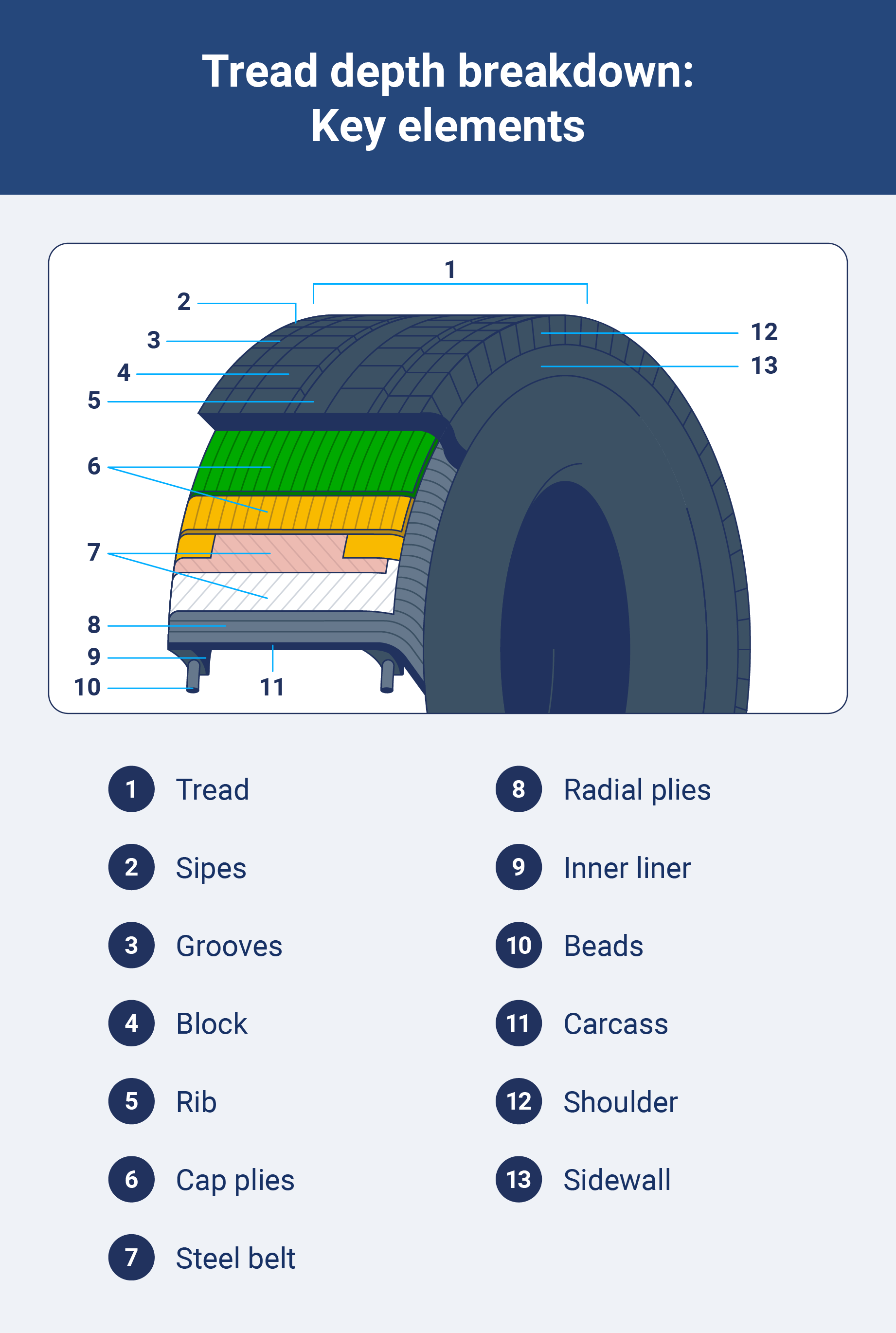
Credit: www.geotab.com
Safety Implications Of Tread Depth
The minimum tire tread depth plays a crucial role in front tire safety. It affects how well your tires grip the road, especially in wet or slippery conditions. Worn tread means less grip and longer vehicle braking distance. Understanding the safety implications of tread depth helps drivers maintain control and avoid accidents.
Impact On Traction And Handling
Tire tread depth directly influences tire traction and tire handling. Tires with deep tread grooves provide better grip on various road surfaces. This improves vehicle stability and response during turns or sudden stops.
When tread wears down below the recommended minimum, several issues arise:
- Reduced grip on dry and wet roads
- Poor cornering ability
- Longer vehicle braking distance
- Decreased overall tire grip performance
Monitoring tire wear indicators helps identify when tread depth is too low. These small bars inside the grooves appear when tread reaches the minimum safe level.
| Tread Depth (mm) | Effect on Traction | Handling Quality |
|---|---|---|
| Above 4 mm | Excellent grip | Responsive and stable |
| 2-4 mm | Moderate grip | Acceptable but reduced |
| Below 2 mm | Poor grip | Unstable and risky |
Regular tire maintenance tips include checking tread depth and pressure. Keeping tires in good shape ensures safe tire handling and optimal performance.
Hydroplaning Risks
Hydroplaning prevention depends heavily on proper tread depth. Tires with worn tread cannot channel water away effectively. This causes the tire to lose contact with the road surface.
Key points on hydroplaning and tread depth:
- Deeper tread grooves allow water to escape from under the tire.
- Shallow tread increases the chance of hydroplaning at low speeds.
- Hydroplaning leads to loss of control and longer vehicle braking distance.
Front tires are vital in preventing hydroplaning since they steer the vehicle. Maintaining the minimum tire tread helps keep the tires in contact with wet roads.
Here is a quick guide for hydroplaning risks based on tread depth:
| Tread Depth (mm) | Hydroplaning Risk Level | Safety Advice |
|---|---|---|
| > 4 mm | Low | Safe for wet roads |
| 2-4 mm | Moderate | Drive cautiously in rain |
| < 2 mm | High | Replace tires immediately |
Good tire maintenance tips include regular tread checks and avoiding driving fast in heavy rain. These steps improve tire grip performance and reduce hydroplaning risks.
Recommended Tread Depth For Front Tires
Recommended tread depth for front tires plays a crucial role in ensuring vehicle handling and safety on the road. The front tires often bear more stress during steering and braking, so maintaining proper tread depth is vital. Proper tire tread depth helps maintain tire traction, especially in wet or slippery conditions. Knowing the right depth helps drivers follow tire wear guidelines and stay within the legal tread depth limit. This section explains the recommended tread depth for front tires and why it matters for front tire safety.
Manufacturer Guidelines
Manufacturers provide specific recommendations for minimum tire tread depth. These guidelines help maintain optimal tire performance and vehicle handling. Most car makers suggest checking tread depth regularly as part of tire maintenance tips.
Common manufacturer recommendations include:
- Minimum tread depth of 3/32 inch (2.4 mm) for front tires on many vehicles.
- Some manufacturers recommend replacing front tires at 4/32 inch (3.2 mm) for better wet traction.
- Regularly inspect for uneven tire wear and rotate tires to prolong lifespan.
Here is a quick reference table for minimum tire tread depths:
| Vehicle Type | Recommended Minimum Tread Depth | Reason |
|---|---|---|
| Passenger Cars | 3/32 inch (2.4 mm) | Maintain tire traction and safe handling |
| Trucks & SUVs | 4/32 inch (3.2 mm) | Better grip in diverse conditions |
| Winter Tires | 5/32 inch (4 mm) | Improved performance on snow and ice |
Following these tire tread depth guidelines ensures your front tires perform well and meet safety standards. It also helps avoid penalties related to the legal tread depth limit. Regular checks, combined with proper tire rotation, keep your tires balanced and safe.
Differences Between Front And Rear Tires
Front tires and rear tires experience different types of stress, which affects their tire wear and tread depth needs. Understanding these differences improves front tire safety and overall vehicle stability.
Front Vs Rear Tires differences include:
- Steering Load: Front tires handle steering, so they wear faster on the edges.
- Braking Force: Front tires take more braking force, reducing tread depth quicker.
- Weight Distribution: Front tires often support more weight, especially in front-engine cars.
Because of these differences, front tires usually require a higher tread depth than rear tires for safe driving. Below is a comparison table outlining these key points:
| Aspect | Front Tires | Rear Tires |
|---|---|---|
| Primary Function | Steering and braking | Drive force and stability |
| Wear Pattern | Faster edge wear | Even wear |
| Recommended Minimum Tread Depth | 3/32 to 4/32 inch (2.4-3.2 mm) | 2/32 inch (1.6 mm) legal limit |
| Impact on Vehicle Handling | High | Moderate |
Maintaining proper tread on front tires is essential for vehicle handling and safety. Tires with low tread depth reduce tire traction, increasing risks on wet or slick roads. Always follow tire maintenance tips and tire wear guidelines to keep front tires in good condition.
Measuring Tread Depth
Measuring tread depth is key for front tire maintenance and safety. Tires with low tread lose tire grip and traction, which can cause accidents. The minimum tread depth for front tires is set by front tire safety standards and minimum tread depth regulations. Regular tire safety inspection helps spot worn tires early. Understanding how to measure tread depth keeps you safe and legal on the road.
Tools For Accurate Measurement
Using the right tools ensures precise tire tread depth measurement. The most common tool is the tread depth gauge. It is easy to use and gives accurate results.
- Tread Depth Gauge: A small device that measures the depth in millimeters or 32nds of an inch.
- Coin Test: An informal method using a coin to estimate tread depth.
- Tire Wear Indicators: Built-in bars in the tire tread that show when the tread is too low.
The table below compares these tools:
| Tool | Accuracy | Ease of Use | Cost |
|---|---|---|---|
| Tread Depth Gauge | High | Easy | Low |
| Coin Test | Low | Very Easy | Free |
| Tire Wear Indicators | Medium | Easy | Built-in |
Tread depth gauges are best for accurate checking tire tread. They help meet legal tire tread limit requirements. Coins and wear indicators give quick checks but less precision.
How To Perform The Test
Performing tire tread depth measurement is simple but must be done correctly. Follow these steps for an effective tire safety inspection:
- Park the vehicle on a flat surface and turn off the engine.
- Remove any dirt or stones from the tread grooves.
- Place the tread depth gauge into the deepest groove of the front tire.
- Press the gauge’s base flat against the tread surface for an accurate reading.
- Read the measurement on the gauge in millimeters or 32nds of an inch.
- Repeat the process at several points across the tire width.
- Check the smallest measurement; this shows the tire’s lowest tread depth.
For safety, the minimum tread depth regulations usually require at least 2/32 inch (1.6 mm) of tread. Anything less means the tire is unsafe and must be replaced. Regularly checking tread depth helps maintain front tire safety standards and prevents accidents caused by poor tire grip and traction.
When To Replace Front Tires
Knowing when to replace front tires is crucial for safe driving and maintaining optimal vehicle performance. The minimum tread depth for front tires is a key factor in this decision. Tire tread depth affects tire grip and traction, which directly impacts vehicle handling and tire tread effectiveness. Front tires wear faster due to steering and braking forces, so monitoring tire tread measurement regularly helps identify the right time for front tire replacement. Understanding the signs of wear and the effects of uneven tread wear ensures you stay within tire safety standards and maintain road safety.
Signs Of Excessive Wear
Front tires show clear signs when their tread wears too much. Checking these signs helps prevent dangerous driving conditions. The minimum tread depth front tires should never drop below 2/32 of an inch, as less depth reduces tire grip and traction. Here are common front tire wear signs to watch for:
- Shallow tread grooves: If the grooves are almost flat, the tires need replacing.
- Tire wear indicators: Small bars inside the tread become level with the tread surface when the tire is worn out.
- Cracks or cuts: Visible damage can weaken the tire structure.
- Bald spots: Areas with no tread increase the risk of slipping.
- Frequent loss of air pressure: May indicate tread or sidewall damage.
Regularly measuring the tread depth helps keep tires safe. Use a tread depth gauge or the penny test. Insert a penny into the tread with Lincoln’s head down. If the top of his head is visible, the tread is too low.
| Tread Depth | Safety Level | Action Needed |
|---|---|---|
| Above 4/32 inch | Good | Keep monitoring |
| 3/32 to 4/32 inch | Moderate | Plan replacement soon |
| 2/32 inch or below | Unsafe | Replace immediately |
Effects Of Uneven Tread Wear
Uneven tire wear affects safety and performance. It causes poor vehicle handling and tire tread issues. Uneven wear also reduces the effective tread depth on some parts, leading to early front tire replacement. Common causes include misalignment, unbalanced tires, or incorrect tire pressure.
Here are key uneven tire wear effects to consider:
- Reduced grip: Uneven wear decreases traction on wet or slippery roads.
- Vibration and noise: Uneven tread causes vibration, leading to an uncomfortable ride.
- Increased tire damage risk: Certain worn spots may fail faster under stress.
- Steering problems: Pulling to one side or wandering on the road.
Maintaining proper tire pressure and regular alignment checks help prevent uneven wear. Using tire tread measurement tools can detect uneven wear early. This protects against premature tire wear and keeps tires within tire safety standards.
| Type of Uneven Wear | Possible Cause | Effect on Tire |
|---|---|---|
| Center Wear | Overinflation | Less contact on edges, reduced traction |
| Edge Wear | Underinflation | Increased heat, faster wear on edges |
| One-Side Wear | Misalignment | Pulling, uneven grip |
| Patchy Wear | Unbalanced tires | Vibration, noise |
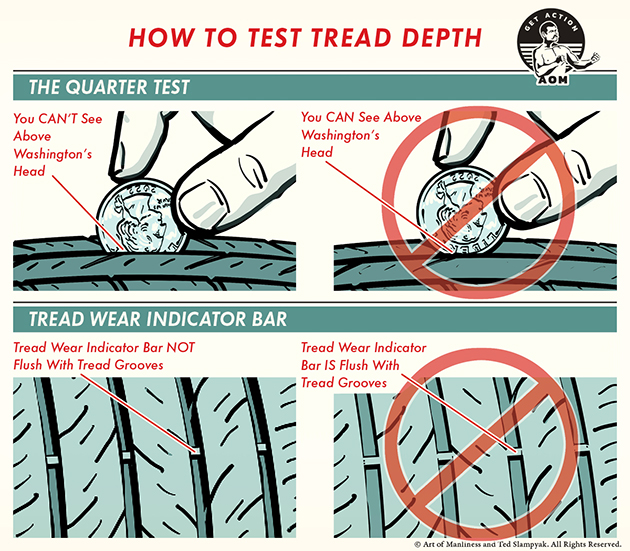
Credit: www.artofmanliness.com
Maintaining Optimal Tread Depth
Maintaining optimal tread depth on front tires is crucial for front tire safety and overall vehicle performance. The minimum tire tread measurement ensures your tires provide enough grip and traction on the road. Worn-out tread reduces control, especially in wet or slippery conditions. Regular care keeps tires within the tire tread depth standards and helps avoid early tire replacement guidelines. Proper maintenance extends tire life and improves vehicle handling safety.
Regular Tire Rotation
Regular tire rotation helps maintain even tire wear across all wheels. Front tires often wear faster due to steering and braking forces. Swapping tires between front and rear positions balances the tread wear. This practice improves tire grip and traction and prolongs tire life.
- Tire Rotation Importance includes preventing uneven tread wear.
- Rotation schedules usually suggest every 5,000 to 7,000 miles.
- Helps maintain consistent minimum tire tread measurement.
Uneven wear can expose tire wear indicators sooner on front tires. These small bars inside tread grooves show when tread is too low. Ignoring them risks poor grip and unsafe driving. A simple rotation schedule can delay this and keep your tires safe longer.
| Rotation Pattern | Purpose | Recommended Mileage |
|---|---|---|
| Front-to-Rear | Balances wear between front and rear tires | 5,000 – 7,000 miles |
| Cross Rotation | Improves even wear on all tires | 5,000 – 7,000 miles |
Following a rotation routine supports tire health and vehicle handling safety. It keeps your front tires near the minimum tire tread measurement longer.
Proper Inflation And Alignment
Maintaining correct tire pressure is vital for tire pressure maintenance. Underinflated or overinflated tires wear unevenly and reduce grip. Proper pressure improves fuel efficiency and helps keep tread depth consistent.
- Check tire pressure monthly using a reliable gauge.
- Follow manufacturer’s recommended pressure found on the door or manual.
- Adjust pressure before long trips or heavy loads.
Wheel alignment effects also impact tire wear and safety. Misaligned wheels cause uneven tread wear, especially on front tires. This reduces front tire safety and increases the risk of accidents.
- Misalignment causes tires to drag, wearing edges faster.
- Steering may pull to one side, affecting vehicle control.
- Increased fuel consumption and premature tire replacement.
Regular alignment checks help maintain the correct angle of wheels. This preserves even tread wear and keeps your tires within tire tread depth standards. Proper inflation combined with alignment ensures better vehicle handling safety and tire longevity.

Credit: www.mysafetymanager.com
FAQs For What is the Minimum Tread Depth for Front Tires
What Is The Legal Minimum Tread Depth For Front Tires?
The legal minimum tread depth for front tires is 2/32 of an inch in most states. This ensures safe traction and handling. Driving below this limit increases the risk of hydroplaning and accidents, so timely replacement is crucial for safety.
How Does Tread Depth Affect Front Tire Performance?
Tread depth directly impacts grip, braking, and water dispersion. Deeper treads provide better traction on wet or slippery roads. Worn-out treads reduce control and increase stopping distances, making driving dangerous, especially in adverse weather conditions.
When Should I Replace Front Tires Due To Tread Depth?
Replace front tires when tread depth reaches 2/32 inch or less. Regularly check tread depth with a gauge or penny test. Early replacement improves safety, fuel efficiency, and overall driving comfort.
Can Uneven Tread Wear Affect Minimum Tread Depth?
Yes, uneven tread wear can cause one area to reach minimum depth faster. This affects handling and tire lifespan. Regular tire rotation and alignment help maintain even wear and ensure safer driving conditions.
Conclusion
Maintaining the right tread depth on front tires keeps you safe on the road. The minimum legal tread depth is usually 2/32 of an inch. Tires with less tread can cause slipping and longer stopping distances. Check your tires often to catch wear early.
Replace tires before they become too worn. Good tread helps with traction, especially in rain or snow. Safe tires mean safer drives for you and your passengers. Stay aware and keep your tires in good shape. Your safety depends on it.