How to Remove Baffles from Motorcycle Exhaust Safely ?

Removing baffles from your motorcycle exhaust can increase sound and performance, but it must be done safely and legally. This guide walks you through the process step by step, covering tools, safety tips, and common pitfalls to avoid.
How to Remove Baffles from Motorcycle Exhaust Safely
If you’re looking to give your motorcycle a deeper, more aggressive sound or improve airflow, removing the baffles from your exhaust might seem like a quick fix. Baffles—those internal components inside your muffler—are designed to reduce noise and control exhaust flow. While they help keep your bike street-legal and quieter, some riders prefer the raw sound and potential performance gains of a baffle-free exhaust.
But here’s the catch: removing baffles isn’t just about unscrewing a part. It requires careful planning, the right tools, and awareness of legal and mechanical consequences. In this guide, we’ll walk you through how to remove baffles from your motorcycle exhaust safely, step by step. You’ll learn what to expect, how to avoid common mistakes, and how to keep your bike running smoothly afterward.
Whether you’re a weekend rider or a DIY enthusiast, this guide will help you tackle the job with confidence—without damaging your bike or breaking the law.
What Are Baffles and Why Remove Them?
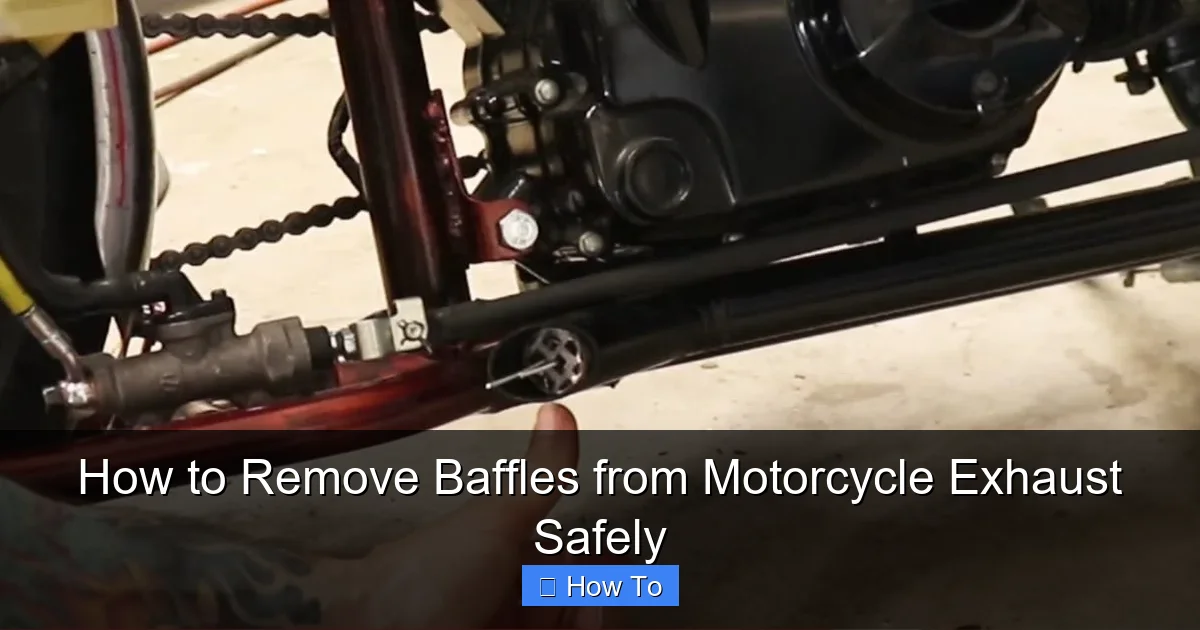
Visual guide about How to Remove Baffles from Motorcycle Exhaust Safely
Image source: motorcycleguidelines.com
Baffles are metal chambers or perforated tubes inside your motorcycle’s muffler. They slow down and redirect exhaust gases, reducing noise and sometimes improving backpressure for better engine efficiency. Most factory-installed baffles are designed to meet noise regulations and emissions standards.
However, many riders remove baffles for a few reasons:
– Louder, deeper exhaust note: A more aggressive sound is a major draw for performance enthusiasts.
– Improved airflow: Less restriction can lead to slight horsepower gains, especially on high-performance bikes.
– Aesthetic customization: Some riders prefer the look of an open exhaust tip.
But it’s important to note: removing baffles can also reduce backpressure too much, potentially hurting low-end torque. It may also void your warranty or make your bike illegal to ride on public roads, depending on local noise laws.
Tools and Safety Gear You’ll Need
Before you start, gather the right tools and safety equipment. Rushing in without preparation can lead to injury or damage.
Essential Tools
- Socket wrench set: For removing exhaust bolts and clamps.
- Penetrating oil (like WD-40 or PB Blaster): Helps loosen rusted or seized baffle screws.
- Screwdrivers (flathead and Phillips): Useful for prying or turning screws.
- Pliers or vise grips: For gripping and turning stubborn parts.
- Drill and drill bits (if needed): For removing riveted baffles.
- Hammer and punch: Helps break loose welded or stuck baffles.
- Work gloves and safety glasses: Protect your hands and eyes from sharp metal and debris.
- Jack stand or motorcycle lift: Keeps your bike stable and accessible.
Safety First
Always work in a well-ventilated area, preferably outdoors or in a garage with the door open. Exhaust systems can retain heat and release harmful fumes. Wear long sleeves, gloves, and eye protection. Never work on a hot exhaust—let it cool completely after riding.
Step-by-Step Guide to Removing Baffles
Now that you’re prepared, let’s get into the actual process. The steps vary slightly depending on your bike’s make and model, but the general approach is the same.
Step 1: Check Local Laws and Regulations
Before you even touch a wrench, research your local noise and emissions laws. In many places, removing baffles makes your motorcycle louder than the legal limit—typically 80–95 decibels, depending on the region. Riding an excessively loud bike can result in fines, impoundment, or failed inspections.
Some states require a functioning muffler with baffles intact. If you plan to ride on public roads, consider keeping the original baffles to reinstall when needed.
Step 2: Let the Exhaust Cool Down
Never work on a hot exhaust system. After riding, allow your bike to cool for at least 1–2 hours. Hot metal can cause burns, and thermal expansion can make parts harder to remove.
Step 3: Lift and Secure Your Motorcycle
Use a motorcycle stand or jack to lift the rear wheel off the ground. This gives you better access to the exhaust system. Make sure the bike is stable and won’t tip over.
Step 4: Remove the Muffler from the Bike
Most baffles are inside the muffler, so you’ll need to remove the entire muffler assembly.
– Locate the bolts or clamps that attach the muffler to the header pipe and mounting bracket.
– Spray penetrating oil on rusted bolts and let it sit for 10–15 minutes.
– Use a socket wrench to loosen and remove the bolts.
– Gently wiggle the muffler free. Be careful not to damage the exhaust gasket.
Set the muffler on a clean, flat surface—preferably on a workbench or towel to avoid scratching.
Step 5: Inspect the Baffle Type
Not all baffles are the same. Identify how yours is attached:
– Screw-in baffles: These have a threaded end and can be unscrewed with a wrench or socket.
– Riveted baffles: Held in place with metal rivets—requires drilling.
– Welded baffles: Permanently fused to the muffler—very difficult to remove without damaging the can.
Knowing the type will determine your next steps.
Step 6: Remove Screw-In Baffles
If your baffle is threaded, this is the easiest method.
– Spray penetrating oil around the baffle’s base.
– Use a socket or wrench that fits the baffle’s hex head (usually 14mm to 22mm).
– Turn counterclockwise to loosen. If it’s stuck, tap the wrench gently with a hammer to break corrosion.
– Once loose, unscrew it by hand and pull it out.
Tip: If the baffle spins but won’t come out, try inserting a long screwdriver through the exhaust tip and tapping it to break the seal.
Step 7: Remove Riveted Baffles
Riveted baffles are more challenging but still doable.
– Use a center punch to mark the center of each rivet.
– Drill out the rivets using a drill bit slightly smaller than the rivet diameter (usually 3/16” or 5mm).
– Drill slowly to avoid damaging the muffler shell.
– Once all rivets are removed, the baffle should slide out.
Alternative: Some riders use a reciprocating saw or angle grinder, but this risks cutting into the muffler wall. Drilling is safer.
Step 8: Deal with Welded Baffles
Welded baffles are the toughest to remove. In most cases, it’s not worth the risk of damaging the muffler.
Options:
– Cut the baffle out: Use a rotary tool with a cutting wheel to slice the baffle into sections, then remove pieces with pliers.
– Replace the muffler: If the baffle is welded, consider buying a performance muffler designed for open use.
Warning: Cutting can create sharp edges and weaken the muffler structure. Proceed with caution.
Step 9: Clean the Muffler Interior
After removing the baffle, clean out any carbon buildup or debris inside the muffler. Use a wire brush and compressed air. This ensures smooth exhaust flow and prevents rattling.
Step 10: Reinstall the Muffler
Once the baffle is out and the muffler is clean, reattach it to your bike.
– Replace the exhaust gasket if it’s worn or damaged.
– Align the muffler with the header pipe and mounting bracket.
– Tighten bolts evenly to avoid warping.
– Double-check all connections are secure.
Troubleshooting Common Issues
Even with careful planning, problems can arise. Here’s how to handle them:
Baffle Won’t Budge
If the baffle is stuck due to rust or carbon buildup:
– Apply more penetrating oil and let it soak overnight.
– Use heat (a heat gun or propane torch) to expand the metal slightly—don’t overheat.
– Tap around the baffle with a rubber mallet to break the seal.
Stripped or Broken Screws
If a screw head strips while removing a screw-in baffle:
– Use a screw extractor tool.
– Or, drill a small hole and use an easy-out kit.
– As a last resort, drill out the entire baffle.
Rattling Noise After Removal
Without baffles, loose packing material or debris may rattle. Clean the muffler thoroughly. Some riders add high-temperature exhaust wrap or new packing to reduce noise and improve sound quality.
Check Engine Light or Poor Performance
Removing baffles can alter backpressure, affecting fuel-air mixture. If your bike runs rough or the check engine light comes on:
– Consider a fuel tuner or ECU flash.
– Reinstall the baffle temporarily to test.
Final Tips and Considerations
– Keep the original baffles: Store them in a safe place. You may need them for inspections, resale, or quieter rides.
– Monitor noise levels: Use a decibel meter app to check if your bike is too loud.
– Consider slip-on mufflers: Many aftermarket mufflers come with removable baffles or are designed for open use—easier and often legal.
– Don’t forget the O2 sensor: If your bike has one near the muffler, avoid damaging it during removal.
Conclusion
Removing baffles from your motorcycle exhaust can enhance sound and performance, but it’s not a decision to take lightly. By following this guide, you’ve learned how to do it safely, legally, and effectively. Always prioritize safety, use the right tools, and be aware of the potential downsides—like reduced backpressure or legal issues.
Remember, a louder bike isn’t always a better bike. Ride responsibly, respect noise ordinances, and enjoy the open road with confidence. Whether you’re going full race-spec or just want a deeper rumble, now you know how to remove baffles the right way.