Are Motorcycle Oil Filters Universal: My Essential Guide

Are all motorcycle oil filters the same? Many people ask this. They want oil changes to be easy and cheap. The clear answer is no. Motorcycle oil filters are not universal. You cannot swap them. This is true even for bikes from the same brand. You cannot use a car filter on a bike. Some filters are sold as “universal.” This is not true. They only fit a list of bikes. An oil filter is a key part of an engine’s oil system. It is made for a certain engine. It is built to meet the engine’s needs. It protects the engine.
This report will show why oil filters must be specific. It is a rule of good engine design. We will look at three main reasons:
- How it fits: The size, threads, and seals must be a perfect match. This stops oil leaks.
- How oil flows inside: Special valves control oil flow. They handle the high heat and speed of bike engines.
- What it is made of: The filter material must clean the oil well. It must also let enough oil flow through.
This report will explain these points. It will list the types of filters. It will compare filters from the bike maker (OEM) with other brands. It will also show the bad things that happen if you use the wrong filter. Last, it will give clear steps to pick the right filter. This will help you keep your engine safe and running well.
You can also read : Symptoms of a Bad Fuel Filter in a Motorcycle
Key Technical Specifications and Their Critical Role
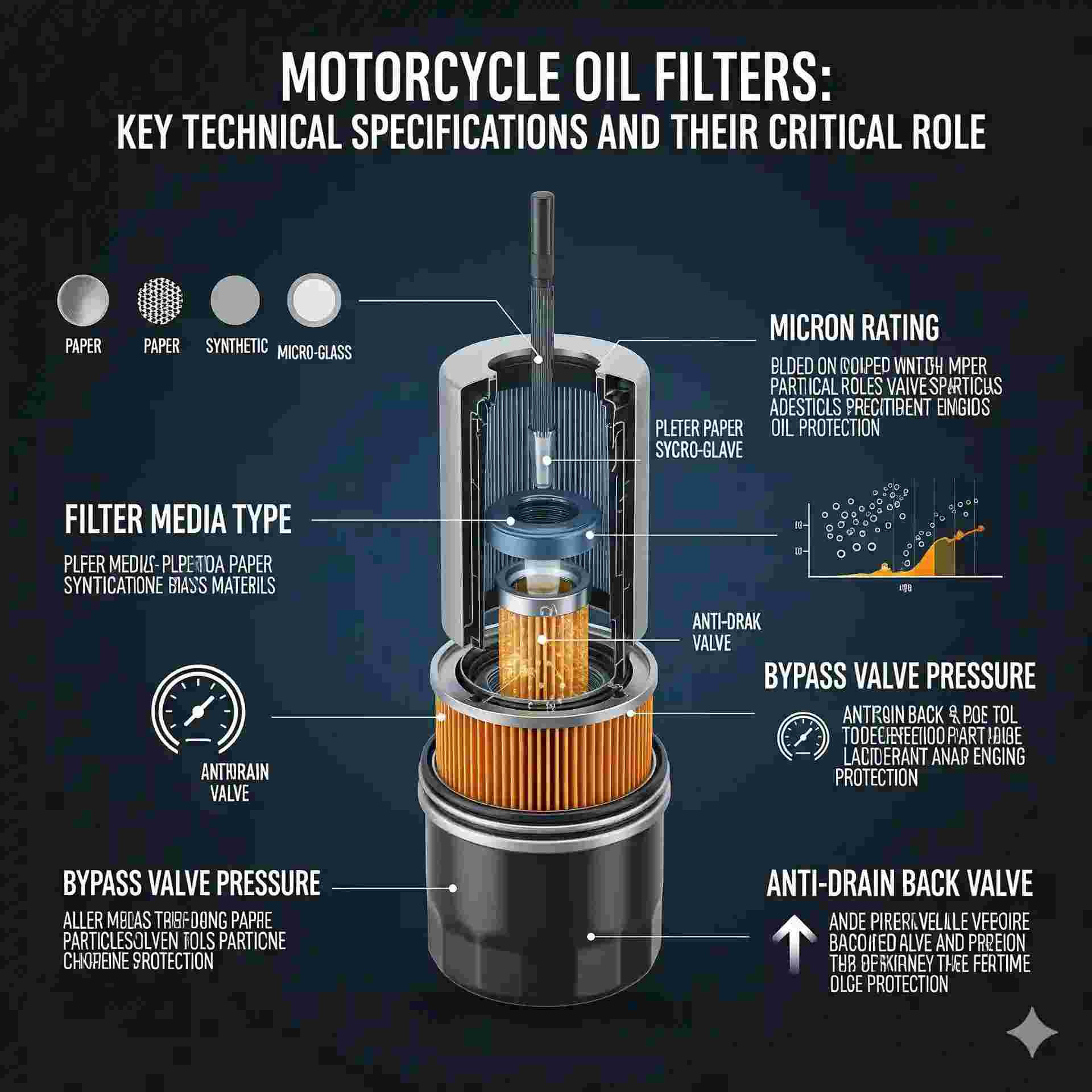
Oil filters are not universal for many reasons. Two filters can look the same on the outside. But small changes inside can hurt an engine. These details are not random. They are set to match the engine’s oil system. A good filter helps an engine last a long time. It must meet these strict needs.
Physical Fitment and Sealing Integrity: The First Barrier to Universality
A filter must do two basic things. It must fit on the engine. It must seal so oil does not leak. These are key rules for how it fits.
Thread Size and Pitch
The thread is the most basic part of the fit. There are many thread sizes. Some are metric. Some are standard. The filter’s thread must match the engine’s thread. Some brands use special threads. This makes it hard to find other filters. For example, many Suzuki bikes use an M20x1.0 thread. Almost no car filters use this thread. So, owners must buy special bike filters. Do not use a filter with the wrong thread. It can damage the threads on the engine. This is a costly fix. It can also cause a bad seal. Oil can leak out under pressure.
Gasket Dimensions
The rubber gasket is at the base of the filter. It makes a tight seal with the engine. Its size is very important. This includes its inside size, outside size, and thickness. A gasket that is too small may not seal well. A gasket that is too big may get pinched. Both cases can cause a bad seal. A running engine has high oil pressure. A bad seal can cause oil to leak. It can be a small drip or a big leak. A big leak can drain the oil fast. This can ruin the engine.
Canister/Cartridge Physical Dimensions
The height and width of the filter are important. They depend on the space on the engine. They also depend on how much it needs to hold. A filter that is too big may not fit. It might hit the exhaust pipes or frame. A filter that is too small may not have enough filter material. It will not last as long. It may also block oil flow. The size is a key part of the filter’s design.
Internal Hydraulic and Filtration Dynamics: The Hidden Complexities
How a filter works inside is very complex. It is made to match the engine’s oil system. This is where the worst problems can happen. You cannot see these parts from the outside. Bike engines run very fast. They often run at speeds over 10,000 RPM. Car engines run much slower. This means oil flows in a very different way. The filter must have parts that match these needs.
Bypass Valve Pressure Rating
The bypass valve is a very key part. It is a big reason you cannot swap car and bike filters. The valve has a spring. It is for safety. It opens when oil pressure gets too high. This can happen for two reasons. One is a cold start. The oil is thick then. The other is a clogged filter. The valve opens to let oil go around the filter. This makes sure the engine gets oil. If the engine gets no oil, it will break.
The pressure setting of this valve is key. It is measured in PSI. It is set for a certain engine’s oil pressure. A Suzuki filter might need an 11 PSI valve. A car filter that fits might have a 16 PSI valve. Using a filter with the wrong setting is bad. It can cause two big problems:
- Valve Opens Too Soon (Setting is too low): The valve might open during normal high speed use. This is not good. It lets dirty oil flow through the engine. This wears out engine parts like bearings and pistons much faster.
- Valve Does Not Open When Needed (Setting is too high): The valve may not open if the filter is clogged. This will stop oil from flowing to the engine. This can quickly lead to total engine failure.
This is a main reason why using a car filter on a bike is a bad idea. Even if it fits, it can harm the engine.
Anti-Drainback Valve
The anti-drainback valve is a rubber flap. It is over the holes at the base of the filter. It stops oil from draining out of the filter when the engine is off. It keeps oil in the top parts of the engine. This helps oil flow right away at the next start. Without this valve, the engine has a “dry start.” This means parts move with no oil for a moment. This causes a lot of wear over time. Good valves are made of silicone. They last longer than rubber ones. A bad valve can get hard and fail.
Filtration Media and Micron Rating
The filter material is the core of the filter. It is made of fibers that trap dirt. Its “micron rating” tells you what size dirt it can catch. A micron is very small. A low micron rating means it catches smaller dirt. But, a filter that catches very small dirt can also block oil flow. Bike oil filters often need to catch smaller dirt than car filters. This is because bike engines have higher stress.
The filter material is also key:
- Cellulose (Paper): This is the most common type. It is made of wood fibers. It works well for normal use with normal oil.
- Synthetic Blend: This is a mix of paper and man-made fibers. It filters better than just paper.
- Full Synthetic (Microglass): This is the best type. It is made of very fine glass fibers. It catches the smallest dirt. It holds more dirt and lets oil flow well. It is great for high-power engines and long-life oils.
Oil Flow Rate and Pressure Drop
An oil filter must clean oil without blocking its flow too much. All filters slow down oil flow a bit. This is called a pressure drop. The filter’s design affects this. This includes the size of the holes in the base , the amount of filter material , and the type of material. A filter for a slow car engine might block oil too much for a fast bike engine. This can starve the engine of oil at high speeds. This can cause great damage.
The parts of an oil filter are a careful balance. A filter cannot be perfect at everything. It cannot have the best cleaning, the best flow, and the longest life all at once. An “optimal” filter is one made for a certain engine. A race filter might focus on the best flow. A filter for a touring bike might focus on long life. This is why filters are made for specific models.
| Part | What It Does | What Can Go Wrong |
| Thread Size & Pitch | Screws the filter onto the engine. | Wrong threads can damage the engine. The seal can fail. This can cause a total loss of oil. |
| Gasket Diameter & Profile | Makes a tight seal between the filter and engine. | A wrong size gasket will leak oil. This can drain the engine and cause it to seize. |
| Bypass Valve PSI | Lets oil flow if the filter is clogged. This stops the engine from running out of oil. | A low setting lets dirty oil in. This causes wear. A high setting can stop oil flow. This can cause engine failure. |
| Anti-Drainback Valve | Keeps oil in the filter when the engine is off. | A bad valve causes “dry starts.” This adds a lot of wear to the engine over time. |
| Micron Rating | Shows the size of dirt the filter can catch. | A high rating lets bad dirt through. This damages parts. A low rating may block oil flow. |
| Flow Rate | The amount of oil that can pass through the filter. | A low flow rate can starve the engine of oil. This is bad at high speeds. It can cause severe damage. |
A Taxonomy of Motorcycle Oil Filters
We can group motorcycle oil filters by how they are built. We can also group them by how well they work. Knowing these groups helps you see the choices you have.
Primary Design Formats: Canister vs. Cartridge
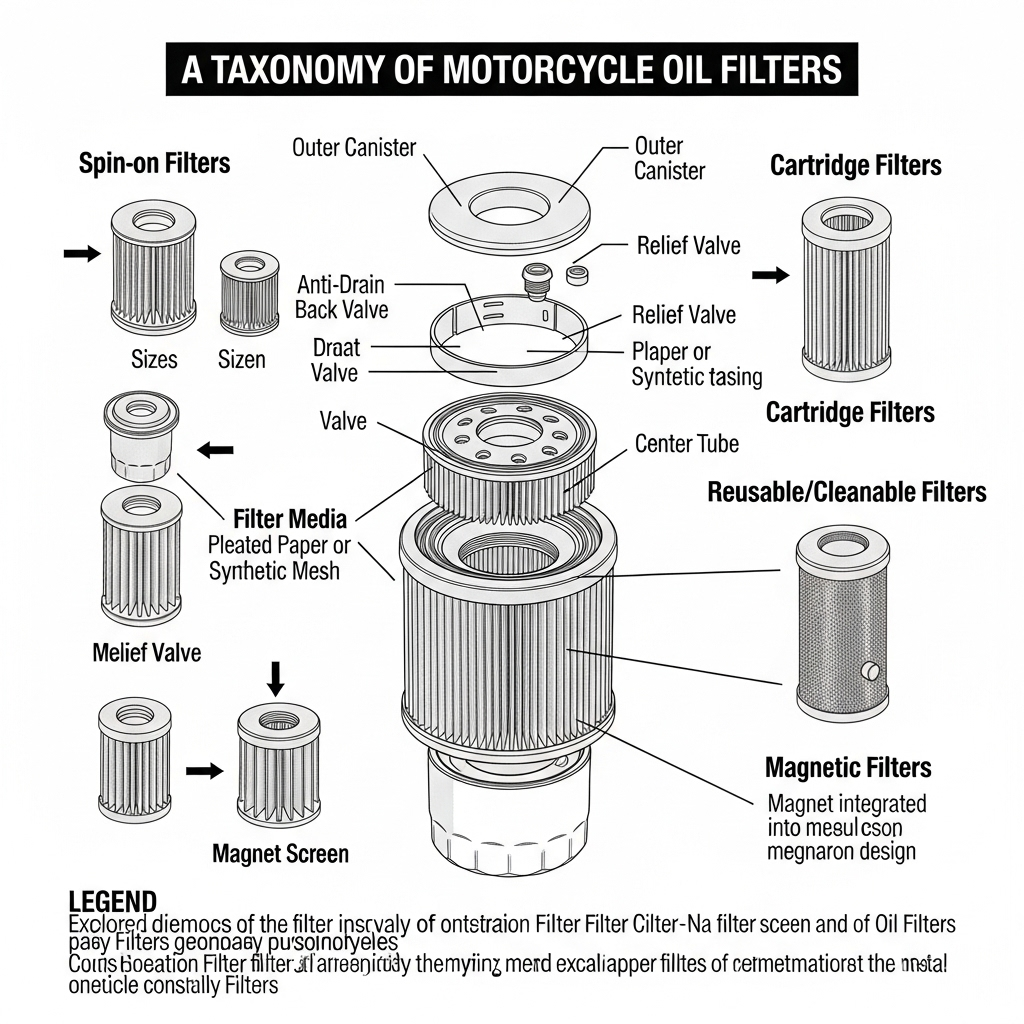
The main difference in oil filters is their basic design. Some are a single unit called a spin-on or canister. Others have a part you replace called a cartridge.
Spin-On (Canister) Filters
Spin-on filters are the most common type. They are a single unit. They have the filter material, valves, and seal in a metal can. You screw the whole thing onto the engine. You use it once, then throw it away and put on a new one.
They are easy to use. There is less risk of mistakes. You just unscrew the old one and screw on the new one. All the key parts are inside the can. This makes it hard to mess up.
Cartridge (Element) Filters
Cartridge filters are an older style that is now popular again. With this type, the engine has a filter house that you reuse. When you change the oil, you open the house cap. You only replace the filter part inside. You also replace the rubber O-rings.
This design is better for the earth. It makes less waste. You only throw away the filter part, not a whole metal can. This is because people want to reduce waste. It is also cheaper to make just the filter part. But, it is easier to make a mistake with this type. You must replace all the O-rings. You must make sure the filter sits right. If you forget an O-ring or do not tighten the cap right, oil can leak. With this type, the key valves are part of the engine, not the filter part you throw away.
| Feature | Spin-On (Canister) Filter | Cartridge (Element) Filter |
| Key Parts | One unit: can, filter, valves, seal. | Filter part with O-rings. The house is part of the engine. |
| How to Install | Unscrew old, screw on new. It is simple. | Open house, change filter and O-rings, close house. Needs more care. |
| Common Problems | Wrong threads, too tight or loose, bad seal. | Filter not in right, bad O-rings, cracked cap from being too tight. |
| Waste | More waste (metal can, filter, valves are all thrown out). | Less waste (only filter and O-rings are thrown out). |
| Cost to Replace | Can be a bit more money. | Can be a bit less money. |
| Where are the Valves | Valves are inside the can you throw away. | Valves are part of the engine, not the filter part you replace. |
Performance Tiers and Media Composition
Filters are also grouped by how well they work. This is mostly based on the filter material inside.
Standard Filters (Cellulose Media)
These are the most common and cheapest filters. The bike maker often uses these. The filter material is made of paper. They are for use with normal oil. You should change them at normal times (like every 3,000-5,000 miles). They work well enough for normal riding.
High-Performance Filters
These filters are for engines that work hard. This includes high-power engines or tough conditions. They often use a mix of paper and man-made fibers. This helps them clean better and hold more dirt. They are often built stronger to handle higher oil pressure.
Synthetic Filters (Microglass Media)
These are the best filters. They are made for use with modern man-made oils. They let you go longer between oil changes. The filter material is made of very fine man-made fibers. They can trap much smaller dirt than paper filters. This gives the best protection for engine parts. They also let oil flow well and hold a lot of dirt. They can last for 15,000 miles or more.
Specialty and Racing Filters
These filters are for racing. For racing, some things are more important than others. Some race filters are made for the best oil flow. They may not catch the smallest dirt. This is because getting enough oil at very high speeds is the most important thing. They often have strong, thick cans to protect from damage. They may have a nut on the end. This makes them easy to put on and take off. It also lets you use a wire to keep them from getting loose. The filter material is also made to handle high heat.
A Comparative Analysis
Should you use an oil filter from the bike maker (OEM) or from another brand? This is a common choice for bike owners. It is a choice between a sure fit, good quality, and cost. But it is not a simple choice. The quality of other brands can be very different.
The Case for Original Equipment Manufacturer (OEM) Filters
Using an OEM filter is the easy and safe choice. These filters are made by the bike company or for them. They are made to the exact needs of your engine.
- Sure Fit: An OEM filter is sure to have the right threads, seal, and size. The valves inside will also be correct. This means no guessing. It will be a perfect fit.
- Warranty Safe: If your bike is new, you should use OEM parts. If your engine fails, the maker may not pay if you used a non-OEM part. Using OEM parts avoids this problem.
- Known Quality: A bike maker wants its engines to last. They want a good name. So, OEM filters are tested well. They are sure to meet the needs for engine safety. For example, Yamaha says their filters keep oil flow steady. They say other filters they tested did not always meet the right pressure needs.
The Aftermarket Spectrum
Other brands offer many choices. They are often cheaper. You can find them in many stores and online. But “aftermarket” is not one thing. The quality can be very good or very bad.
- Good Things: The main good things are lower cost and more choice. Good brands often make filters that are as good as or better than OEM. Some high-power filters may have better filter material or be built stronger than the OEM part.
- The Quality Gap: The main risk is that the quality can be bad. Some brands are well known. Others just try to be cheap. They may use cheap parts. Looking inside different filters shows big changes. Some good ones have great filter material and are all metal. Some cheap ones use cardboard parts, weak valves, and not much filter paper. Using a cheap filter can be very bad for your engine.
Material and Construction Showdown
A close look shows where the quality differs:
- Filter Media: OEM filters use good paper. Other brands can use similar paper or much better man-made material. The total amount of filter material can also be very different. This affects how much dirt it can hold and how long it lasts.
- End Caps: The end caps hold the filter material together. Good filters use steel end caps. Some cheap filters use cardboard. Cardboard can break down in hot oil. This can let dirty oil and filter bits into the engine.
- Valves and Seals: The quality of the bypass valve spring and the anti-drainback valve are key. Good ones use strong silicone. Cheaper ones use rubber that does not last as long.
- Build Quality: Other things like the thickness of the can and the quality of the welds matter too. Some filters have broken where a nut was welded on. This caused a bad oil leak.
It is good to know that the line between OEM and other brands is not always clear. Bike companies often do not make their own filters. They pay a large filter company to make them. Then they put their own brand name on them. That same filter company also sells filters under its own name. So, a good filter from a known brand may be the same as the OEM part. It may just have a different paint job and price. The key is not the brand on the box. It is the quality of the company that made it. You can often get OEM quality at a lower price if you find out who makes the OEM filter.
| Factor | OEM Filters | Good Aftermarket | Cheap Aftermarket |
| Cost | Highest. | Medium; often less than OEM for same or better quality. | Lowest. |
| Where to Buy | Mostly at bike dealers. | In many auto parts stores and online. | In many places, often from unknown brands. |
| Quality | High and the same every time. | Mostly high and trusted, from known brands. | Can be very bad; parts may be low quality. |
| Fit | Sure to be a perfect match. | Should fit if you use a good cross-reference list, but you must check. | Risky; may not fit right even if it says it will. |
| Warranty | Safest choice; will not void your warranty. | May cause a warranty claim to be denied if the part fails. | High risk of causing problems that could void a warranty. |
| Performance | Meets the needs of the engine. | Can meet or be better than OEM. May offer upgrades. | Will likely not work as well as OEM. |
| Material Quality | Good to high quality. | Often high quality, with top options available. | Often low quality (e.g., cardboard parts, cheap valves) to save money. |
Risks and Consequences of Mismatched Filters
Using the wrong oil filter is a big risk. It is not a small problem. You might save a few dollars on a cheap filter. But you could pay thousands for engine repair. The problems from a wrong filter can be quick or slow. They can lead to total engine failure.
Immediate Mechanical Failures
The most clear problems come from a bad fit.
- Bad Seal and Oil Leaks: A filter with the wrong thread or seal will not seal right. Oil will leak out. A small leak might just make a mess. But a big leak can drain the oil very fast. This is very bad if you are riding. The oil light will come on. Then the engine can seize if you do not stop right away.
- Filter Falls Off: In the worst case, a filter with wrong threads can be pushed off by oil pressure. This causes a sudden and total loss of oil. This will destroy an engine in seconds.
Compromised Lubrication and Engine Performance
Even if a filter fits, wrong parts inside can slowly harm the engine.
- Wrong Oil Pressure: A filter that blocks oil too much or has a bad valve will mess up the oil pressure. Low oil pressure starves parts like bearings. This causes metal to rub on metal. High oil pressure can damage other seals in the engine. The oil pressure light on the dash may come on.
- Poor Performance: An engine with bad oil flow will not work well. More friction means the engine has to work harder. This can make the bike feel slow. It can also use more fuel.
Accelerated Engine Wear and Catastrophic Failure
The worst danger of a wrong filter is the slow damage it causes. You may not see any signs at first. The engine may seem to run fine. But inside, it is being worn out.
- The Effects of Dirty Oil: If a filter has bad material, a wrong micron rating, or a bad bypass valve, it will not clean the oil. Small bits of metal, carbon, and dirt will flow through the engine.
- Damage to Key Parts: This dirty oil acts like sandpaper. It grinds away at the engine’s parts. It scratches the cylinder walls. This causes a loss of power and more oil use. It wears down the camshafts. Most of all, it destroys the bearings for the crankshaft and connecting rods. These parts need a clean film of oil to work.
- The End Result: Engine Failure: Over time, this wear will lead to a major failure. You may hear strange noises from the engine. Then, a bearing could fail or a piston could seize. This will mean you need to rebuild or replace the engine. The real cause was the wrong oil filter from months or years ago. But people often blame it on high miles. This shows why picking the right filter is so important.
The Professional’s Approach to Filter Selection
Making sure you use the right oil filter is easy. It just takes some care. By following these steps, anyone can avoid the risks of a wrong filter.
Step 1: Consult the Primary Source
The best source of information is the bike’s owner’s manual. The manual will tell you the right OEM part number for the oil filter. This part number is the key. It is the starting point for all other checks. If you do not have the manual, a dealer can give you the right number.
Step 2: Master Cross-Reference Guides
If you want to use a non-OEM filter, you need a cross-reference guide. These are lists that match an OEM part number to other brands.
- How They Work: You enter the OEM part number. The guide gives you a list of other filters that should work.
- Using the Tools: Many filter makers like WIX and AMSOIL have these tools on their websites. There are also other websites that have this information. Just find the tool, enter the OEM number, and see the list of choices.
- A Key Warning: You must read the warnings on these tools. These lists are just for general help. They are mostly right, but there can be mistakes. The person who installs the filter is the one who must check that it is right. Do not just trust a list without checking the filter.
Step 3: Final Verification Before Installation
This last, simple step is the most important safety check. Before you put on any new oil filter, you must compare it to the old one.
Put the old and new filters next to each other. Check these things:
- Check the Thread: Look at the threads. Make sure they look the same.
- Check the Gasket: Look at the rubber seal. Make sure its size and place are a perfect match.
- Check the Size: Make sure the new filter’s height and width will fit on the engine.
If you see any difference in the thread or gasket, do not use the filter. The few minutes you spend on this check can save your engine from great damage.
FAQs for are motorcycle oil filters universal
Are all motorcycle oil filters the same?
No, they are not. Each bike needs a special filter. The size and parts inside must match your engine. Using the wrong one can hurt your bike.
Can I use a car oil filter on my motorcycle?
No, you should not. A car filter may fit, but it is not safe. Bike engines run faster and hotter. A car filter can cause bad oil flow and hurt your engine.
What happens if I use the wrong oil filter?
The wrong filter can cause big problems. It can leak oil or block oil flow. This can wear out parts fast. It might even ruin your engine completely.
Are expensive oil filters better for my motorcycle?
A good brand is more important than price. Some filters use better parts to clean oil well. Cheap filters can be made with weak parts that might break.
How do I find the right oil filter for my bike?
Check your owner’s manual for the part number. You can also use a cross-reference guide online. This helps you find the right filter for your exact bike model.
Final words
This report shows one clear fact: motorcycle oil filters are not “universal.” They are special parts made for certain engines. This is not about brands. It is about how engines work. Key things like thread size, seal size, and valve pressure are set for each engine. This is to make sure the engine gets clean oil all the time.
The choice between OEM and other brands is not just about cost. The market has a wide range of quality. OEM filters promise a perfect fit and good quality. But good aftermarket brands can be just as good or better, often for less money. The key is the quality of the company that made the filter, not the name on the box. Cheap, no-name filters are a big risk. They can cause engine failure. The results of using a wrong filter are very bad. They can be oil leaks or slow engine damage.
Based on this, here are our suggestions for picking an oil filter:
- Be Precise, Not Just Convenient: Think of the oil filter as a key engine part, not a simple item. Do not grab a filter that “looks close.” The risk is not worth it.
- Use OEM for a Sure Thing: If you are not sure, or if your bike is new, use the OEM filter. It is the safest choice. It will not void your warranty.
- Research Good Aftermarket Brands for Value: If your bike is older, you can save money with other brands. But you must do your research. Pick known brands with good reviews. Stay away from very cheap or no-name filters. The money you save is not worth the risk to your engine.
- Always Check the Fit: No matter what filter you choose, always do the last check. Put the new filter next to the old one. Make sure the thread and seal match. This simple step is a key safety check. It can stop a total engine failure.