Can I Use Grease on Motorcycle Chain? Expert Advice & Tips

If you ride a motorcycle, you already know that chain maintenance is important. But with so many products available, it’s easy to wonder: Can I use grease on a motorcycle chain? You might have an old can of grease in your garage, or maybe you’ve seen other riders apply it. The answer isn’t as simple as yes or no—and using the wrong product can cause big problems for both your bike and your wallet.
This article explores whether grease is suitable for motorcycle chains, what actually happens if you use it, and what the best alternatives are. You’ll get clear, practical advice to help you maintain your chain safely and effectively, avoid expensive mistakes, and enjoy smoother, longer rides.
Understanding Motorcycle Chains And Lubrication
Motorcycle chains are more than just links of metal. They are critical components that transfer power from the engine to the rear wheel. Keeping this system healthy is key to motorcycle performance and safety.
Most modern bikes use one of three types of chains:
- Standard (non-sealed) chains
- O-ring chains
- X-ring chains
Sealed chains (O-ring and X-ring) have tiny rubber rings between the inner and outer links. These rings keep factory grease inside and block dirt and water. Non-sealed chains don’t have these protections, so they need more frequent lubrication.
A good lubricant does three things:
- Reduces friction between moving parts.
- Repels water to prevent rust.
- Keeps out dirt and grit that can grind down the chain.
Not every greasy product does all of these jobs. That’s why the type of lube you use really matters.
What Is Grease? Properties And Common Uses
Grease is a thick, sticky lubricant made by mixing oil with a thickener (like soap). It’s commonly used in bearings, joints, and slow-moving parts that need a coating that won’t run off easily.
Some features of grease:
- High viscosity: Stays in place, doesn’t drip.
- Water resistance: Protects against moisture.
- Excellent for pressure: Handles heavy loads well.
You’ll find grease in wheel bearings, steering head bearings, and swingarm pivots. But these parts don’t move as fast as a motorcycle chain. So, the way grease works in other parts may not be the same on a chain.
Can You Use Grease On A Motorcycle Chain?
The short answer: You can apply grease to a motorcycle chain, but it’s usually not the best choice. Here’s why.
How Grease Behaves On A Chain
Motorcycle chains spin at high speeds, especially at highway RPM. When you put thick grease on an exposed chain:
- The centrifugal force flings most of it off within a few miles.
- What’s left gathers dust and sand, turning into a gritty paste.
- The thick layer stops new lubricant from getting inside the rollers and pins, where it’s most needed.
Effects On Sealed Chains (o-ring/x-ring)
These chains are already filled with factory grease inside the rollers. The O-rings keep this grease in and block out dirt. Adding extra grease on the outside won’t reach the inner parts, so it only sits on the surface. Worse, using the wrong type of grease can damage rubber O-rings, making them brittle and shortening the chain’s life.
Effects On Non-sealed Chains
Non-sealed chains are more open to the elements. Grease can help, but it still collects dirt quickly. Over time, the grit works its way into the pins and bushings, causing wear.
Real-world Example
Many riders have tried using axle or bearing grease on their chains, hoping for extra protection. In most cases, after a few rides, they find black, sticky buildup along the chain guard, swingarm, and wheel. The chain itself feels dry inside, and a grinding noise sometimes develops.
This is a sign of poor lubrication.
Pros And Cons Of Using Grease On Motorcycle Chains
Let’s compare the main advantages and disadvantages of grease for chain maintenance:
| Pros | Cons |
|---|---|
| Stays put in slow-moving joints | Flings off at high speed |
| Good for water resistance | Collects dust and sand |
| Cheap and widely available | Does not reach chain internals |
| N/A for sealed chains | Can damage O/X-rings if not compatible |
What Happens If You Use Grease? (practical Outcomes)
If you decide to use grease on your motorcycle chain, here’s what you’re likely to experience:
- Messy Build-Up: Grease thrown off by the spinning chain will splatter your wheel, swingarm, and even your clothing.
- Increased Wear: Gritty debris sticks to the grease, turning it into an abrasive paste that wears out the chain and sprockets faster.
- Shorter Chain Life: Because the inner parts lack proper lubrication, chain links can become stiff and noisy, and eventually, the chain will stretch or fail.
- Possible O-ring Damage: If your chain has rubber seals, the wrong grease can cause them to crack, leading to expensive repairs.
- Harder Cleaning: Greasy chains are harder to clean than ones lubricated with dedicated chain lube, often requiring strong solvents and more time.
A Non-obvious Insight
Many beginners think “grease is grease”—if it works for bearings, it should work for chains. But motorcycle chains move at much higher speeds and are exposed to more dirt and rain. This makes them unique compared to other greasy parts.
What The Experts And Manufacturers Recommend
Motorcycle and chain manufacturers almost always recommend against using grease. Instead, they suggest using a product made specifically for motorcycle chains.
For example, the owners’ manual for most major brands (such as Honda, Yamaha, and Suzuki) clearly states to use motorcycle chain lube or chain-specific oil. This is because these products are designed to:
- Penetrate the small gaps between links and rollers
- Stay in place at high speeds
- Repel water and dirt
Many chain manufacturers also warn that using the wrong lubricant may void your chain’s warranty.
How Is Chain Lube Different From Grease?
Let’s compare chain lube and grease side by side:
| Property | Chain Lube | Grease |
|---|---|---|
| Viscosity | Thin when applied, thickens after drying | Very thick and sticky |
| Penetration | Reaches inner pins and rollers | Sits mostly on the surface |
| Flung off by speed? | Low (sticks well) | High (messy) |
| Dirt attraction | Low (if dry-type) | High |
| Rubber O-ring safe? | Yes | Not always |
| Ease of cleaning | Easier | Harder |
Best Practices For Lubricating Your Motorcycle Chain
1. Choose The Right Product
Motorcycle chain lube is the best choice for nearly all chains—sealed or non-sealed. These come in different types:
- Spray-on lubes: Easy to apply, penetrate well.
- Waxy lubes: Dry to a tack-free finish, attract less dirt.
- Oil-based lubes: Good for non-sealed chains, but can fling off if over-applied.
For O-ring or X-ring chains, always use a lube labeled “O-ring safe. ”
2. Clean Before Lubricating
A dirty chain should be cleaned before adding new lube. Use a chain-specific cleaner or kerosene with a soft brush. Avoid gasoline, as it can damage rubber seals.
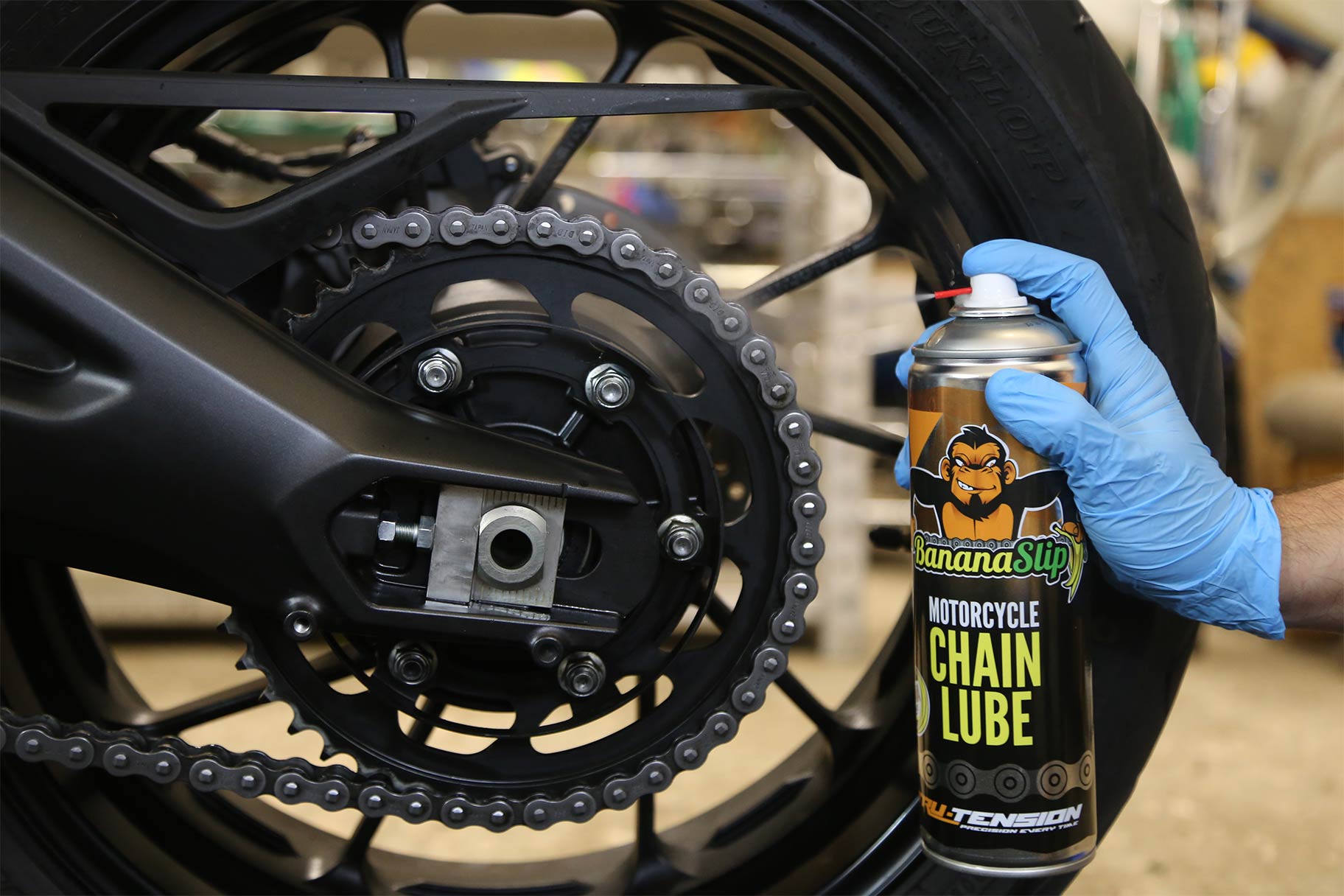
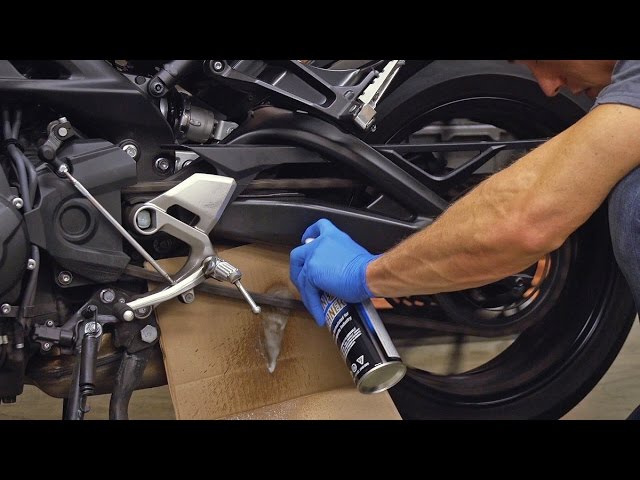
3. Apply Lubricant Properly
- Spin the rear wheel to expose the whole chain.
- Hold the nozzle close and spray the inner side of the chain while rotating.
- Wipe off excess with a rag.
- Allow 10-15 minutes for the lube to set before riding.
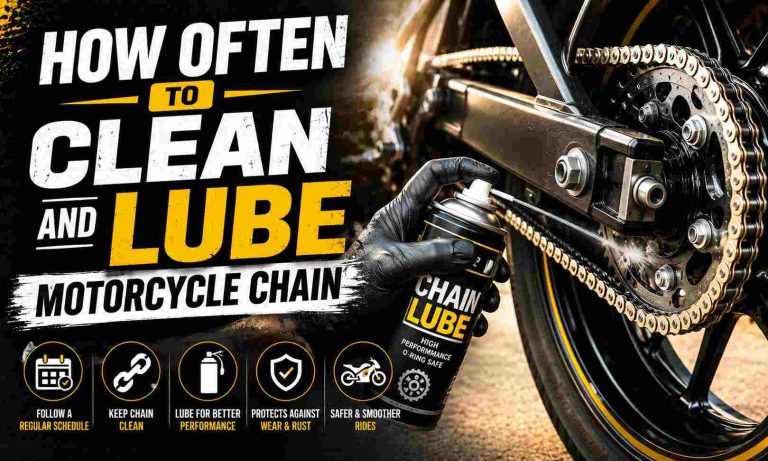
4. Maintain A Regular Schedule
- Lube your chain every 300–600 miles (480–960 km), or after every wet ride.
- Check your owner’s manual for your bike’s recommended interval.
5. Inspect Chain Condition
Look for signs of wear: tight spots, rust, noise, or visible stretching. Replace the chain if these appear, even with good lubrication.
Two Insights That Are Often Missed
- Lubrication isn’t just about the chain—it also protects your sprockets. Worn chains will grind down sprocket teeth much faster if not properly lubricated.
- Over-lubing is almost as bad as under-lubing. Too much lube (especially heavy products like grease) traps more dirt and can gum up the chain, leading to stiff links.
See the 5 Best Motorcycle Chain Lube
What About Old-school Methods? Are They Still Relevant?
Some older riders remember boiling their chain in a pot of grease—a method common before O-ring chains. While this gave good results on non-sealed chains, it’s not recommended today. Modern chains, especially sealed types, do not need this.
Additionally, used or leftover axle grease from cars should not be used on motorcycle chains. These greases are not designed for high-speed, exposed use.
Alternatives To Grease For Chain Lubrication
If you don’t want to use chain lube, what else works?
- Engine oil: Used by some, especially on old non-sealed chains. It penetrates well but flings off quickly and needs frequent reapplication.
- Dry wax chain lubes: Great for dusty conditions; do not attract much dirt.
- White lithium grease sprays: Better than regular grease, but still not as good as chain lube.
- Automatic chain oilers: Devices that drip oil onto the chain while you ride, popular for long-distance touring.
Avoid using:
- WD-40 as a lube (it’s mainly a cleaner and water displacer, not a true lubricant)
- Heavy automotive greases not rated for O-rings
Credit: www.tru-tension.co.uk
Common Mistakes When Lubricating Motorcycle Chains
Even experienced riders make errors with chain care. Watch out for these:
- Using the wrong product: Grease, car oil, or home lubricants are not ideal for high-speed chains.
- Not cleaning first: Lubing over dirt just makes a muddy paste.
- Too much lubricant: Extra lube does not mean extra protection.
- Ignoring O-ring compatibility: Some products damage rubber seals.
- Forgetting the application area: Always lube the inside of the chain where it contacts the sprocket, not just the outside.
How To Tell If Your Chain Is Properly Lubricated
A well-lubricated chain should:
- Move smoothly with no tight spots or kinks
- Run quietly, without grinding or squeaking
- Have a thin, even film of lube (not a thick, greasy layer)
- Show no signs of red rust
If your chain feels sticky, has black buildup, or is noisy, it’s time to clean and re-lube.
Environmental Concerns: Is Grease Bad For The Planet?
Grease that flings off your chain can stick to roads, soil, and water sources. Most chain lubes are designed to minimize fling-off and some are even biodegradable. If you want to reduce your environmental impact, look for eco-friendly chain lubes made for motorcycles.
Comparing Costs: Grease Vs. Chain Lube Vs. Chain Replacement
Let’s break down the costs for each option over one year (assuming 10,000 miles of riding):
| Product | Cost per Year | Chain Life Extension | Cleaning Effort |
|---|---|---|---|
| Grease | $5–$10 | Poor (may shorten life) | High (messy, sticky) |
| Chain Lube | $15–$30 | Good (maximizes chain life) | Moderate (easy to clean) |
| Frequent Chain Replacement | $80–$200 (chain & sprockets) | None (due to poor care) | N/A |
Using proper chain lube saves money in the long run. Grease might seem cheap, but it can lead to more frequent, expensive replacements.
Credit: enduro-mtb.com
How To Switch From Grease To Chain Lube
If you’ve been using grease and want to switch:
- Deep clean your chain with a chain cleaner and brush until all old grease and dirt are removed.
- Inspect O-rings for damage.
- Apply chain lube as recommended.
- Ride for a short distance, then re-check and wipe off any excess.
This process helps restore chain performance and extends its lifespan.
Safety Issues: Why Using The Wrong Lubricant Is Risky
Poorly-lubricated or dirty chains can:
- Snap or break while riding, causing loss of control
- Slip off the sprocket, especially under acceleration
- Lock up the rear wheel if a link gets stuck
All of these can be dangerous at speed. Using proper chain lube, not grease, keeps you safer on the road.
When Might Grease Be Useful?
There are rare cases where grease might help:
- On old, non-sealed chains, if no chain lube is available, a thin layer of grease is better than nothing.
- In emergencies, when stranded or riding off-road for short periods.
However, once you get home, clean off the grease and use proper chain lube as soon as possible.
Expert Tips For Longer Chain Life
- Keep your chain adjusted to the correct tension. Too tight or too loose will wear it out faster.
- Store your bike indoors or cover it. Rain and moisture cause rust.
- Check for worn sprockets. Replace them with the chain; using old sprockets damages new chains.
- Don’t use harsh cleaners. Only use products safe for O-rings.
What To Do If You’ve Been Using Grease
If you’ve used grease for a while, don’t panic. Switch to proper chain care now:
- Deep clean the chain and sprockets.
- Inspect for stiff links or damaged seals.
- Start using chain lube and follow a regular schedule.
You may need to replace the chain sooner if it’s already worn, but better care will protect your next one.
Where To Find Reliable Advice
For trustworthy guidance, check your motorcycle owner’s manual and the website of your chain manufacturer. Reputable forums and resources like WebBikeWorld offer in-depth tests and reviews of chain care products.
Credit: www.youtube.com
FAQs (Can I Use Grease on Motorcycle Chain)
Is It Safe To Use Grease On A Motorcycle Chain If I Have Nothing Else?
In an emergency, a small amount of grease is better than running a chain dry. But it is not recommended for long-term use. As soon as possible, clean off the grease and apply a proper motorcycle chain lube.
Can I Use White Lithium Grease Instead Of Chain Lube?
White lithium grease is better than regular bearing grease but still not ideal. It does not penetrate as well as chain lube and can still attract dirt. Use motorcycle chain lube for the best results.
How Often Should I Lubricate My Motorcycle Chain?
Most manufacturers recommend every 300–600 miles (480–960 km) or after riding in wet conditions. Always check your owner’s manual for the correct interval for your bike.
What’s The Best Way To Clean A Greasy Chain?
Use a chain-specific cleaner or kerosene with a soft brush. Avoid harsh solvents like gasoline, which can damage O-rings. After cleaning, dry the chain and apply chain lube.
Will Using Grease Void My Motorcycle Or Chain Warranty?
It can, especially if the chain has O-rings or X-rings. Always use a lubricant specified by your owner’s manual or chain manufacturer to avoid voiding warranties.
Taking care of your motorcycle chain is one of the simplest ways to ensure safe, smooth, and enjoyable rides. While grease is tempting because it’s cheap and available, it just doesn’t perform as well as products designed for chains. Using the right lube will save you time, money, and trouble down the road.
Invest in proper chain maintenance, and your bike will thank you with reliable performance for thousands of miles.