Full Face vs Open Face Helmet: Which One Should You Choose?

The decision to choose a motorcycle helmet is a key one for any rider. It requires balancing the need for safety with other factors like comfort, usefulness, and personal style. The main choice, between a full-face and an open-face helmet, centers on a core trade-off: a design that provides total protection versus one that offers a more open, sensory experience while riding. This report offers a detailed look at these helmet types, using data from accident studies and safety rules.
Full-face helmets are the most secure choice for riders. They are the best for safety because they cover the entire head, face, and jaw. This design includes a protective chin bar and a face shield, both of which have been proven to save lives in crashes. Open-face helmets, on the other hand, do not cover the face and chin. They are often chosen for a sense of freedom, better airflow, and a wider view. This makes them popular for slow city rides or for riders who prefer a classic look.
A third option is the modular helmet, which is a mix of both types. It allows a rider to flip up the chin bar for convenience, like at a stoplight, while having the option of full-face protection when riding fast. However, this convenience comes with some downsides. Modular helmets are often heavier and more complex, and they may not be as strong as a solid full-face helmet. The best helmet for a rider is a personal decision that must be based on understanding these differences, with safety certification and a proper fit being the most important factors.
The following table provides a high-level overview of the key differences discussed in this Aricle.
| Feature | Full-Face Helmet | Open-Face Helmet | Modular Helmet |
| Protection Level | Highest (Jaw included) | Moderate (Jaw exposed) | Hybrid (Full-face when closed) |
| Best Use Case | Highway, track, all-weather commuting | City riding, cruisers, short rides | Touring, commuting, riders with glasses |
| Ventilation | Good (Controlled vents) | Excellent (Open front) | Versatile (Open and closed modes) |
| Noise Isolation | Better | More wind noise | Varies by design and quality |
| Visibility | Limited peripheral view | Wider peripheral vision | Varies by design and position |
| Weight | Heavier | Lighter | Heaviest (due to hinge system) |
The Core Anatomy of a Motorcycle Helmet
1. The Four Pillars of Protection
Every motorcycle helmet, no matter its type, is built with four key parts that work together to protect the rider.
The first part is the outer shell. This tough layer, often made from strong plastics, is meant to compress when it hits something hard. Its job is to spread the force of a crash across a wider area, which lessens the impact before it reaches your head.
Inside the shell is the impact-absorbing liner. This dense foam, often called expanded polystyrene (EPS) foam, is the helmet’s main shock absorber. In a crash, it crushes to cushion your head and stop it from moving after the helmet has stopped. This material only works once, so a helmet must be replaced after any crash, even if it looks fine. This is a key reason why it is not safe to buy a used helmet.
The third part is the comfort padding. This soft layer rests against your head and makes the helmet fit well. It helps keep the helmet stable both while riding and during a crash.
Finally, the retention system, or chin strap, is the most important part for keeping the helmet on your head during an impact. The chin strap is attached to the shell, and its strength is a major part of all helmet safety tests. A helmet cannot protect you if it comes off.
2. The Defining Structural Difference
While all helmets share these four parts, the main difference between them is the amount of coverage they provide. This difference is the reason for all the other changes in safety and comfort.
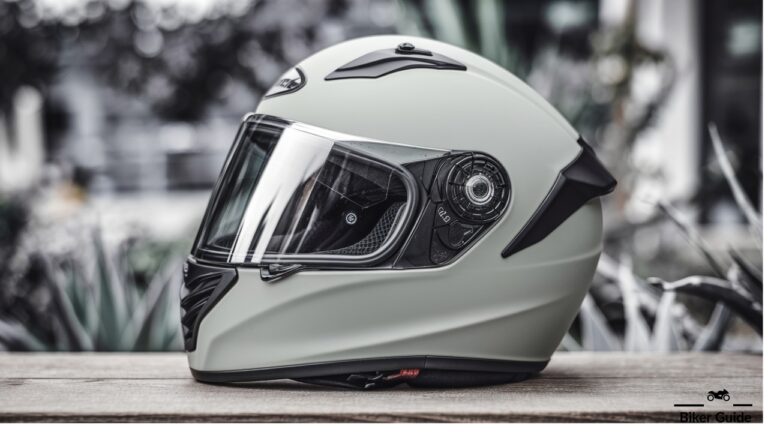
The full-face helmet is a single piece that covers the whole head and face. Its most vital feature is the
chin bar, which extends the helmet’s protective layers to cover the chin and jaw. It also has a face shield that protects the rider’s eyes from wind and debris.
In contrast, the open-face helmet, also known as a three-quarter helmet, covers the top, sides, and back of the head. It leaves the face, jaw, and chin completely open. This design lacks the chin bar and face shield that are so important for safety. Riders who choose this type must wear a snap-on shield or strong goggles, as regular eyeglasses are not enough protection.
Biomechanical Analysis and Safety Quantification
1. The Hard Data on Head Injuries
The superior safety of full-face helmets is supported by many years of crash data and studies. A key study by Dietmar Otte in the 1980s showed that the chin bar was the main point of impact in a remarkable
34.6% of crashes. A later study in 2009 found the same results, proving that full-face helmets are much safer than other types. The facial area was the first point of impact in a little over
10% of accidents. The study found that full-face helmets are
45.3% safer than helmets that do not cover the face. The research also showed that even when the face was not hit first, it was often harmed with cuts and scrapes.
2. The Efficacy of Helmet Types
The level of protection a helmet gives is directly linked to its ability to prevent traumatic brain injuries (TBI). Data shows a clear order of safety, with full-face helmets at the top.
- Half helmets, which have the least coverage, protect against TBI in 38.6% of crashes.
- Three-quarter helmets offer a moderate level of protection, protecting against TBI in 55.5% of crashes.
- Full-face helmets are the safest, protecting against TBI in 69% of crashes.
These numbers show that more coverage means a much higher chance of avoiding serious head injuries. In general, helmets are very effective, with one study showing they prevent
37% of fatal injuries for riders and 41% for passengers.
3. The Gold Standard of Helmet Safety
To make sure helmets are safe, many groups have created safety rules and certifications. The most common ones are DOT, ECE, and Snell.
- DOT (U.S. Department of Transportation): This is the minimum safety standard needed by law in the United States. A helmet with a DOT sticker means the maker has said it is compliant, though the government can do random checks. The DOT standard tests a helmet’s ability to absorb an impact, the strength of its chin strap, and its resistance to being pierced by a sharp object.
- ECE (Economic Commission for Europe): This standard is used in most European countries and is more strict than the DOT standard. The latest version, ECE 22.06, is notable because it also tests for rotational impacts, which are a major cause of brain injury.
- Snell: The Snell Memorial Foundation is a non-profit group that offers an extra, voluntary certification. Snell standards are widely seen as the “gold standard” for safety, as they are much tougher than government rules. For example, the Snell M2020 standard offers almost double the protection of DOT/ECE helmets against strong, repeated impacts. It also includes a specific test for the chin bar. It’s important to know that all Snell-certified helmets also pass DOT and ECE standards, but not the other way around.
Helmets that meet higher standards like Snell may be heavier and cost more. This is because they need more material to offer better protection. The U.S. government warns that helmets that are too thin, weigh less than three pounds, and lack a stiff foam liner may be unsafe. These are often called “novelty” helmets and do not meet basic safety rules.
| Certification | Regulatory Body | Legal Requirement | Testing Rigor | Key Test Features |
| DOT | U.S. Federal Government (NHTSA) | Yes (in the U.S.) | Basic | Impact, Penetration, Retention |
| ECE | European Union | Yes (in Europe) | More Rigorous | Impact, Penetration, Retention, Rotational impact testing (ECE 22.06) |
| Snell | Independent Non-Profit (Snell Memorial Foundation) | No (Optional) | “Gold Standard” | Impact, Penetration, Retention, Chin bar test, multiple impacts |
Rider’s Dynamic Experience
1. Comfort, Heat, and Airflow
A helmet’s design greatly affects the rider’s comfort and how much air they get. Open-face helmets are naturally cooler because their open front allows for maximum airflow. They are a popular choice for riding in hot weather.
In contrast, the closed design of a full-face helmet can feel warm, and in extreme heat, it could cause a risk of overheating. However, modern full-face helmets have vents and air channels to keep air flowing and the rider’s head cool. The enclosed nature of a full-face helmet can also cause a feeling of claustrophobia for some riders, which is a major reason they might choose an open-face or modular helmet instead.
2. The Auditory Environment
A helmet’s design also changes the sound a rider hears. Full-face helmets are generally quieter due to their smooth, one-piece aerodynamic design. The helmet’s padding also helps block out sound. This is especially helpful for riders who use Bluetooth intercom systems for music, GPS, or talking to others.
Open-face helmets, by their design, let in more ambient sound. But they also let in a lot more wind noise, which can be a long-term risk to hearing. Studies have shown that helmets do not stop a rider from hearing important signals. In fact, they can be helpful at high speeds by lowering the “masking noise” from wind turbulence, making other sounds easier to hear.
It is important to know that wind noise inside any helmet, even a good full-face one, can be very loud. Noise levels can go from 85 dBA at 15 mph to 120 dBA at 60 mph. This loud noise can cause permanent hearing loss over time. Because of this, using earplugs is a smart safety practice for all riders to prevent long-term hearing damage.
3. Vision and Sensory Perception
The field of view is a key factor for riders. Open-face helmets are liked for their wider side vision, which can be useful in heavy traffic or for looking at the scenery on a ride.
Full-face helmets have a smaller side view. However, studies have shown that this is a small problem that riders naturally fix by turning their heads more often. The superior protection of a full-face helmet is seen as more important than this small visual trade-off. Newer helmet designs have also gotten much better at giving a wider view.
4. Protection from the Elements
The coverage a helmet provides also decides how well it protects a rider from the environment. Full-face helmets offer complete protection from bugs, rain, sun, cold, and road debris. The face shield is the main defense against flying insects and road grit, which can cause serious harm at high speeds. The closed design also provides better insulation, making them the best choice for riding in cold or rainy weather.
Open-face helmets leave the rider’s face and chin exposed to these elements. Riders must use sunglasses, goggles, or a snap-on shield for eye protection, as wind, dust, and bugs can cause irritation or injury.
The Informed Purchasing Decision
1. The Crucial Role of Fit
The most important factor for a helmet’s safety is its fit. A helmet that does not fit properly cannot protect you in a crash. A properly sized helmet should be snug but not uncomfortably tight. It should sit evenly on your head without causing any painful pressure points. It should not move or wobble when you shake your head. A loose helmet can move in a crash, which stops the protective liner from working, and it could even come off completely.
To find your size, you should measure your head’s circumference just above your eyebrows. But because head shapes are different (round, intermediate oval, or long oval), this measurement is only a starting point. It is essential to try on a helmet to check for pressure points. You should wear a helmet for 30 to 45 minutes to find “hot spots” that may not be obvious at first.
2. Longevity, Replacement, and Pitfalls
A helmet’s protection does not last forever. It is generally recommended to replace a helmet every five years, or sooner if it has been in a crash or shows signs of damage. This is because the EPS liner, which is the main shock-absorbing part, can break down over time from sunlight and sweat.
You should never buy a used helmet. A used helmet might have hidden damage from a past crash that could have hurt the foam liner, making it unsafe.
3. Price vs. Protection
While full-face helmets are generally more expensive due to their design, and modular helmets are often heavier and more costly than open-face helmets, a higher price does not always mean more safety. Some expensive helmets may only have a basic DOT sticker, while more affordable ones may have both DOT and Snell approvals. This shows that a rider should care more about a helmet’s safety certifications and fit than its price or brand name. A rider should always look for the official DOT, ECE, or Snell sticker to be sure the helmet meets safety standards.
Tailoring the Choice to the Rider
1. The Full-Face Profile
The full-face helmet is the most logical choice for a rider whose style and needs fit its advantages.
- Riding Style: This helmet is best for riding at high speeds on highways, on a sportbike, or at a track day. Its full protection is critical in these situations. Full-face helmets are also the recommended choice for off-road riding, where there are more risks from debris and impacts to the face.
- Priorities: The ideal rider wants the most safety, less noise on long trips, and full protection from the elements, wind, and road debris. They may also want to use things like Bluetooth communication systems.
- Trade-Offs Accepted: This rider accepts a smaller side view, a heavier helmet, and less natural airflow in exchange for the highest level of protection.
2. The Open-Face Profile
An open-face helmet can be a good choice for a specific type of rider and riding environment.
- Riding Style: The open-face helmet is often chosen for slow city rides, for scooters, or for riders who like the classic look of vintage and cruiser motorcycles. The slower speeds in cities mean the risk of a high-impact crash is lower.
- Priorities: This rider values a lot of airflow, a greater sense of freedom, and a wider view. The lighter weight is also a key comfort factor.
- Trade-Offs Accepted: This rider accepts a big and measurable drop in protection for the chin and face. They are also more open to wind, bugs, weather, and a higher level of wind noise.
3. The Modular Compromise
The modular helmet is a good mix, offering a balance of protection and ease of use for a certain group of riders.
- Advantages: Modular helmets give the protection of a full-face helmet when closed, but the chin bar can be flipped up at a stop for easier communication or to drink water. The flip-up design is especially helpful for riders who wear glasses, as it makes putting the helmet on and taking it off much easier.
- Disadvantages: This versatility comes with a few downsides. Modular helmets are usually heavier than one-piece full-face helmets because of the extra parts and hinge system. They can also be louder because the seams and moving parts of the chin bar can create more wind noise. Also, a modular helmet may not be as safe as a dedicated full-face helmet, especially if the chin bar is not fully locked in a crash.
You can also read : 7 Best Full Face Womens Motorcycle Helmets for 2025
FAQs About Compare full face vs open face helmet
1.Are full-face helmets good for hot weather?
Modern full-face helmets have vents to keep you cool. But open-face helmets are naturally cooler since they let in more air.
2.Can I wear my glasses with a modular helmet?
Yes, modular helmets often make it easier to wear glasses. Their flip-up design makes putting them on and taking them off simple.
3.Do full-face helmets reduce my side vision?
A full-face helmet can limit your side view a little. But riders learn to turn their heads more often to make up for this.
4.How often should I replace my motorcycle helmet?
It is smart to replace your helmet every five years. You must buy a new one if it has been in a crash, even a small one.
5.Are open-face helmets safe for city riding?
Open-face helmets are fine for slow city rides because they are lighter and have more air. But a full-face helmet is always the safer option.
6.How can I tell if my helmet fits right?
A good helmet should feel snug but not painful. It should not move or wobble when you shake your head.
7.Are modular helmets as safe as full-face helmets?
Modular helmets give a good mix of safety and ease of use. But they may not be as safe as a true full-face helmet.
8.Should I use earplugs with my helmet?
Yes, it is a good idea. Wind noise can be very loud inside any helmet. It can cause hearing loss, so wear earplugs.
9.Are full-face helmets more expensive than open-face helmets?
Full-face helmets can cost more due to their design. But the price does not always mean more safety, so always check for certifications.
Conclusion
The choice between a full-face and an open-face helmet is a complex one that depends on a rider’s specific needs, environment, and how much risk they are willing to take. The evidence is clear: full-face helmets are the safest choice, providing the best protection against head and facial injuries, as shown by accident data. The chin bar, a key part of the full-face design, is not just for looks but is a critical, life-saving component that protects a highly vulnerable area of the face.
While open-face helmets have clear benefits in comfort, airflow, and a more open feeling, these upsides are linked to a big and measurable drop in protection. For a rider to choose an open-face helmet, it must be a careful decision where the specific risks of their slow-speed riding are weighed against the known dangers of an unprotected facial impact.
The modular helmet offers a good middle ground, giving riders the ease of use of an open-face helmet and the safety of a full-face one when needed. However, a rider should be aware of the downsides in weight and potential strength that come with this hybrid design.
In the end, no matter what style is chosen, the most important factors for any helmet are its compliance with recognized safety certifications (DOT, ECE, or Snell) and, most critically, a proper, snug fit. These core elements ensure that the helmet can do its job, turning it from just a piece of gear into a vital tool for saving lives. A rider’s choice should always be an informed one.