Get Your Honda Motorcycles Replacement Battery Chart 2026

Maintaining your Honda motorcycle’s performance starts with the right battery, and in 2026, finding that perfect match is easier than ever with a reliable replacement battery chart. This comprehensive guide will help you understand the crucial specifications, navigate different battery types, and confidently choose the ideal power source for your Honda bike, ensuring reliable starts and optimal electrical system function for years to come.
Get Your Honda Motorcycles Replacement Battery Chart 2026
Hey there, fellow rider! Is your Honda motorcycle feeling a bit sluggish to start, or are you noticing dimming lights when you’re idling? Chances are, your battery might be nearing the end of its life. Just like any crucial component, your motorcycle’s battery won’t last forever. In fact, it’s one of the most common reasons for roadside woes. But don’t sweat it – finding the right replacement doesn’t have to be a headache.
As we cruise into 2026, the world of motorcycle batteries continues to evolve, offering more reliable and powerful options than ever before. But with so many choices, how do you pinpoint the exact battery your beloved Honda needs? That’s where a trusty “Honda Motorcycles Replacement Battery Chart” comes into play. Think of it as your ultimate cheat sheet, guiding you to the perfect power source for your ride.
The Silent Powerhouse: Why Your Battery is So Important
Your motorcycle’s battery is the unsung hero of your electrical system. It’s not just there to kickstart your engine; it also powers all your essential accessories like headlights, tail lights, the horn, and your digital dash when the engine isn’t running. A weak or incorrect battery can lead to frustrating no-starts, unreliable electronics, and even damage to other electrical components. Getting the right battery, with the correct specifications, is absolutely critical for your Honda’s performance and longevity.
Key Takeaways
- Understanding the Chart: A Honda Motorcycles Replacement Battery Chart is an essential tool that lists specific battery models and their specifications (like CCA, Ah, dimensions) for various Honda motorcycle models and years, simplifying the replacement process.
- Key Battery Specifications: Pay close attention to Cold Cranking Amps (CCA), Ampere-hours (Ah), voltage (V), and physical dimensions (Length, Width, Height) to ensure perfect compatibility and performance.
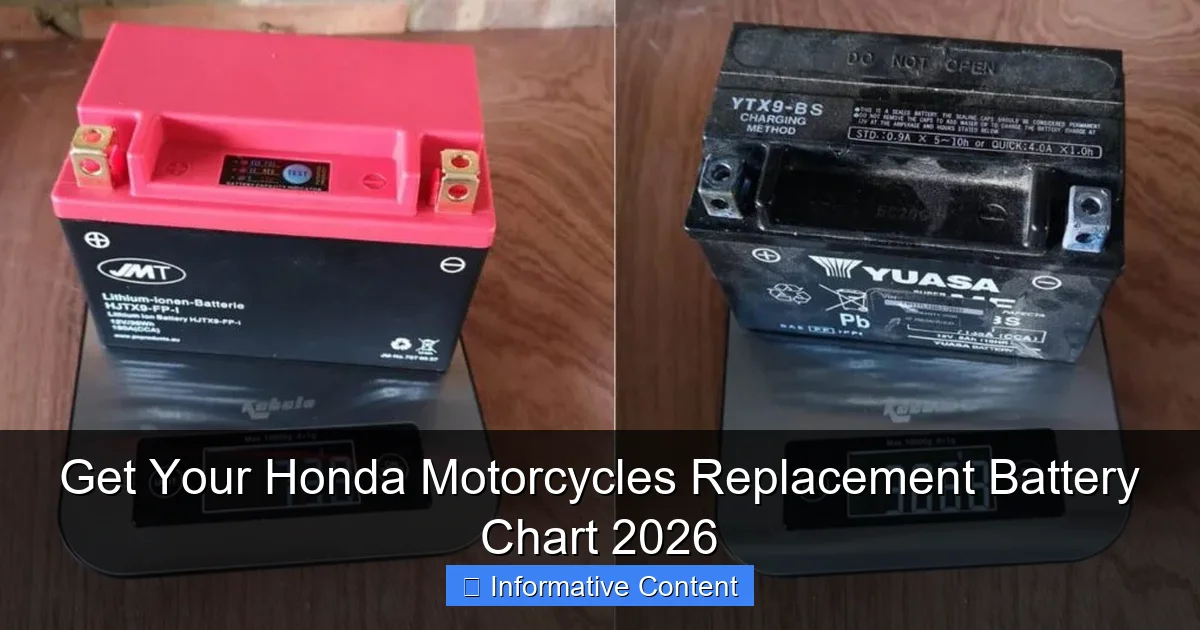
- Battery Types Evolving: While traditional lead-acid (Wet Cell) and AGM (Absorbed Glass Mat) batteries are still common, Lithium-Ion batteries are gaining popularity for their lighter weight, longer life, and higher performance, especially for newer Honda models.
- Finding the Right Chart: The most accurate charts can be found through official Honda dealerships, reputable aftermarket battery manufacturers’ websites, or trusted online parts retailers, often searchable by your motorcycle’s make, model, and year.
- Beyond the Chart: Consider your riding style, climate, and any aftermarket accessories when choosing a battery. A battery maintainer is also a wise investment for extending battery life, especially during off-season storage.
- Safe Installation and Maintenance: Always follow proper safety procedures during battery installation, including wearing protective gear. Regular terminal cleaning and voltage checks are crucial for maximizing your new battery’s lifespan.
Quick Answers to Common Questions
Question 1? What does CCA mean on a Honda motorcycle battery chart?
CCA stands for Cold Cranking Amps. It measures the amount of current a battery can deliver at 0°F (-18°C) for 30 seconds while maintaining a specific voltage. A higher CCA rating means better starting power in cold weather.
Question 2? Can I use a car battery charger for my Honda motorcycle battery?
It’s generally not recommended to use a standard car battery charger on a motorcycle battery. Car chargers often deliver too high of a current and can overcharge or damage smaller motorcycle batteries. Always use a charger specifically designed for motorcycle batteries, preferably a smart charger/maintainer.
Question 3? How often should I check my Honda motorcycle battery’s terminals?
You should visually inspect your Honda motorcycle battery’s terminals for corrosion or loose connections every few months, or at least twice a year (e.g., before and after the riding season). Clean them as needed to ensure optimal contact and prevent issues.
Question 4? What’s the main benefit of a Lithium-Ion battery for my Honda motorcycle?
The main benefits of a Lithium-Ion battery for your Honda motorcycle include significantly lighter weight, higher cold cranking amps (CCA) for easier starting, a much longer lifespan, and a very low self-discharge rate, meaning it holds a charge longer when not in use.
Question 5? My Honda motorcycle battery died suddenly. What should I check first?
If your Honda motorcycle battery died suddenly, first check the battery terminals for corrosion or loose connections. Then, test the battery’s voltage with a multimeter. If the battery is dead, it could be simply old, or there might be an issue with your motorcycle’s charging system (stator or regulator/rectifier) that needs inspection.
📑 Table of Contents
Navigating the Honda Motorcycles Replacement Battery Chart 2026
So, what exactly is a Honda Motorcycles Replacement Battery Chart, and how do you use it? Simply put, it’s a comprehensive resource that lists the recommended battery models and their key specifications for various Honda motorcycle models across different manufacturing years. In 2026, these charts are more detailed than ever, often including multiple compatible options and even different battery chemistries.
Where to Find a Reliable Chart
The first step is knowing where to look for an accurate chart. You have several excellent options:
- Official Honda Dealerships: Your local Honda dealer will have the most up-to-date and specific information directly from the manufacturer. They can look up your exact model and year.
- Reputable Aftermarket Battery Manufacturers: Brands like Yuasa, Interstate, Motobatt, and Shorai (for Lithium-Ion) often provide detailed fitment guides on their websites. These are usually searchable by your motorcycle’s make, model, and year.
- Trusted Online Parts Retailers: Websites specializing in motorcycle parts often have databases or interactive tools that allow you to input your bike’s details and see compatible batteries. Always cross-reference with at least one other source if you’re unsure.
- Your Owner’s Manual: Believe it or not, your original owner’s manual often specifies the original equipment (OE) battery type and specifications. This is a great starting point, though the OE model might have been superseded by a newer, better option.
Once you’ve found a chart, you’ll typically input your Honda motorcycle’s year, make (Honda), and specific model (e.g., CBR600RR, Rebel 500, Gold Wing). The chart will then present you with one or more compatible battery options.
Deciphering Battery Specifications: What Do All Those Numbers Mean?
When you consult a Honda Motorcycles Replacement Battery Chart, you’ll see a series of numbers and acronyms. Understanding these is key to making the right choice. Don’t worry, it’s simpler than it looks!
Key Specifications to Look For:
- Voltage (V): Almost all modern motorcycles use a 12-volt battery. While 6-volt systems existed in older bikes, for 2026 Honda models, you’ll definitely need a 12V battery.
- Cold Cranking Amps (CCA): This is a crucial number, especially if you ride in colder climates. CCA measures the amount of current a battery can deliver at 0°F (-18°C) for 30 seconds while maintaining a voltage of at least 7.2 volts. Higher CCA means more starting power in cold weather. Always try to match or exceed your original battery’s CCA rating.
- Ampere-hours (Ah): Ah measures the battery’s capacity – essentially, how long it can deliver a certain amount of current before discharging. A 10 Ah battery, for example, can theoretically deliver 1 amp for 10 hours, or 10 amps for 1 hour. A higher Ah rating means longer reserve capacity, which is good for powering accessories when the engine is off or recovering from multiple start attempts.
- Dimensions (Length x Width x Height): This is incredibly important! A battery with the wrong dimensions simply won’t fit in your motorcycle’s battery box. Always measure your existing battery or check the chart’s specified dimensions carefully.
- Terminal Configuration: Batteries have positive (+) and negative (-) terminals. They can be on the left, right, or top. Ensure the replacement battery’s terminals are in the correct position to match your bike’s cables. Incorrect terminal orientation can make installation impossible or even dangerous.
Choosing the Right Battery Type for Your Honda in 2026
The Honda Motorcycles Replacement Battery Chart might offer different battery types. Understanding these will help you choose the best one for your riding style and budget.
Types of Batteries:
- Conventional Wet Cell (Lead-Acid):
- Pros: Generally the most affordable option. Tried and true technology.
- Cons: Requires maintenance (checking fluid levels and topping off with distilled water). Can leak acid if tipped over. Shorter lifespan compared to other types.
- When to Choose: If budget is your primary concern and you don’t mind a little maintenance. Still common on older models.
- AGM (Absorbed Glass Mat) – Sealed Lead-Acid:
- Pros: Maintenance-free, spill-proof, resistant to vibration, slower self-discharge rate than conventional batteries. Better cold-weather performance.
- Cons: More expensive than conventional batteries. Can be sensitive to overcharging.
- When to Choose: An excellent all-around choice for most riders, offering great performance and convenience. Many newer Hondas come with AGM as standard.
- Lithium-Ion (LiFePO4):
- Pros: Extremely lightweight (up to 70% lighter!), higher CCA for faster starts, longer lifespan (up to twice as long as AGM), very low self-discharge, can be mounted in any orientation. Environmentally friendlier.
- Cons: Most expensive option. Requires a specific Lithium-compatible battery charger; using a standard charger can damage it. Some performance degradation in extreme cold (though newer tech mitigates this).
- When to Choose: If you’re a performance enthusiast, want the latest technology, value weight savings, or need maximum lifespan. Increasingly popular for performance and adventure bikes in 2026.
Beyond the Chart: Practical Tips for Your Honda Battery
While the Honda Motorcycles Replacement Battery Chart is your primary guide, a few extra tips can ensure you get the best value and longest life out of your new battery.
Consider Your Riding Habits:
Do you ride daily, or is your bike stored for long periods? Frequent short rides might not fully recharge your battery, potentially shortening its life. If your bike sits for weeks or months, a battery tender or maintainer is almost a necessity. This smart charger keeps the battery topped off without overcharging, greatly extending its lifespan.
Visual guide about Get Your Honda Motorcycles Replacement Battery Chart 2026
Image source: bikerrated.com
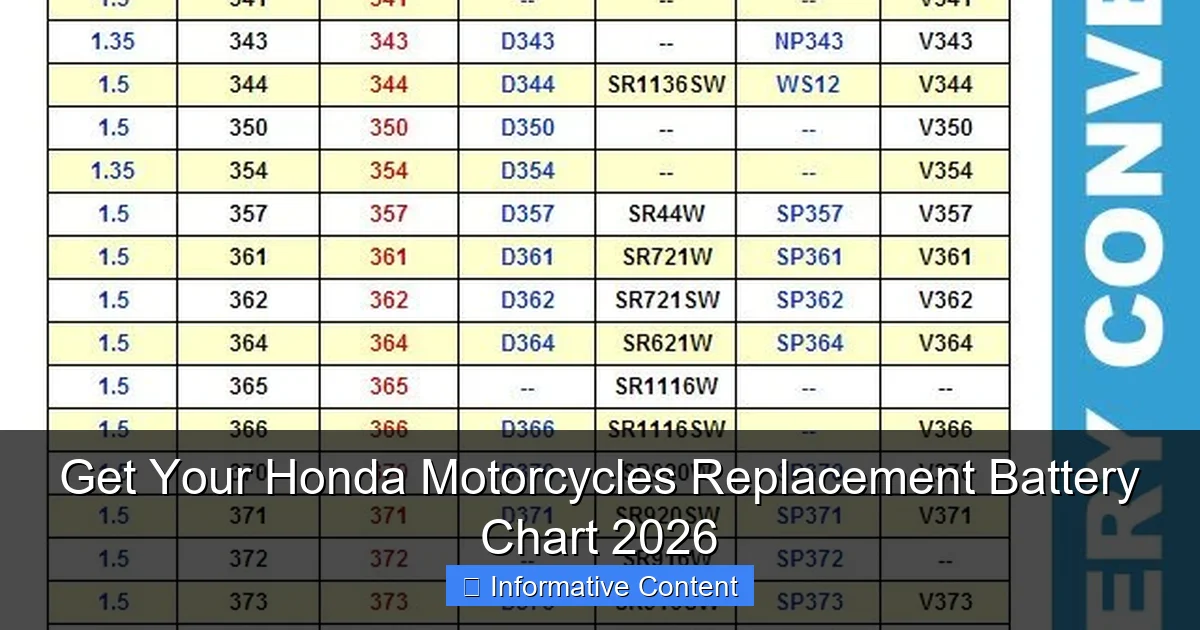
Visual guide about Get Your Honda Motorcycles Replacement Battery Chart 2026
Image source: i.pinimg.com
Check Your Charging System:
Before installing a new battery, it’s a good idea to have your motorcycle’s charging system (stator and regulator/rectifier) checked. A faulty charging system can quickly kill a brand-new battery. Most shops can perform this test quickly, or you can do it yourself with a multimeter.
Proper Installation is Key:
Always disconnect the negative (-) terminal first and connect it last. Ensure all connections are clean and tight. Loose connections can lead to poor performance, charging issues, and premature battery failure. Consider using anti-corrosion grease on the terminals.
Maintenance for Longevity:
- Keep it Clean: Regularly check for corrosion on the terminals and clean them with a wire brush and a baking soda-water solution.
- Keep it Charged: Use a smart battery charger/maintainer during storage or extended periods of non-use. This is especially vital for Lithium-Ion batteries.
- Inspect Periodically: Look for any physical damage, swelling, or leaks.
The Future is Bright: Honda Batteries in 2026
As we look to the mid-2020s, Honda continues to push boundaries in motorcycle technology, and batteries are no exception. Expect to see further integration of smart battery management systems (BMS) in Lithium-Ion packs, providing even greater safety and efficiency. The “Honda Motorcycles Replacement Battery Chart 2026” will reflect these advancements, potentially listing more specific Lithium-Ion options for a wider range of models, possibly even highlighting energy recovery systems in hybrid or electric assist concepts.
Embrace the future by choosing the right battery, and your Honda will thank you with countless reliable starts and exhilarating rides.
Conclusion: Powering Your Adventures with Confidence
Finding the correct replacement battery for your Honda motorcycle doesn’t have to be a daunting task. By utilizing a reliable “Honda Motorcycles Replacement Battery Chart 2026,” understanding key specifications like CCA and Ah, and choosing the right battery type for your needs, you can ensure your ride is always ready for adventure. Remember to invest in good charging practices and proper installation, and you’ll enjoy many miles of worry-free riding with your perfectly powered Honda. Keep those wheels turning, and ride safe!
Frequently Asked Questions
What is the lifespan of a typical Honda motorcycle battery?
The lifespan of a Honda motorcycle battery typically ranges from 2 to 5 years, depending on the type of battery, riding habits, climate, and maintenance. AGM batteries often last longer than conventional lead-acid, while Lithium-Ion batteries can last significantly longer, sometimes up to 8-10 years with proper care.
Is it okay to store my Honda motorcycle with the battery disconnected?
Yes, storing your Honda motorcycle with the battery disconnected can help prevent parasitic drains and preserve the battery’s charge. However, even when disconnected, batteries can slowly self-discharge, so it’s still best to connect it to a smart battery maintainer during long-term storage for optimal health.
How do I know if my Honda motorcycle battery needs replacing?
Common signs that your Honda motorcycle battery needs replacing include slow or sluggish engine cranking, dim headlights or instrumentation when the engine is off, the battery not holding a charge despite charging, or physical signs like a swollen battery case or corrosion that won’t clean off.
Can a weak battery affect other electrical components on my Honda motorcycle?
Yes, a weak or failing battery can definitely affect other electrical components on your Honda motorcycle. It can put a strain on the charging system, leading to premature failure of the stator or regulator/rectifier, and can cause erratic behavior in electronic systems like fuel injection or digital displays.
What is the difference between Ah and CCA on a battery?
Ah (Ampere-hours) measures a battery’s capacity or how much energy it can store, indicating how long it can deliver a certain current. CCA (Cold Cranking Amps) measures the instantaneous power a battery can deliver to start the engine, especially in cold conditions. Both are important for different aspects of battery performance.
Do I need a special charger for a Lithium-Ion Honda motorcycle battery?
Yes, you absolutely need a specific charger designed for Lithium-Ion (LiFePO4) batteries for your Honda motorcycle. Standard lead-acid chargers can overcharge and damage Lithium-Ion batteries, potentially leading to dangerous situations or significantly reducing the battery’s lifespan. Always verify charger compatibility.