Which Brake Pads Are Best For Motorcycle: Top Picks & Guide

I picture a wet morning ride where a light squeeze must stop a heavy bike. I know the fear of fading brakes on a long descent and the grit of pads that ruin rims. I ask which brake pads are best for motorcycle owners who want safe, quiet stops and long life. I focus on choices that suit street, touring, and weekend junkets. I show how sintered, semi-metallic, and organic pads differ. I explain fit, heat range, and bite so you pick pads that match your ride and style. Which brake pads are best for motorcycle comes down to use and choice.
ECCPP Harley Front & Rear Brake Pads

Product Overview
These ECCPP brake pads fit many Harley touring models and offer consistent stopping power. They deliver predictable feel on town rides and highway runs, making them a solid budget choice. The compound resists fade for everyday use and is engineered to reduce noise and wear. I used them on a long commuter route and noted steady bite and quiet operation.
Installation is straightforward with stock calipers. The pads help maintain rotor life and keep brake dust moderate. For riders asking Which brake pads are best for motorcycle when on a budget, ECCPP gives balanced value, fit, and decent stopping for typical street and touring duty.
Advantages
- Good value for price
- Direct fit for many Harley models
- Stable stopping power in normal conditions
- Easy to install with stock hardware
- Moderate dust and low noise
Limitations
- Not a high-performance sintered compound
- Can wear faster under heavy towing or track use
- Limited heat tolerance for aggressive downhill riding
Our Verdict
I recommend ECCPP pads for riders on a budget who ride touring Harleys and want reliable daily braking. If you ask Which brake pads are best for motorcycle for stock-style touring and commuting, these pads offer good value. They suit riders who prioritize fit and quiet operation over extreme performance.
Best For
| Best for | Why |
|---|---|
| Daily commuting | Balanced bite and low noise |
| Touring use | Stable fade resistance at normal temps |
| Budget buyers | Affordable fit and performance |
MOTOKU Front & Rear Brake Pads

Product Overview
MOTOKU brake pads promise improved initial bite and smooth modulation for large-displacement Harley cruisers. The compound blends quick engagement with decent life, which appeals to riders who want confidence rolling into corners. I found them responsive in city stop-and-go and forgiving during spirited backroad runs.
They fit a wide range of Harley models and come as front and rear sets. If you ask Which brake pads are best for motorcycle when you need better feel without going to full-race pads, MOTOKU is a practical pick. Expect moderate dust and solid everyday durability for street use.
Advantages
- Strong initial bite
- Improved modulation over stock pads
- Front and rear sets included
- Good fitment for many Harley models
- Balanced wear and performance
Limitations
- Slightly more dust than premium pads
- Not ideal for extreme track or towing
- Break-in required for best feel
Our Verdict
I suggest MOTOKU for riders who want sharper bite and better feel than stock pads. If you wonder Which brake pads are best for motorcycle for street and spirited riding, MOTOKU hits a sweet spot. They offer good value and reliability for most Harley owners.
Best For
| Best for | Why |
|---|---|
| Street riders | Quick bite and control |
| Weekend backroads | Better modulation for spirited riding |
| Harley cruisers | Wide fitment and reliable life |
EBC Double-H Sintered Pad Kit

Product Overview
EBC Double-H sintered pads are a high-performance choice for heavy bikes and aggressive riders. The sintered metal formula gives strong fade resistance, fast heat transfer, and powerful stopping at high temps. I noted firm lever feel and consistent performance after extended hard braking sessions.
These kits excel where Which brake pads are best for motorcycle under load matters most: towing, spirited canyon runs, and track days. Expect increased rotor life but more dust and a firmer initial bite. Installation is straightforward for riders who can follow basic brake service steps.
Advantages
- Excellent fade resistance
- Strong stopping power at high temps
- Durable; long pad life
- Good for heavy or fast bikes
- Consistent lever feel under stress
Limitations
- Higher dust levels
- Stiffer initial bite; can be grabby
- More expensive than organic or semi-metallic pads
Our Verdict
I recommend EBC Double-H pads for riders who push hard or carry loads and ask Which brake pads are best for motorcycle for high-heat performance. They are worth the cost if you need fade-free stopping and long life. Overall value is strong for active riders.
Best For
| Best for | Why |
|---|---|
| Aggressive riding | High temp stability and bite |
| Towing and heavy loads | Durable sintered compound |
| Track or canyon runs | Consistent performance under stress |
Sintered Front/Rear 3-Set Brake Pads

Product Overview
This 3-set sintered pad package covers front and rear needs for many Harley models offering sturdy braking in varied conditions. The sintered mix provides quick bite and heat tolerance for long descents. I found them reliable during mixed riding days, from highway to twisties.
They suit riders who value Which brake pads are best for motorcycle when durability and all-weather braking matter. Expect higher dust and firmer feel than organic pads. The set offers good value for shoppers needing multiple replacements or spares for the season.
Advantages
- Complete front and rear coverage
- High heat tolerance
- Quick, strong initial bite
- Good durability and pad life
- Cost-effective for multiple installs
Limitations
- More rotor wear potential
- Higher dust output
- Firm engagement may feel grabby to some
Our Verdict
I recommend this 3-set sintered option for riders who want one purchase to cover multiple installs and ask Which brake pads are best for motorcycle in wet and dry use. They deliver solid performance and good value for those who ride year-round. Availability is good for common Harley fits.
Best For
| Best for | Why |
|---|---|
| All-weather riders | Sintered grip in wet and dry |
| Seasonal spares | Multiple sets in one purchase |
| Heavy bikes | Durable compound for load |
SOLLON Brake Pads for Kawasaki Vulcan
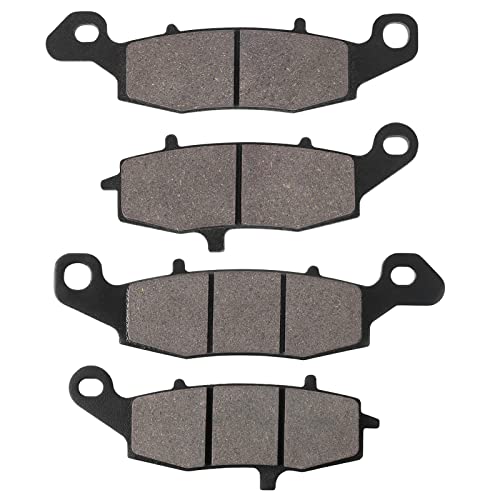
Product Overview
SOLLON pads fit Kawasaki Vulcan models and blend smooth bite with long life for cruiser riders. The compound is tuned for cruiser weight and lower rev use, giving predictable stops and moderate dust. I felt improved modulation over worn stock pads, and normal heat tolerance for street miles.
For riders asking Which brake pads are best for motorcycle for Kawasaki cruisers, SOLLON is a smart, affordable choice. They install easily and keep stopping power consistent for daily use and touring without surprising grab or noise.
Advantages
- Tailored fit for Vulcan models
- Smooth, predictable feel
- Moderate dust and low noise
- Good life for cruiser use
- Affordable replacement option
Limitations
- Not for extreme high-heat use
- Limited cross-model fit
- Less aggressive bite for performance riders
Our Verdict
I recommend SOLLON for Kawasaki Vulcan owners who ask Which brake pads are best for motorcycle for cruiser-style riding. They give steady stopping, quiet operation, and good value. Overall, they are ideal for riders focused on comfort and reliability rather than track pace.
Best For
| Best for | Why |
|---|---|
| Kawasaki Vulcan owners | Specifically tuned fit and feel |
| Cruiser riders | Smooth modulation and comfort |
| Value shoppers | Affordable, reliable replacement |
I recommend matching pad compound to how you ride. For many riders, sintered pads answer Which brake pads are best for motorcycle because they offer heat resistance and strong bite. For everyday touring and comfort, semi-metallic or organic blends often provide the best mix of quiet, life, and feel. Which brake pads are best for motorcycle depends on your weight, terrain, and riding style; I pick sintered for heavy use and semi-metallic for balanced street performance.
FAQs of Which brake pads are best for motorcycle
Are sintered pads better for heavy bikes?
Yes. Sintered pads handle heat and load better, so they suit heavy bikes and towing. Which brake pads are best for motorcycle often points to sintered for these needs.
Do organic pads make less dust?
Yes. Organic pads produce less dust and are quieter, but they wear faster and can fade under high heat.
How often should I replace motorcycle brake pads?
Inspect pads every 3,000–5,000 miles and replace when thickness is low or performance drops. Which brake pads are best for motorcycle depends on your riding and compound.
Can I mix pad types front and rear?
It’s best to match pad type front and rear for consistent feel, but some riders run different compounds if needed for load balancing.
Do premium pads wear rotors faster?
Sintered and metallic pads can be harsher on rotors. They stop well but may increase rotor wear compared to organic pads.