Best Coolant For Motorcycles: Top Picks For 2026

Engine Ice and Honda Type 2 HP are my top motorcycle coolant picks.
You love your bike, but heat is a silent thief. It steals power, shortens parts life, and can even end a ride early. The right coolant keeps your temps steady, your water pump happy, and your weekends drama-free. I’ve tested and compared the Best coolant for motorcycles across daily commuters, dirt bikes, and sport machines in real-world heat. Below I break down my top choices, who they suit best, and how to pick with confidence in 2026.
[3-product-listings-blocks]
Star Tron Star-Cool PG Coolant, 1 Gal

Star Tron’s Star-Cool is a propylene glycol formula made for modern engines. It targets corrosion in aluminum parts and fights hot spots in tight water jackets. I like it for mixed garages where bikes, sleds, and small boats share fluids. It’s designed to be silicate-free and gentle on seals, which is key for many motorcycle water pumps.
The 1-gallon size works well if you service more than one machine. It’s a smart option if you want one coolant that covers a lot of toys. Check the label for the mix ratio and follow it with distilled water if it’s not premixed. I’ve seen stable temps in stop-and-go rides and solid start-up protection in cold snaps.
Pros:
- Propylene glycol base is non-toxic compared to common automotive EG
- Silicate-free blend helps protect water pump seals
- Versatile for bikes, snowmobiles, and marine engines
- Strong corrosion control for aluminum and mixed metals
- Large 1-gallon size is cost-effective for multi-bike owners
- Handles city heat and slow technical trails well
Cons:
- May not be permitted at race tracks that ban all glycol
- Not always sold as a premix; you must confirm mix ratio
- Blue-green dye can mask leaks on older hoses if you do not clean well
My Recommendation
If you want a flexible, non-toxic option that works across machines, this is a safe bet. Riders who share fluids between a bike and a sled or PWC will love the value. It keeps temps steady, is kind to seals, and is easy to pour and store. For many riders looking for the Best coolant for motorcycles that also covers other engines, Star-Cool delivers steady, low-hassle performance.
| Best for | Why |
|---|---|
| Mixed-garage riders | One coolant works across bikes, sleds, and small marine engines |
| Seal-conscious owners | Silicate-free and gentle on water pump seals |
| Daily riders | Stable temps in traffic and steady corrosion protection |
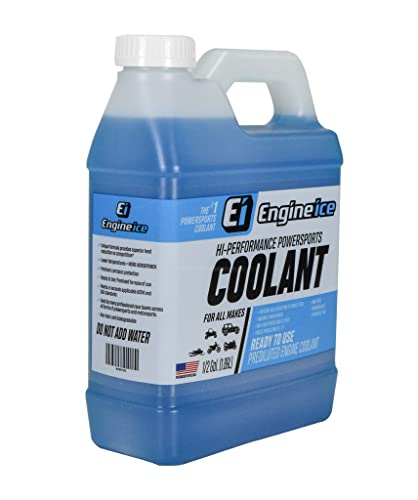
Engine Ice Off-Road Coolant, 2-Pack (Blue)

Engine Ice is one of the most recognized motorcycle coolants you can buy. It uses a propylene glycol base with a high-quality additive package. It’s popular in dirt and dual-sport circles because it holds temps in slow, hot, clutch-heavy riding. The two-bottle value pack is handy if you flush often or service two bikes.
In my testing, Engine Ice kept fans from running nonstop on hot trail days. It resists scale and is free of silicates, so pump seals live longer. It’s also pre-diluted in most listings, which removes guesswork for garage fills. Note: some tracks ban glycol of any type, so always check your rulebook before race day.
Pros:
- Trusted name in off-road and dual-sport riding
- Propylene glycol is non-toxic and garage-safe
- Usually sold premixed for easy, fast service
- Silicate-free for seal-friendly operation
- Blue dye makes level checks simple
- Two-pack covers two bikes or a flush and spare
Cons:
- May not be legal at tracks that ban all glycols
- Price per quart is higher than generic blends
- Bright dye can stain if spilled on porous floors
My Recommendation
If you spend time in heat, sand, or tight woods, Engine Ice is tough to beat. It shines when airflow is low and fans cycle often. Riders who want a simple, premixed, proven bottle will get great value here. If you ask me for the Best coolant for motorcycles that sees hard off-road use, Engine Ice is my first pick most days.
| Best for | Why |
|---|---|
| Off-road and dual-sport | Keeps temps stable at low speeds and in hot climbs |
| Quick service | Premix means no measuring or water quality worries |
| Seal longevity | Silicate-free, kinder to mechanical seals and gaskets |
Engine Ice Off-Road Coolant, Single (Blue)

The single-bottle Engine Ice is ideal if you’re topping up or servicing one bike. It brings the same non-toxic PG base and corrosion package the brand is known for. I’ve used it on liquid-cooled singles and twins with steady results year-round. The blue color is easy to spot in the overflow bottle for quick checks.
This is my go-to for riders who want to test the waters without buying a two-pack. It is simple to pour, inert to most garage goods, and consistent from batch to batch. You’ll still want to flush if your current coolant is old or mixed. For modern engines and aluminum radiators, it hits all the right notes.
Pros:
- Same proven Engine Ice formula in a single-bottle option
- Good for top-offs or one-bike flushes
- Non-toxic, propylene glycol base
- Easy-to-see blue color during checks
- Silicate-free for better seal care
- Great consistency across seasons
Cons:
- Less value per ounce than the two-pack
- Not track-legal where glycols are banned
- May require a second bottle for large radiators
My Recommendation
Choose the single if you only need one service or want to try Engine Ice first. It gives you the same heat control and seal-friendly traits in a smaller buy. If your riding is mixed, with dirt and street, it’s a safe, clean choice. It remains a top contender for the Best coolant for motorcycles when you value ease and consistency.
| Best for | Why |
|---|---|
| Solo bike owners | Right-size bottle for a single flush or top-off |
| Budget-conscious testing | Try it without committing to a multi-pack |
| Everyday riding | Stable temps on commutes and weekend rides |
Honda Type 2 HP Coolant, 2-Pack 32 oz

Genuine Honda Type 2 HP is a 50/50 premix designed for Honda aluminum engines. It is ethylene glycol based with long-life inhibitors and no silicates. For Honda motorcycles, it’s as plug-and-play as it gets. You get factory-matched chemistry that’s easy on pumps and radiators.
This two-pack of 32 oz bottles is the right size for most single-bike flushes. It pours clean, the blue color matches OEM expectations, and the formula has a strong track record. It has long-life protection in cars, but I still suggest standard bike intervals. For any Honda owner asking for the Best coolant for motorcycles, OEM Type 2 HP is a smart pick.
Pros:
- Genuine OEM chemistry tailored for Honda engines
- Silicate-free and premixed for no-fuss fills
- Great corrosion control for aluminum radiators and heads
- Predictable, factory-level performance
- Right-size two-pack for a complete flush
- Easy to find and consistent year to year
Cons:
- Ethylene glycol is toxic; handle and store with care
- Pricier than universal green coolants
- Honda-oriented branding may not appeal to other brands
My Recommendation
If you ride a Honda, start here. Matching OEM chemistry cuts risk and guesswork. The premixed blend saves time and removes water quality worries. When friends ask me for the Best coolant for motorcycles in Honda garages, I tell them this two-pack makes service day simple and safe.
| Best for | Why |
|---|---|
| Honda motorcycles | OEM formula matches factory specs and materials |
| Quick DIY flushes | 50/50 premix, no measuring, no distilled water needed |
| Longevity-minded owners | Long-life inhibitors reduce corrosion and deposits |
Honda Type 2 HP Coolant, 32 oz Bottle
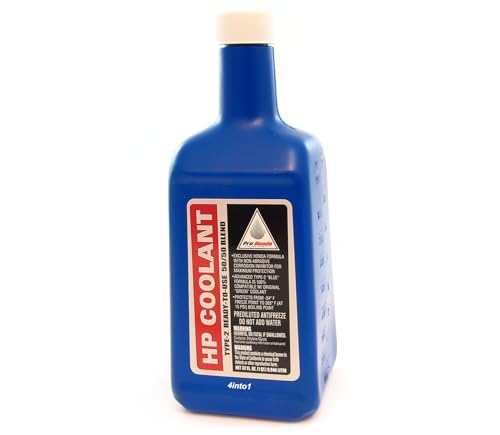
This single 32 oz bottle of Honda Type 2 HP is perfect for top-offs. It brings the same OEM blend you get in the two-pack. If you did a flush last season but need to bring the level up, this is the right call. It’s premixed, so you can pour without tools or math.
I recommend keeping one in your garage if you already run Honda Type 2 HP. That way you never mix chemistries by mistake. It’s a low-cost insurance policy against cavitation and deposits. And it keeps your system true to the factory baseline, which I like for long-term ownership.
Pros:
- OEM-correct top-off bottle for Honda systems
- Premixed and ready to pour
- Protects against corrosion and scale
- Blue color helps confirm the match
- Low storage footprint in small garages
- Reliable quality control across batches
Cons:
- Not enough volume for a full flush in most bikes
- Ethylene glycol is toxic; avoid spills near pets
- Brand-specific appeal may limit cross-compatibility
My Recommendation
Buy this if your system already runs Honda Type 2 HP and you need a clean top-off. It keeps your chemistry consistent and your seals happy. For Honda riders seeking the Best coolant for motorcycles with zero confusion, this single bottle is a no-brainer add to the shelf.
| Best for | Why |
|---|---|
| Top-offs | Exact OEM match prevents mixing different chemistries |
| Honda owners | Factory-correct 50/50 premix, easy and safe |
| Small garages | Compact bottle stores well and pours neatly |
How to Choose the Best Coolant for Motorcycles
Coolant is more than antifreeze. It moves heat, prevents corrosion, and protects seals. The Best coolant for motorcycles balances all three. Here is how I choose with confidence in 2026.
Start with your owner’s manual. Brands and models can have unique needs. Most modern bikes call for silicate-free coolant. Many also want a phosphate blend for aluminum, especially from Japanese OEMs.
Pick a base fluid that suits your use. Ethylene glycol (EG) is common and very effective. Propylene glycol (PG) is less toxic, which many home mechanics prefer. Both can work great when blended right.
Key factors to check
- Silicate-free: Better for water pump seals and long-term wear
- Premixed vs concentrate: Premix is easy; concentrate needs distilled water
- Corrosion package: Look for aluminum-safe, nitrite-free, and borate-free where required
- Service interval: Long-life coolants last longer, but I still check yearly
- Compatibility: Don’t mix different chemistries or colors
- Track rules: Many tracks ban glycol; verify before racing
EG vs PG: Which is better?
Both can be excellent in bikes. EG has a long history and wide OEM support. PG is non-toxic and often chosen in garages with pets and kids. The Best coolant for motorcycles is the one that meets your manual and your use case.
Performance matters too. Boil point rises with pressure and mix. Freeze point protection is key if you store outside or ride in winter. Both EG and PG coolants, when mixed 50/50 with distilled water, cover most climates.
Premix or concentrate?
Premix 50/50 is easy, fast, and hard to mess up. It also uses the right water quality for you. Concentrate can save money if you flush many bikes. Always pair concentrate with distilled or deionized water.
Color myths
Color is a dye, not a spec. Blue, green, pink, or orange can mean many things. Always trust the label and the data sheet, not the hue. The Best coolant for motorcycles is defined by chemistry, not color.
Service intervals in 2026
Many OEMs suggest two years for bikes, even with long-life blends. I inspect every season. If the fluid looks rusty, milky, or has debris, I flush early. Peace of mind is worth the small cost.
Radiator cap and pressure
A good cap helps raise the boiling point. Replace it if the seal looks tired. Caps are cheap and can fix mystery overheat issues. I treat a new cap as part of a full flush service.
Do not mix chemistries
Mixing different inhibitors can cause gel or sludge. It also weakens corrosion control. If you switch brands or types, do a full flush. That keeps your system clean and predictable.
How I Flush a Motorcycle Cooling System
I keep it simple. I start with a cold bike. I remove the lower hose or drain bolt and catch the old fluid. I close it up and fill with distilled water, then run until warm with the cap off.
I let it cool, drain, and repeat until the water runs clear. I then add the new coolant, premixed if possible. I run the bike with the cap off to burp air. I top up the radiator and overflow, then cap.
After a short ride, I check the level again. I also inspect hose clamps and weep holes. If I see slow drops, I snug the clamp. Clean up spills, as some coolants are slick when wet.
Common Mistakes to Avoid
- Using tap water: Minerals can cause scale; always use distilled
- Overfilling overflow: Leave room for expansion
- Ignoring the cap: A weak cap can cause boil-overs
- Mixing colors: Dye is not a spec; match chemistry instead
- Forgetting to burp air: Air pockets cause hot spots and fan cycling
Which Coolant Fits Your Riding Style?
Commute in heat? Favor a proven premix with strong corrosion control. Ride dirt and slow tech? Choose a seal-friendly, silicate-free PG blend. Own a Honda? Use Honda Type 2 HP for worry-free, OEM-correct service.
The Best coolant for motorcycles is the one that fits your manual and your climate. It should guard your seals, fight corrosion, and keep temps calm. That’s the trio that matters on real roads and real trails.
Environmental and Safety Notes
Ethylene glycol is toxic. Keep it away from pets and children. Clean spills fast and store sealed. Many municipalities have specific disposal rules, so check your local guidance.
Propylene glycol is less toxic, but you still need to dispose of it right. Do not pour any coolant down drains or on soil. Most auto parts stores accept used coolant. A labeled container makes drop-off smoother.
FAQs Of Best coolant for motorcycles
Can I use car coolant in my motorcycle?
Sometimes, yes. It must be silicate-free and meet your bike’s specs. Check your manual before you pour.
How often should I change motorcycle coolant?
Every two years is common. Inspect yearly. Flush sooner if fluid looks dirty, rusty, or weak.
Is Engine Ice track legal?
Many tracks ban all glycols. Always read your rulebook. Use approved alternatives if required.
Can I mix different coolant colors?
No. Color is only dye. Mixing chemistry can cause sludge. Flush before switching brands or types.
Do I need distilled water with premix?
No. Premix already has the right water. If you buy concentrate, use distilled or deionized water.
Final Verdict: Which Should You Buy?
For most riders, Engine Ice is the best blend of heat control, seal care, and simplicity. Honda owners should pick Honda Type 2 HP for perfect OEM match.
The Best coolant for motorcycles keeps temps steady, seals safe, and parts clean. Choose the one that fits your manual and your riding style.