Can you use motorcycle oil in a car?-My Pithy Answer

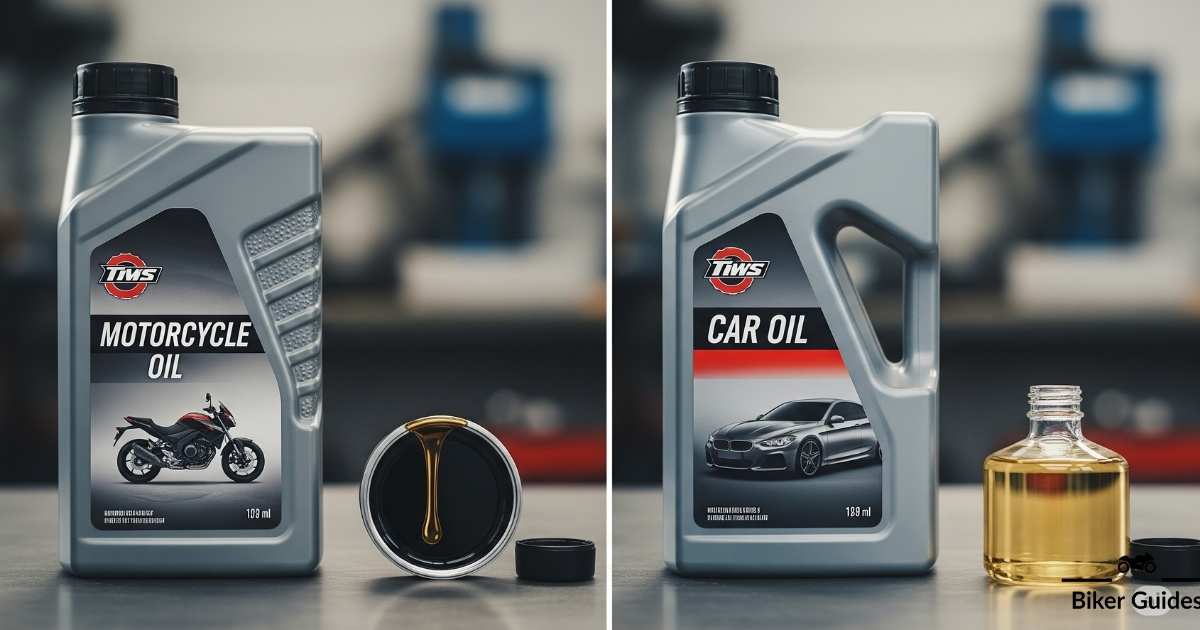
Can you use motorcycle oil in a car? This seems like a simple question. But the answer is not so simple. It is about how oil works to stop parts from rubbing. Some people say “oil is oil.” This is not true. It is a very wrong thing to say. You can pour motorcycle oil into a car. But you should not do this. It can cause big problems. It can hurt how the car runs. It can harm the parts that clean the car’s exhaust. Car oil and motorcycle oil are not the same. They are made to work in very different engines.
The main reason car oil and motorcycle oil are not the same is how their engines are built. This report will look at why they are so different. We will look at three main things:
- How the Engines Work: We will see how car and motorcycle engines are not the same. We will look at how they share oil, how hot they get, and how fast they spin.
- What Is in the Oil: We will look at the parts of the oil. We will see how the added chemicals are very different. These chemicals change how the oil works.
- The Rules for Oil: We will look at the different seals of approval for oil. Cars use API rules. Motorcycles use JASO rules. These rules show that the oils are made for different jobs.
Motorcycles need to be small and light. So, their engines are built in a special way. The engine, gears, and clutch are often in one unit. They all share the same oil. This is called a “shared sump”. This makes the oil’s job very hard. The oil must cool the fast engine. It must protect the gears from being crushed. It must also let the clutch grab just right, not too much and not too little. A car is much bigger. It has space for separate parts. The engine has its own oil. The gears have their own fluid. This makes the engine oil’s job much easier. So, motorcycle oil is made for a shared oil system. Car oil is not. This report will explain these key points. It will give a clear answer to the main question.
You can also read : Can You Use Car Spark Plug on Motorcycle Harley Davidson ?
Why Engines Are Different
Car oil and motorcycle oil are not the same. To know why, you must see how their engines are different. They work in very different ways. A motorcycle engine gets very hot. It spins very fast. It has a lot of stress. This is much more stress than a car engine has. This is why they need different kinds of oil.
Heat, Speed, and Cooling
Motorcycle engines are small but strong. They make a lot of power. They do this by spinning very fast. A car engine may spin at 2,000 to 4,000 times per minute. A motorcycle engine can spin at 8,000 times per minute. Some can spin at 14,000 times per minute or more. Spinning so fast makes a lot of heat. This is very hard on the oil. The oil must keep a film between the moving parts.
How the engines cool is also different. Most cars use water to cool the engine. The water moves to a radiator to lose heat. This keeps the engine at a good temperature. It is often around 235 degrees F. Many motorcycles use air to cool the engine. Air blows over the engine fins to cool it. This does not work as well. This is true when the bike is in traffic and not moving fast. So, air-cooled motorcycle engines can get much hotter than car engines. The heat can make the oil break down fast.
Motorcycles also hold less oil. A car can hold 4 to 6 quarts of oil. A motorcycle might hold only 2 to 4 quarts. Less oil means it has to move through the engine more often. It gets hot and stressed more. The oil must be very strong. It must fight heat and not break down.
The Shared Oil Pan
The biggest reason for different oils is the shared oil pan. Most motorcycles have this. One oil has to do three jobs at once:
- Keep the Engine Safe: It protects parts like pistons and cylinders from wear. This is the same as in a car.
- Keep the Gears Safe: It must handle the great force of the gears as they turn.
- Help the Clutch Work: It cools the clutch. It lets the clutch plates grab smoothly to send power to the wheel.
Cars do it a different way. The engine has its own oil. The gears have their own fluid. A car with a stick shift has a “dry” clutch. It works in the air and needs no oil. This means car engine oil has only one job. It just has to protect the engine. It does not need to worry about gears or a clutch. This makes its job much more simple.
Power and Stress on Oil
Motorcycle engines make more power for their size than car engines. This puts more stress on all the parts. It also puts more stress on the oil. The worst thing for oil in a shared system is called shear.
Shear happens when the oil is squeezed between the gear teeth. The force is very strong. It can tear the oil’s molecules apart. These molecules help the oil stay thick when it gets hot. When they are torn, the oil gets thin for good. A 10W-40 oil can turn into a 10W-30 oil. This is called “shearing down.” A thin oil cannot protect the engine well at high heat. This leads to more wear.
So, motorcycle oils must have special parts that do not shear easily. This is a much harder job than for car oils. Car oils never touch the gears. They can use less tough, cheaper parts. A motorcycle engine is always working very hard. It is like a car engine on a race track all the time. The mix of high heat, high speed, and high stress means motorcycle oil must be very tough. A car does not need oil that is this tough.
What Is in the Oil?
An oil’s job is done by what is in it. All engine oils have two main parts. Base oils make up most of it, from 70 to 90 percent. Added chemicals make up the other 10 to 30 percent. The base oil is key. But the added chemicals are what make motorcycle oil and car oil so different.
Types of Base Oil
There are three main types of base oil. Each has a different cost and works in a different way:
- Mineral Oils: These are the most basic oils. They come from crude oil from the ground. They work well for simple jobs and short oil change times.
- Semi-Synthetic Oils: These are a mix of mineral and man-made oils. They work better than mineral oils. They cost less than full man-made oils.
- Full Synthetic Oils: These are the best base oils. They are made by science, not just cleaned from crude oil. This makes all the oil parts the same size. They are very good at handling heat. They do not break down easily. They flow well when it is cold. This makes them great for the hard job in a motorcycle engine.
Oil Thickness (SAE Grades)
The first thing you see about oil is how thick it is. This is called viscosity. The Society of Automotive Engineers (SAE) has a system to grade oil. A grade looks like SAE 10W-40:
- The first number with a “W” is for “Winter.” It tells you how well the oil flows when it is cold. A low number is better for cold starts. A lot of engine wear happens on cold starts.
- The second number tells you how thick the oil is when the engine is hot. A high number means the oil stays thick. It makes a strong film to protect parts at high heat.
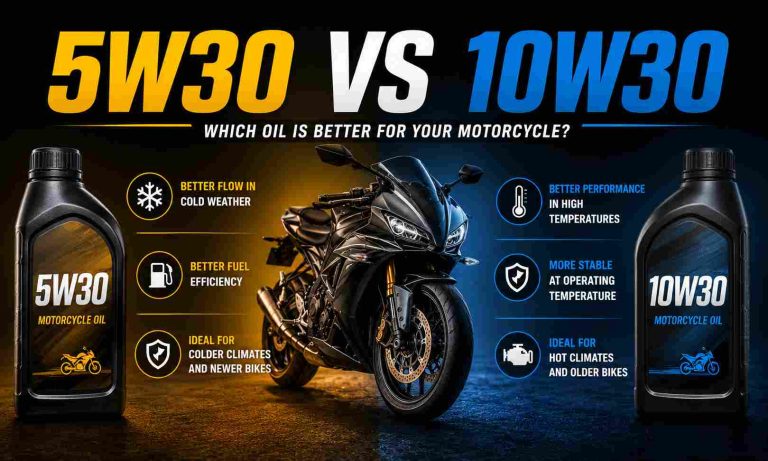
Motorcycles run hotter and work harder. They often need thicker oils, like 10W-40 or 20W-50. Cars are now using thinner oils, like 5W-20 and 0W-20. This helps them save gas. As we said, motorcycle oil must not get thin from the gears. It must hold its thickness grade.
Special Added Chemicals
The added chemicals are what make a base oil into a great oil. This is where car oils and motorcycle oils are most different. They are made to do opposite things.
Slippery Additives to Save Gas
New car oils have a lot of slippery additives. These additives make metal parts slide past each other more easily. This helps the car use less gas. Oils with these additives might say “Energy Conserving” on the bottle.
Motorcycle oils for a wet clutch must not have these slippery additives. A wet clutch needs some rubbing to work. The plates in the clutch press on each other to send power. If the oil is too slippery, the plates will just slip. The bike will not go fast. The clutch will get very hot and can be ruined.
Zinc and Phosphorus to Stop Wear
A chemical called ZDDP is a great additive to stop wear. It has been used for a long time. When it gets hot and is under pressure, ZDDP makes a thin, glass-like film on metal parts. This film keeps the metal parts from touching. This stops wear. It is very good for gears in a motorcycle.
Motorcycle oils have high levels of ZDDP. They have about 1,000 to 1,400 parts per million (ppm) or more. This strong protection is needed for the gears and the fast-spinning engine.
New car oils have much less ZDDP. The law says they can have no more than 800 ppm of phosphorus. This is not because ZDDP is bad. It is to protect a part in the car’s exhaust system. This part is the catalytic converter. The phosphorus in ZDDP can ruin this part. A small bit of oil gets burned in the engine. The phosphorus goes out the exhaust. It coats the inside of the converter and stops it from working. This makes the car pollute more. It will fail a smog test.
Soaps and Other Helpers
Both oils have soaps to fight acids and keep parts clean. They also have helpers to hold dirt so it does not stick to parts. But the mix of these can be different. Motorcycle oils are made for the dirt from a very hot, fast engine. Car oils are made for a modern car engine that runs cooler. Motorcycle oils also have more helpers to stop rust. This is because bikes often sit for a long time.
So, the added chemicals in car and motorcycle oils are made for opposite goals. Car oil is made for less rubbing to save gas. It has low ZDDP to protect the exhaust parts. Motorcycle oil is made for the right rubbing for the clutch. It has high ZDDP to protect the engine and gears from high stress. You cannot have both at the same time.
| What it is | Car Oil | Motorcycle Oil |
| Main Goal | Save gas. Protect exhaust parts. | Protect engine, gears, and clutch. |
| Works with Shared Oil Pan | No (Just for the engine) | Yes (For engine, gears, and clutch) |
| Slippery Additives | Yes (To save gas) | No (So the clutch does not slip) |
| Wear Protection Levels | Low | High (To protect from hard use) |
| Stays Thick | Normal | Very well (For the gears) |
| How Thick It Is | Thinner (like 0W-20, 5W-30) | Thicker (like 10W-40, 20W-50) |
| Main Seal of Approval | API (like SP, SN) | JASO (e.g., MA, MA2) and API |
You can also read : How Often To Change Brake Fluid On Motorcycles?
How to Read Oil Labels (API and JASO)
The differences in car and motorcycle oils are not just for show. They are written down in official rules. If you know these rules, you can pick the right oil. The two main groups that make these rules are the American Petroleum Institute (API) for cars and the Japanese Automotive Standards Organization (JASO) for motorcycles.
API Labels for Cars
The API is the main group for car oil rules in North America. Oils that pass their tests can show the API “donut” symbol. For gas engines, the rules start with the letter “S.” The letters go up over time as engines get better.
The newest rules are API SP. Before that was SN, SM, and SL. A new oil can be used in an older car. So, an SP oil is fine if your car needs SN oil. These API rules for cars are for car problems, like:
- Saving Gas: This is shown by the “Resource Conserving” words.
- Protecting Exhaust Parts: This means less phosphorus to keep the catalytic converter safe. It also means new rules for new kinds of engines.
- Keeping the Engine Clean: This makes sure the oil stops dirt and grime from building up.
The API “S” tests do not check how an oil works in gears. They do not check how it works with a wet clutch.
JASO Labels for Motorcycles
In the 1990s, car oils got more slippery to save gas. This caused problems for motorcycles. Their clutches started to slip. The API rules were not enough for bikes. So, the Japanese Automotive Standards Organization (JASO) made a new rule in 1998. It is called T903. It is now the main rule for 4-stroke motorcycle oils all over the world.
The JASO T903 rule is all about how the oil works with a wet clutch. It tests three things: how the clutch feels, how well it holds, and how fast it grabs. Based on these tests, oils get a label:
- JASO MA: This is the normal label for oils used in a shared oil system. It means the oil has no slippery additives. It will not let the clutch slip.
- JASO MA2: This label came out in 2006. It is for oils that work even better with a clutch. It is good for new, strong motorcycles. It is also safe for bikes with catalytic converters.
- JASO MA1: This is a lower-level MA oil. It is for bikes that have separate oils for the engine and gears. This is not very common.
- JASO MB: This is the most slippery oil. It has slippery additives. It is made for scooters with automatic gears. They have a dry clutch that does not use engine oil. You must never use a JASO MB oil if your bike needs JASO MA. It will make the clutch slip very badly.
Why API Is Not Enough for Bikes
Before an oil can be tested for a JASO label, it must first pass a basic car oil test, like API SG or higher. This makes sure the oil can do the basic job of protecting an engine.
But an oil can have the best API label, like API SP, and still be very bad for a motorcycle. The API SP label means it is great for a car. But it says nothing about how it works with a clutch. In fact, it usually means it has slippery additives that will harm a wet clutch. The JASO MA or MA2 label is the key. It is the extra test that proves the oil is safe for a wet clutch. The fact that the JASO rule exists proves that car and motorcycle oils are not the same. If car oils were good for bikes, there would be no need for this extra, costly test.
| Label | Used For | What It Means |
| API SP | New Cars (2021+) | Low ZDDP, has slippery additives. |
| API SN | Cars (2011-2020) | Low ZDDP, often has slippery additives. |
| JASO MA2 | New, Strong Motorcycles with Wet Clutches | Good for clutches, no slippery additives, high ZDDP. |
| JASO MA | Normal Motorcycles with Wet Clutches | OK for clutches, no slippery additives, high ZDDP. |
| JASO MB | Scooters with Automatic Gears | Slippery, has slippery additives. Not for wet clutches. |
What Happens if You Use Motorcycle Oil in a Car
Now we know why the oils are different. So, we can answer the main question. What happens if you use motorcycle oil in a modern car? It will probably not blow up the engine right away. But it will cause slow and bad problems over time. It will hurt the exhaust system and make you use more gas.
Harm to the Exhaust Cleaner
The biggest and most costly problem is harm to the catalytic converter. As we saw, motorcycle oils have a lot of ZDDP. This additive is full of phosphorus. All engines burn a little bit of oil. This is normal. The oil goes into the engine’s burn chamber and is burned with the gas.
When oil with a lot of phosphorus is burned, the phosphorus goes into the exhaust. It sticks to the inside of the catalytic converter. This is called “catalyst poisoning.” It makes a layer that blocks the good metals inside. The converter can no longer clean the bad gases from the engine. It can no longer change them into safe air and water.
This damage is slow, but it adds up. It cannot be fixed. The car’s computer will see that the converter is not working. It will turn on the “Check Engine” light. The car will then fail a smog test. The only way to fix it is to buy a new catalytic converter. This can cost a lot of money.
Using More Gas
New car engines are made to work with thin, slippery oil. This oil is a key part of how the car saves gas. The engine parts are made to work with oil that has additives to cut down on rubbing.
Motorcycle oils with a JASO MA or MA2 label do not have these slippery additives. If you use this oil in a car, there will be more rubbing inside the engine. This will not cause damage right away. But it will make the engine work harder. This will make the car use more gas. Studies show that slippery additives can help a car use less fuel. Over a year of driving, this extra cost for gas will add up.
Dirt and Grime in the Engine
This is not as certain as the other two problems. But there is a chance the engine will not stay as clean. The soaps in motorcycle oil are made for a very hot, fast engine. This mix of soaps may not be the best for the dirt and grime made in a cooler car engine. Over a long time, this could let more dirt build up inside the engine.
So, using motorcycle oil in a car is not a good idea. You pay more for a special oil. The main good thing about it is protection for gears. A car does not need this. In return, you are hurting a costly exhaust part. You are also paying more for gas.
What Happens if You Use Car Oil in a Motorcycle
Now let’s look at the other way around. What if you use car oil in a motorcycle? This is done more often. The problems are usually faster and worse. This shows that the motorcycle is the one that needs the more special oil.
The Clutch Will Slip
The first and biggest problem is that the clutch will slip. New car oils that say “Energy Conserving” have slippery additives. These additives make a slippery film on metal parts. When this oil gets on the clutch plates in a motorcycle, it makes them too slippery. They cannot grab each other to send power.
You will know it is happening. When you give it gas, the engine will rev up, but the bike will not go faster. The clutch may feel soft. You may smell something burning. This is the clutch plates getting very hot. This can ruin the clutch very fast. You will need a new clutch, which costs a lot of money.
Gears Will Wear Out Fast
Even if a bike did not have a clutch, car oil would still ruin its gears. The gear teeth in a motorcycle are under great force. They need the strong protection from the high levels of ZDDP in motorcycle oil. The low ZDDP in new car oil is not enough. The metal gear teeth will touch. This will cause them to wear out very fast. They can get pits or even break.
Also, the molecules in car oil are not made for the stress of gears. The oil will get thin very fast. This is called “shearing down.” When the oil gets thin, it cannot protect the gears or the engine parts well.
Oil Breaks Down from Heat
A normal car oil is not made for the high heat of many motorcycle engines. This is true for big, air-cooled bikes. The high heat will make the car oil break down very fast. This makes dirt and grime. The oil stops working well. This leads to fast wear on the engine’s parts.
Using motorcycle oil in a car causes slow, long-term problems. But using car oil in a motorcycle can cause fast and very bad mechanical failure. This big difference shows that a motorcycle with a shared oil pan has special needs. A car oil cannot meet these needs.
FAQs for Can you use motorcycle oil in a car
Can you use motorcycle oil in a car?
No, you should not use motorcycle oil in a car. It has special chemicals that can harm your car’s exhaust system. It can also make your car use more gas.
What happens if you use car oil in a motorcycle?
Using car oil in a bike is very bad. The oil is too slippery and can make the clutch slip. This can quickly damage the engine and the gears.
Why are car and motorcycle oils so different?
Car oil is just for the engine. Motorcycle oil must also protect the gears and the clutch. This is why they have very different chemicals inside them.
Is 10W-40 motorcycle oil the same as 10W-40 car oil?
No, they are not the same. Even if the numbers match, the chemicals inside are very different. The bike oil is made for a much harder job in a hotter engine.
How do I choose the right oil for my vehicle?
Always check your owner’s manual. It tells you the right kind of oil to use for your car or bike. Using the right oil keeps your engine safe and running well.
Final Words
We have looked at the engines, the oils, and the rules. The answer is clear. Car oils and motorcycle oils are special fluids. They are not made to be used in place of each other. They are made differently because they work in very different places.
Here are the main points:
- How They Are Built: Most motorcycles use one oil for the engine, gears, and clutch. Cars use separate fluids for each. This makes the engine oil’s job in a car much more simple.
- What Is in the Oil: The added chemicals have opposite goals. Car oils are made for less rubbing to save gas. They have low ZDDP to protect exhaust parts. Motorcycle oils are made for the right rubbing for the clutch. They have high ZDDP to protect the engine and gears.
- The Rules: These opposite goals are shown in the rules. The API rules for cars are about saving gas and protecting exhaust parts. The JASO rules for motorcycles are about making sure the clutch works right. The API rules do not check for this.
Final Advice:
- Do Not Use Motorcycle Oil in a Modern Car: You should not do this. The high phosphorus will slowly ruin the car’s catalytic converter. This will cause a failed smog test and a costly repair. Also, the lack of slippery additives will make you use more gas. The extra protection in motorcycle oil is not needed in a car.
- Never Use Car Oil in a Motorcycle with a Wet Clutch: This is much more important. The slippery additives in most new car oils will make the clutch slip right away. This will cause a loss of power and will ruin the clutch. Also, the oil is not strong enough to protect the gears from being destroyed.
- Follow the Owner’s Manual: The best guide for what oil to use is always the owner’s manual for your car or motorcycle. The people who made your vehicle have tested oils to find the right one. Always use an oil with the right thickness grade (like SAE 5W-30) and the right seal of approval (like API SP for a car, or JASO MA2 for a motorcycle). This is the best way to protect your vehicle.