Noco Genius 5 vs 10: Which Battery Charger Suits Your Needs?

Many people hunt for a reliable battery charger to keep their vehicles and gear ready. Too often buyers assume higher amperage automatically means a better charger. They overlook other important factors like battery chemistry compatibility, temperature compensation, and maintenance modes. People also mix up raw charging power with useful maintenance features such as desulfation or trickle charging. By knowing each model’s strengths and limits, you can pick the right charger for your needs. I wrote this guide to help you confidently choose between the NOCO Genius 5 and NOCO Genius 10.
Choosing The Right Battery Charger For Your Setup
- Pick Genius 5 if you need a compact charger for small to medium batteries.
- Choose Genius 10 when faster charging for larger batteries is important.
- Go with Genius 5 for lightweight and easy portability in everyday use.
- Prefer Genius 10 if you want more power and versatility for multiple battery types.
- Genius 5 makes more sense for occasional maintenance and trickle charging tasks.
- Genius 10 is the safer bet for frequent use on bigger or multiple battery systems.
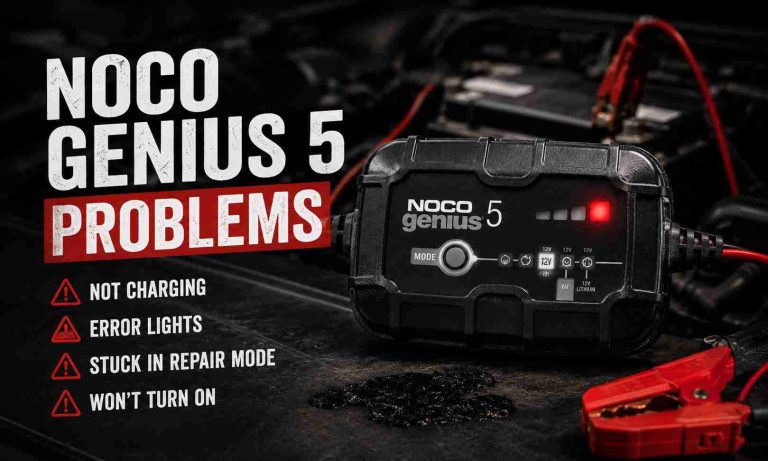
You can also read :NOCO Genius 5 problems
Is The Noco Genius 5 Suitable For Everyday Battery Maintenance?
Yes. The Genius 5 is a great fit for routine maintenance and charging of 6V and 12V lead-acid and lithium batteries. It uses temperature-compensated charging and can revive deeply discharged batteries. Its small size and light weight make it easy to move and store. I use one in my garage for car, marine, and powersport batteries. It feels reliable and simple to operate. The charger quietly manages battery health and keeps batteries topped off without overcharging. The built-in thermal sensor changes the charge rate for cold or hot environments. That gives me extra confidence when I use it outdoors. The compact design also fits neatly on a shelf or in a toolbox. Overall, it’s an easy-to-use tool to keep batteries ready.

What Genius 5 does best for battery care
- Compact and lightweight for easy handling and storage
- Supports various 6V and 12V lead-acid and lithium battery types (including LiFePO4)
- Built-in thermal sensor adjusts charging to ambient temperature
- Capable of charging deeply discharged batteries from zero volts
- Functions as charger, maintainer, trickle charger, and desulfator
Considerations before choosing Genius 5
- Lower amperage means slower charging on larger batteries
- Not ideal for very large or multiple batteries at once
- Lacks some advanced features found in higher amperage models
A practical pick for light to moderate battery needs
The Genius 5 suits anyone who wants a low-fuss charger for personal vehicles or small battery systems. It stops overcharging and maintains battery health with little input. Beginners find it simple. Experienced users value its precise charging and recovery modes. In my routine, having this charger around removes one worry about a dead battery. A simple tip: store it dry and away from dust to extend its life. Overall, it delivers reliable, everyday battery maintenance without a steep learning curve.
Battery size, amp hours (Ah), and real-world expectations
To choose correctly, match charger output (amps) to battery capacity in amp-hours (Ah). A 5A charger like the Genius 5 is fine for batteries up to ~50–100Ah for maintenance and slow charging. It will still charge larger batteries but expect longer charge times. I estimate charge time roughly as battery Ah divided by charger amps, then add 20–30% for inefficiency and tapering. For example, a 50Ah battery may take 12–14 hours from low state to full on a 5A charger. If you often need faster turnarounds, consider the higher amperage Genius 10.
Does The Noco Genius 10 Offer A Significant Upgrade In Charging Power?
It depends on your needs. The Genius 10 delivers about twice the charging current of the 5A model. That makes it better for larger batteries or when you need quicker top-ups. It shares the Genius 5’s useful features: temperature compensation, dead battery recovery, maintenance mode, and desulfation. In my use, the Genius 10 feels more robust. It handles heavy-duty tasks without overheating. I rely on it for marine batteries and deep-cycle applications where charge times matter. It is slightly bigger and heavier, but that trade-off is worth it when power and speed matter. The unit still fits well on a workshop bench and remains easy to use.

Key Questions To Decide Between Noco Genius 5 Vs 10
Are you charging smaller batteries or larger ones? How often will you use the charger? Do you prefer a lighter, portable unit or more power for faster charging? Will you regularly charge deeply discharged batteries? Is temperature compensation important where you live? Do you plan to maintain several batteries or just one? Ask these questions and match them to the charger specs. I usually list my priorities first: battery type, typical Ah, and how quickly I need a full charge.
How Noco Genius 5 And 10 Compare In Practical Battery Charging
In daily use both chargers are safe and reliable. They have temperature compensation and recovery modes. The main difference is charging speed. The Genius 5 is great for smaller batteries and maintenance. The Genius 10 shines when larger batteries or shorter charge cycles are needed. Both handle dead batteries and offer desulfation. Below I break down the real-world differences so you can pick based on use case, not just amp numbers.
Which charger fits your battery size best?
The Genius 5 suits small to medium batteries. The Genius 10 is better for larger or multiple batteries. Match the charger amp rating to the battery Ah and your desired charge time.
| Metric | Genius 5 | Genius 10 |
|---|---|---|
| Charging Current | 5 Amps | 10 Amps |
| Weight | 1.59 Pounds | 3.99 Pounds |
| Size (HxWxL) | 7.95 x 3.43 x 4.61 Inches | 9.1 x 4.48 x 4.41 Inches |
| Suitable Battery Types | 6V/12V Lead-Acid & Lithium | 6V/12V Lead-Acid & Lithium |
| Dead Battery Recovery | Yes | Yes |
Ratings: Genius 5 – 7/10 | Genius 10 – 9/10
So what? Choose based on your battery size and how quickly you want to recharge.
How do portability and size affect daily use?
The Genius 5 is lighter and smaller. It is easier to store and carry. The Genius 10 is bulkier but delivers more power. Think about where you will keep the charger and how often you will move it.
| Decision point | Genius 5 | Genius 10 |
|---|---|---|
| Weight | 1.59 Pounds | 3.99 Pounds |
| Compactness | Smaller, fits tight spaces | Larger footprint |
| Portability | Easy to move around | Less convenient for frequent moves |
| Storage | Fits in small compartments | Needs more shelf space |
Ratings: Genius 5 – 9/10 | Genius 10 – 6/10
So what? Pick Genius 5 if portability is a priority.
What about charging speed differences?
The Genius 10 charges over twice as fast as the Genius 5. That matters when you need a quicker turnaround. For daily maintenance the speed difference is less critical, but for larger batteries or emergencies it’s a big plus.
| Use case | Genius 5 | Genius 10 |
|---|---|---|
| Charging small battery | Slower but adequate | Fast and efficient |
| Charging large battery | Longer time required | Shorter charging cycles |
| Maintaining battery | Effective for trickle charge | Also effective |
Ratings: Genius 5 – 6/10 | Genius 10 – 9/10
So what? Faster charging suits those with larger batteries or tight schedules.
How do the temperature compensation features compare?
Both models use thermal sensors to adjust the charge profile for ambient temperature. This prevents overcharging in heat and undercharging in cold. In climates with wide temperature swings, that feature keeps batteries healthier over time.
| Metric | Genius 5 | Genius 10 |
|---|---|---|
| Thermal Sensor | Integrated | Integrated |
| Overcharge Protection | Yes | Yes |
| Undercharge Prevention | Yes | Yes |
Ratings: Genius 5 – 8/10 | Genius 10 – 8/10
So what? Both provide reliable protection in varying climates.
Can both handle deeply discharged batteries well?
Yes. Each charger offers a Force Mode (or recovery mode) to revive batteries down to zero volts. This helps with neglected or deeply discharged lead-acid and lithium batteries. Use the recovery mode cautiously and follow the manual for best results.
| Use case | Genius 5 | Genius 10 |
|---|---|---|
| Charging from zero volts | Yes, with Force Mode | Yes, with Force Mode |
| Battery types supported | Lead-acid and lithium | Lead-acid and lithium |
| Maintenance mode | Yes, safe for long-term | Yes, safe for long-term |
Ratings: Genius 5 – 8/10 | Genius 10 – 8/10
So what? Both are good choices for restoring old or dead batteries.
Safety tips and best practices for charging batteries
Always clean battery terminals before connecting a charger. Work in a well-ventilated area, especially with flooded lead-acid batteries. Use the correct mode for your battery chemistry—select LiFePO4 for lithium and the proper lead-acid profile for flooded, AGM, or gel. Never force a charger to a damaged battery; inspect for swelling, leaks, or cracks. I always wear gloves and eye protection when handling batteries. Lastly, read the NOCO manual for Force Mode and safety limits to avoid mistakes.
Deciding Between Noco Genius 5 And Genius 10 For Your Battery Needs
The Genius 5 is ideal for users who want a lightweight, compact charger for smaller batteries or occasional use. It suits people who value portability and simplicity over charging speed. If you maintain a single vehicle or a small powersport battery, the Genius 5 is practical and cost-effective. The Genius 10 fits buyers who need faster charging or work with larger or multiple batteries. It’s built for frequent use and tougher tasks. Its extra power reduces downtime and supports bigger battery systems. When unsure, list your typical battery size, how often you charge, and how quickly you need a charge. For light to moderate needs pick the Genius 5. For heavier use or faster charging pick the Genius 10. Both offer safe, temperature-compensated charging for peace of mind.
Frequently Asked Questions On Noco Genius 5 Vs 10 Battery Chargers
Can both chargers handle lithium batteries safely?
Yes. Both the Genius 5 and Genius 10 charge 6V and 12V lithium-ion (including LiFePO4) safely. They include overcharge protection and temperature compensation to protect battery life.
Is it necessary to unplug the charger after the battery is full?
No. These NOCO models have smart maintenance modes. You can leave them connected for long periods without overcharging. The charger monitors the battery and reduces power as needed.
Which charger is better for marine or deep-cycle batteries?
The Genius 10 is better for large marine or deep-cycle batteries due to its higher output. The Genius 5 can maintain these batteries but will need more time to bring them to full charge.
Can these chargers revive completely dead batteries?
Both chargers include a Force Mode for reviving batteries down to zero volts. This helps recover deeply discharged or neglected batteries, though success depends on the battery’s condition.
Does ambient temperature affect charging performance?
Yes. Both chargers include thermal sensors that adjust charging based on temperature. This prevents overcharging in hot conditions and undercharging in cold conditions, helping maintain battery health.
Are these chargers suitable for beginners?
Yes. Both are user-friendly with automatic features. The Genius 5 is simpler and lighter, which can be friendlier for first-time users. Still, beginners should read the manual and follow safety tips.
How portable are the Genius 5 and Genius 10 chargers?
The Genius 5 is compact and highly portable. The Genius 10 is larger and heavier but remains manageable for a workshop or garage. Choose based on where you’ll store and carry it most.
Additional resources and related terms to know
If you want to dig deeper, look up terms like “desulfation,” “float charge,” “bulk charge,” “absorption stage,” “LiFePO4 charging profile,” and “charging efficiency.” These will help you understand how smart chargers manage battery chemistry. You can also check related reviews and troubleshooting guides for both models to learn about common issues and fixes.