How Long Does It Take To Charge A Car Battery? Complete Charging Time Guide

If your car will not start and the battery is dead, one of the first questions that comes to mind is simple: how long does it take to charge a car battery?
I get this question all the time. The answer depends on several things, including the battery size, how discharged it is, and the type of charger you use. A battery can take anywhere from 30 minutes for a partial charge to over 24 hours for a full charge.
In this guide, I’ll explain what affects charging time, how different chargers compare, and how to charge a battery safely. By the end, you’ll know what to expect and how to get back on the road faster.
Quick Answer
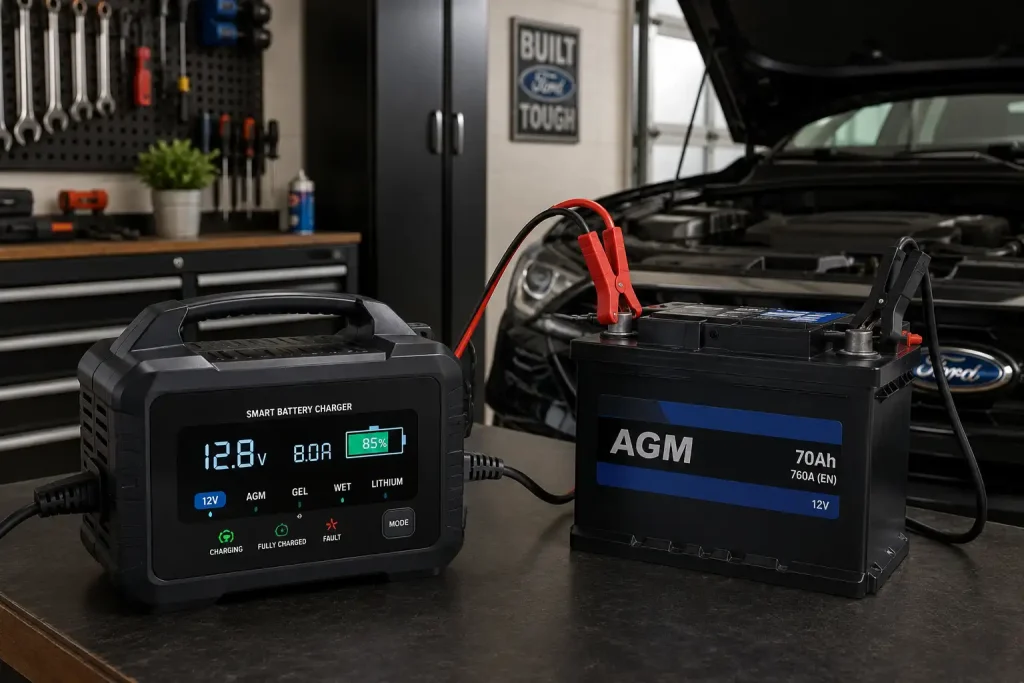
Most car batteries take between 4 and 24 hours to fully charge. A smart charger rated at 10 amps can often recharge a moderately discharged battery in about 4 to 8 hours. A slower 2-amp charger may require 12 to 24 hours or longer.
If you only need enough power to start the vehicle, a partial charge may take less than an hour. However, a complete charge is always better for battery health and long-term reliability.
What Affects How Long It Takes to Charge a Car Battery?
Several factors determine charging time. Two batteries may take very different amounts of time even when using the same charger.
- Battery size and capacity
- Battery age and condition
- Amount of discharge
- Charger amperage rating
- Ambient temperature
- Battery chemistry type
For example, a nearly dead battery will take much longer to charge than one that only lost part of its capacity overnight.
Cold weather can also slow charging. According to the U.S. Department of Energy, batteries become less efficient in low temperatures, which can affect charging performance.
Typical Car Battery Charging Times
Here is a general guide for common charger sizes.
| Charger Output | Estimated Charging Time | Best Use |
|---|---|---|
| 2 Amp | 12-24+ Hours | Battery maintenance |
| 4 Amp | 8-15 Hours | Slow charging |
| 10 Amp | 4-8 Hours | Everyday charging |
| 20 Amp | 2-4 Hours | Fast charging |
| 40+ Amp | 30-90 Minutes | Emergency charging |
These are estimates. Actual charging times vary based on battery condition and charger efficiency.
How Long Does It Take to Charge a Dead Car Battery?
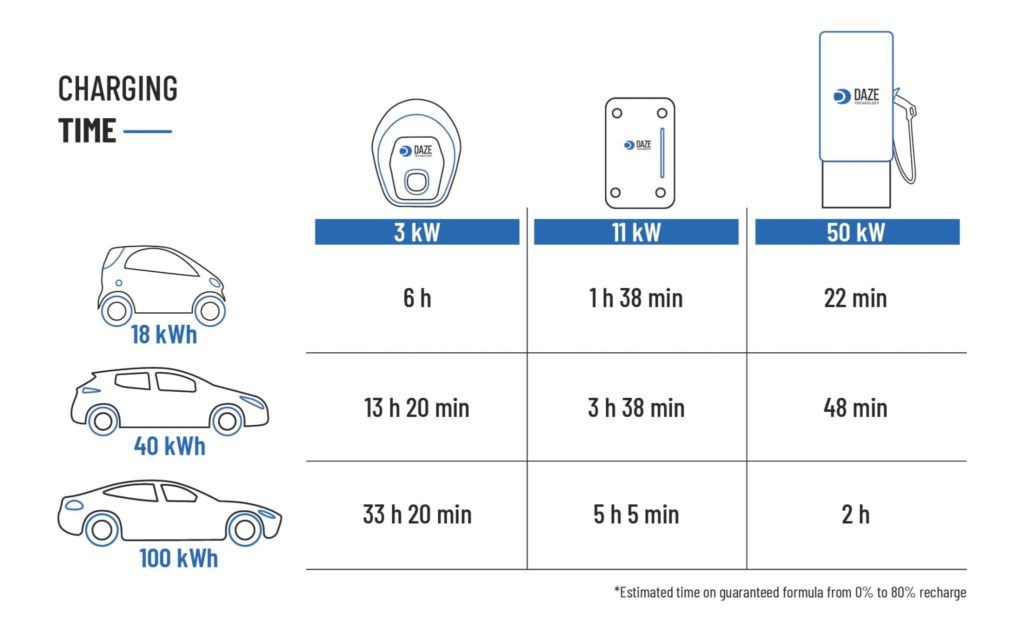
A completely dead battery usually requires several hours of charging before it reaches full capacity.
If you use a 10-amp smart charger on a standard 50Ah car battery, you can expect around 5 to 8 hours for a near-full charge. Older batteries often take longer because they do not accept charge as efficiently.
Keep in mind that some batteries may be too damaged to hold a charge. If charging repeatedly fails, the battery may need replacement.
If you’re dealing with repeated battery problems, you may also want to read our guide on signs of a failing vehicle battery.
How Long Does It Take to Charge a Car Battery While Driving?
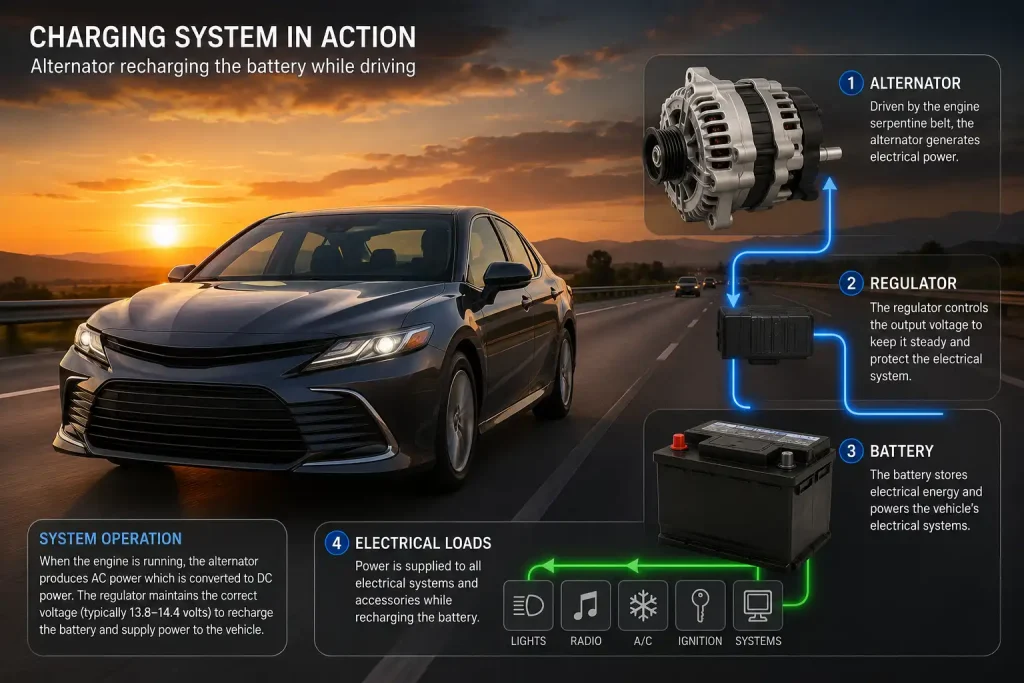
Many drivers assume a short drive will fully recharge a battery. That is not always true.
Your alternator recharges the battery while the engine runs. However, restoring a heavily discharged battery can take several hours of driving.
In many cases:
- 15 to 30 minutes may restore enough power for starting
- 1 to 2 hours can add a substantial charge
- Several hours may be needed for a full recharge
The exact time depends on electrical loads such as headlights, air conditioning, heated seats, and audio systems.
The experts at Kelley Blue Book also note that short trips often do not provide enough time for full battery recovery.
How to Charge a Car Battery Safely
Charging a battery is usually straightforward, but safety matters.
- Park in a well-ventilated area.
- Turn off the vehicle and remove the key.
- Inspect the battery for damage or leaks.
- Connect the positive charger clamp to the positive terminal.
- Connect the negative clamp according to charger instructions.
- Select the correct charging mode.
- Allow the charger to complete the charging cycle.
- Disconnect the charger safely when finished.
Most modern smart chargers automatically adjust charging rates and help prevent overcharging.
| Charging Method | Pros | Cons |
|---|---|---|
| 2 Amp Charger | Gentle on battery | Very slow |
| 10 Amp Charger | Good balance of speed and safety | Requires several hours |
| Fast Charger | Quick results | Can create extra heat |
| Alternator Charging | No special equipment | Slow for deeply discharged batteries |
Signs Your Battery Is Fully Charged
Wondering when to stop charging?
Here are common signs that the battery has reached full charge:
- Smart charger indicates 100% charge
- Charging current drops significantly
- Battery voltage stabilizes around 12.6 to 12.8 volts
- Vehicle starts normally
- Electrical accessories work properly
A digital battery tester can provide a more accurate picture of battery health and charge level.
Can You Overcharge a Car Battery?
Yes. Overcharging is possible, especially with older manual chargers.
Excessive charging can cause:
- Battery overheating
- Electrolyte loss
- Shortened battery life
- Internal damage
The good news is that most modern smart chargers automatically reduce charging current when the battery becomes full.
The National Highway Traffic Safety Administration recommends following manufacturer charging instructions whenever working with vehicle electrical systems.
Common Charging Mistakes to Avoid
- Using the wrong charger setting
- Charging a damaged battery
- Ignoring battery corrosion
- Disconnecting too early
- Charging in an enclosed space without ventilation
- Assuming a short drive fully recharges the battery
These mistakes can reduce battery life and create unnecessary problems.
Expert Tips from Robert
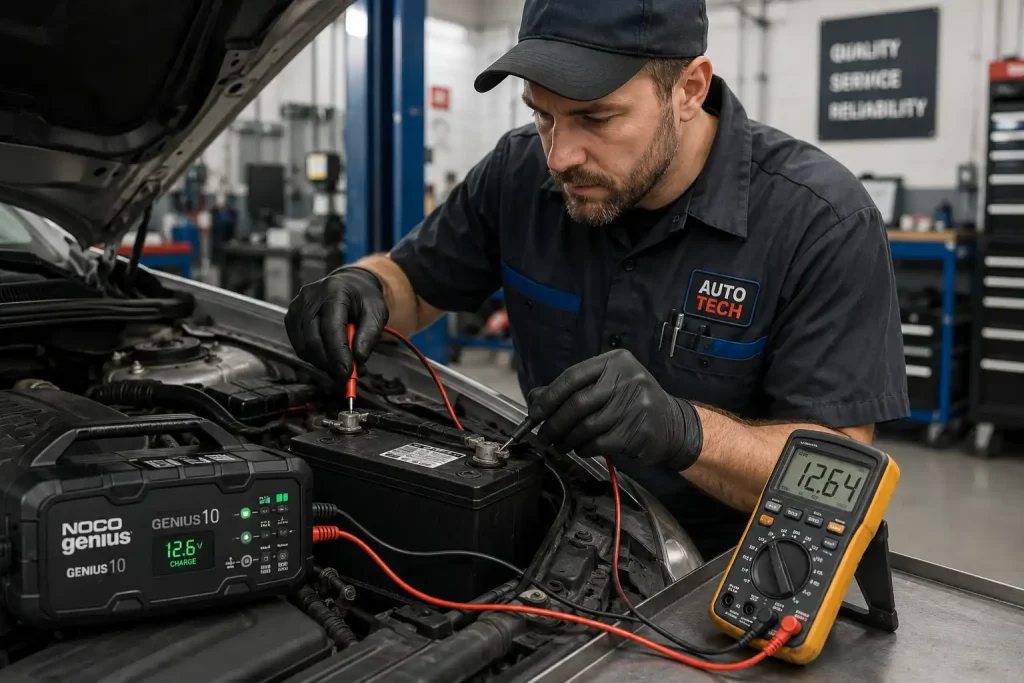
Check Voltage Before Charging
Robert’s Tip: I always check battery voltage before charging. It gives me a better idea of how much charging time will be needed.
Use a Smart Charger
Robert’s Tip: Modern smart chargers are worth it. They reduce the risk of overcharging and often improve battery lifespan.
Clean the Terminals First
Robert’s Tip: Dirty battery terminals can affect charging performance. A quick cleaning often helps.
Avoid Constant Fast Charging
Robert’s Tip: Emergency charging is useful, but regular slow charging is generally healthier for the battery.
Test Older Batteries
Robert’s Tip: If a battery is more than a few years old and struggles to hold a charge, test it before assuming the charger is the problem.
Key Takeaways
- Most car batteries need 4 to 24 hours for a full charge.
- Charging time depends on battery condition and charger output.
- Driving can recharge a battery, but it may take several hours.
- Smart chargers are safer and easier to use.
- A fully charged battery typically reads about 12.6 to 12.8 volts.
Frequently Asked Questions
How long does it take to charge a car battery with a 10 amp charger?
Most standard car batteries require about 4 to 8 hours with a 10 amp charger. The exact time depends on battery size and charge level.
Can I leave a car battery charging overnight?
Yes, if you are using a quality smart charger. These chargers automatically reduce charging current when the battery becomes full.
How long should I drive to recharge a car battery?
A short drive may provide enough power to restart the vehicle. A full recharge can require several hours of driving depending on battery condition and vehicle electrical load.
What is the fastest way to charge a car battery?
A high-amperage charger provides the fastest charging speed. However, slower charging is generally better for long-term battery health.
Can a completely dead battery be recharged?
Many dead batteries can be recharged successfully. If the battery has internal damage or severe sulfation, replacement may be necessary.
How do I know when my battery is fully charged?
A smart charger usually indicates a full charge. Voltage readings around 12.6 to 12.8 volts are also a good sign.
Does cold weather affect charging time?
Yes. Low temperatures reduce battery efficiency and can increase charging time compared with warmer conditions.
Conclusion
So, how long does it take to charge a car battery? For most drivers, the answer is somewhere between 4 and 24 hours, depending on the charger and battery condition.
The best approach is to use a quality smart charger and allow the battery enough time to reach a full charge. Rushing the process may get you moving sooner, but proper charging helps extend battery life and improve reliability.
If you’re working on vehicle maintenance, you might also find our guide on battery charger selection and maintenance tips helpful.